Wednesday, February 14, 2018

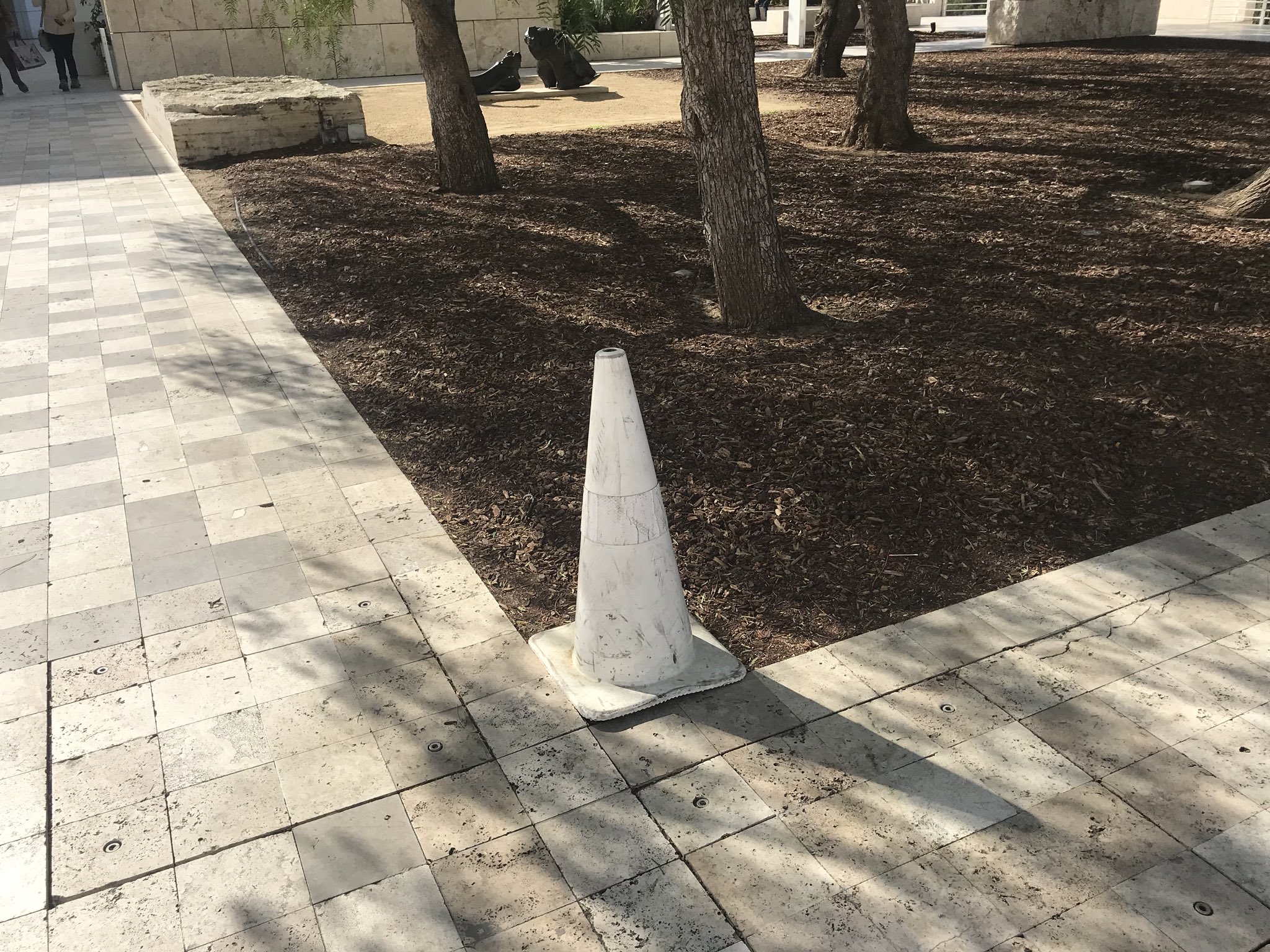
Standing outside the Getty Research Institure , now exhibiting Harald Szeemann Museum of Obsessions


I am privileged 
I am not afraid of sweat 
I am not afraid of aesthetics
I am not afraid of friends 
I am not afraid of enemies
I am not afraid of concepts 
I am not afraid of touch
We are not afraid of third parties 
We are not afraid of your opinions 
I am not afraid of the little, cold hand of the 70's
I am not afraid of the financial ruin of the 80's
I am not afraid of aging in the 90's
Because I'm for getting it wrong
Because I'm for trying it out 
Because I'm for direct contact 
Because I'm for the flicker in the eye that meets mine
Because I'm for other people 
Because we are for unsettling ourselves 
Because we're for enlightened rulers

Because I'm for rebellion against various firsts and seconds
Because I'm for lived counter-models  
Because I'm for new models 
Because I'm for individual mythologies 
Because I'm for human rights 
Because I'm for structuralism
Because I'm for the Eastern,the Western, the Nordic and the Mediterranean, the ephemeral and the ethereal  
Because I'm for poetry and passion
Because I'm for posing
Because I'm for selection
Because I'm against selection
Because I'm for complexity
Because I'm for my simple nature for which everything seems possible
Because I'm for the utopia of the new
Because I'm for hope

Because I'm for questioning the concept of property 
Because I'm for the disruption of questioning through the arresting of ideas
Because I'm for the duality of meanings
ergo the local
ergo the regional
ergo the national 
ergo the international 
Because I'm for anarchy that denies the artist
Because I'm for the artist that cultivates anarchy 
Because I'm for the denial of decision 
Because I'm for the affirmation of this refusal 
Because I'm for open-ended situations
Because I'm against the gravity of property,veto, taboo

Hold on a minute


Are you holding anything back?
I'm holding my position for the ambush which is art
I am privileged because I am dependent and yet independent 
Because I have a moral vein and yet have none
Because I am afraid and yet not afraid
Because I am a daredevil
But I don't want to hurt anyone 
Because I have faith that things that aren't right reduce themselves to absurdity above all in my own case 

i am privileged because i can call this moral/ethical conscience my own and because everything is not so very simple

Amen

H Szeemann speaks
a seedling amen


Tuesday, February 13, 2018

The facility of stone.

So why bother with these rather challenging kinds of workshop projects ? They're exhausting physically and mentally, and new design ideas are always a bit risky, and have a tendency to look like they could fail spectacularly .  Why knock yourself out with a handful of eager enthusiasts, building all kinds of crazy schist, rather than just be safe and teach a standard course for those who have more of an experience of, and know pretty much already, what can and can not be done with, stone?  

Well, it's because I'm enthusiastic about providing, ( in this case with stone )not just a eye opening , hands on building experience for beginners, but helping demystify or perhaps  unlock in some new way, the human potential for ' collaborative creative accomplishment'  in anything - and thus, potentially, in everything! 

Ordinary people with like interests, who may never have met one another before, get to discover (with the right conditions and a with guidance from an able instructor) what bonding is all about and together make 'something' new  - a 'something' very real, and at the same time quite 'magical' . The effort is worth it . Being provided an opportunity to play and build with stones structurally, those involved  get a taste for creating something unique over a fairly short space of time. The structure they make is not just 'different' or just unusually massive , but often exudes a very permanent sense of proper use of space and time . In the simple act of ordering  natural material we are basically enjoying the art of rearranging elements of our seemingly random existence, (often by luck ) into some meaningful expression of life. Such a fulfilling activity can make us reevaluate other things we do with our time and let our imagination take flight on any given weekend , rather than just do nothing .

Sunday, February 11, 2018

Looking Up


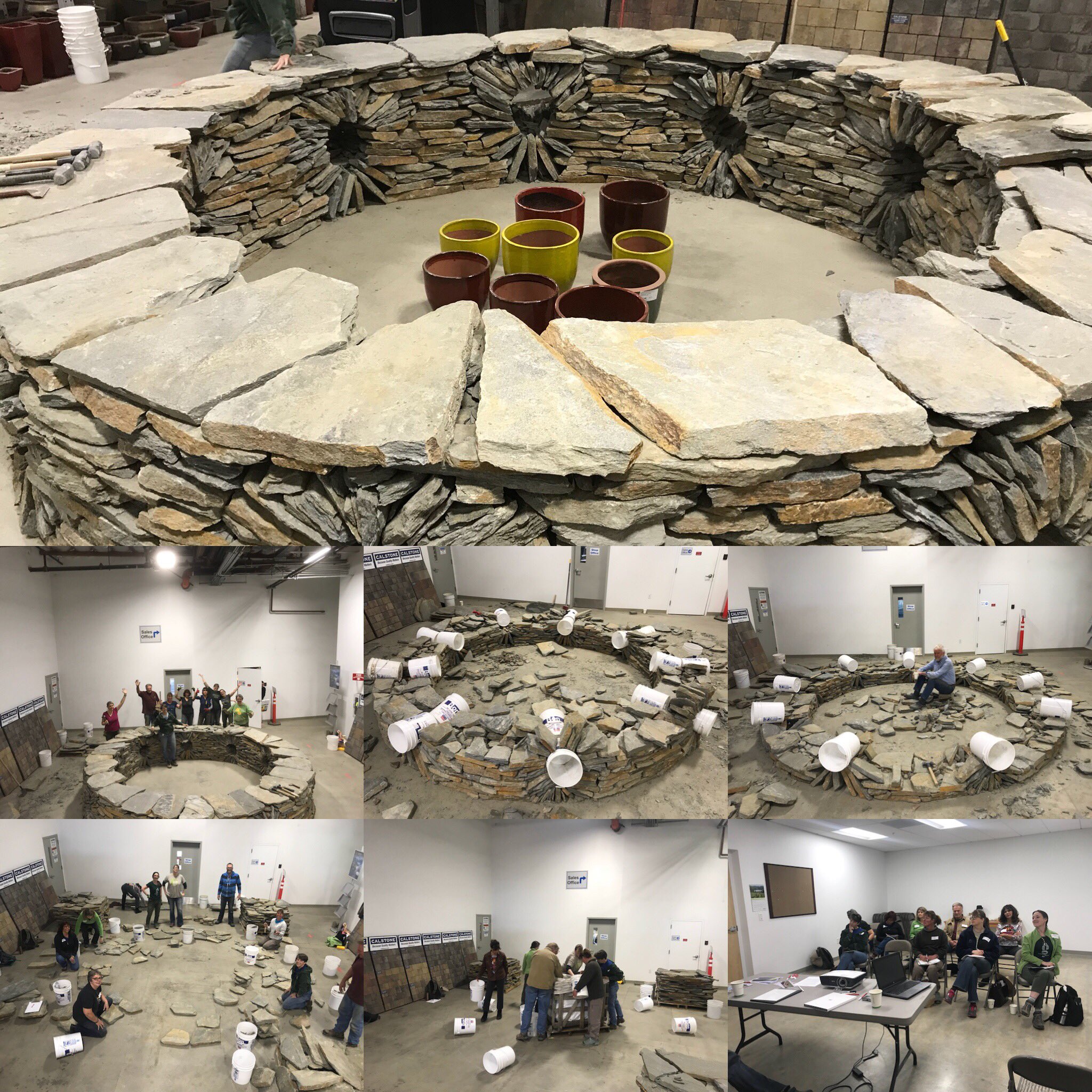
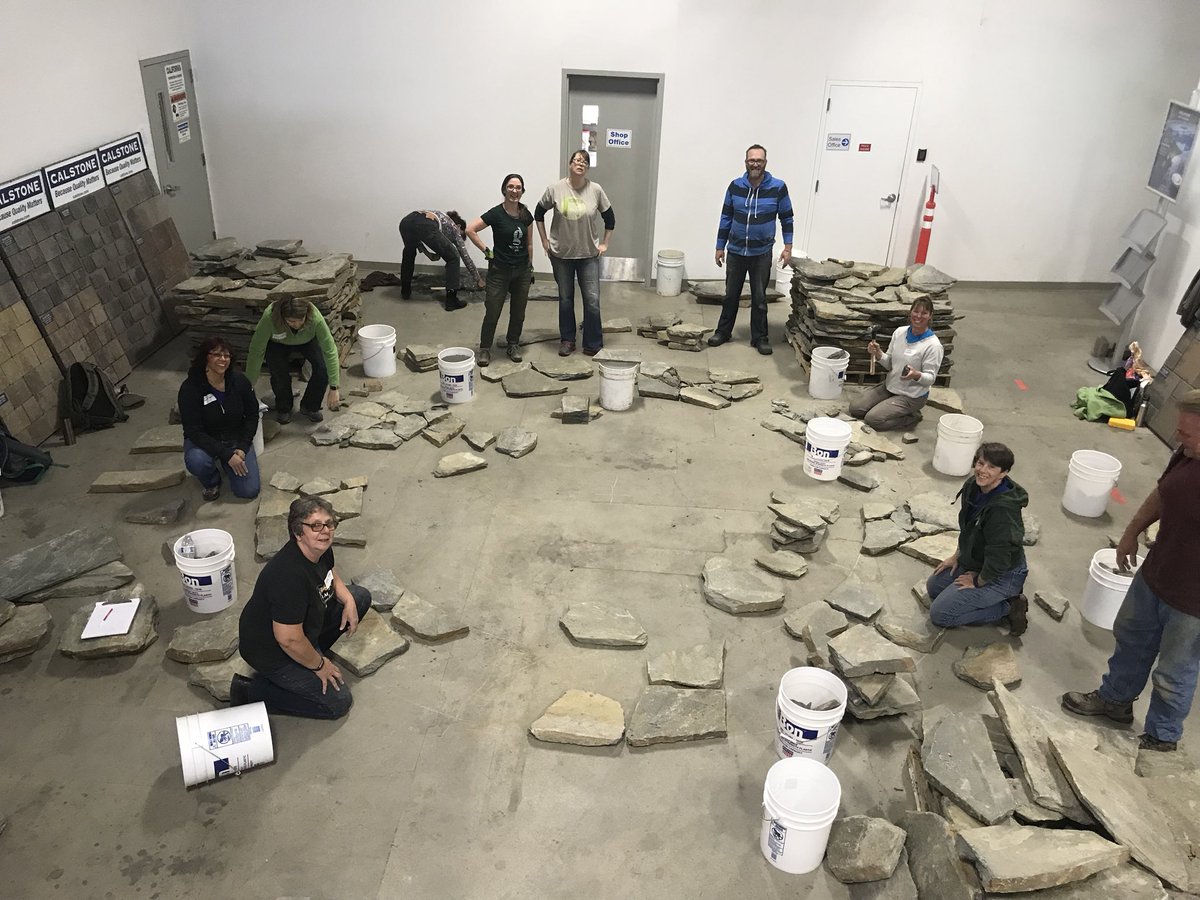
My workshop crew this weekend consists of one man and eight women . This is a good trend . Women generally listen better and apply what is taught rather than just ignore it. I'm happy to say that even though it's a challenging project design and we did get off to a slow start , just  like the students in the photo , everything is looking up now.

Saturday, February 10, 2018

Checked off their bucket list .

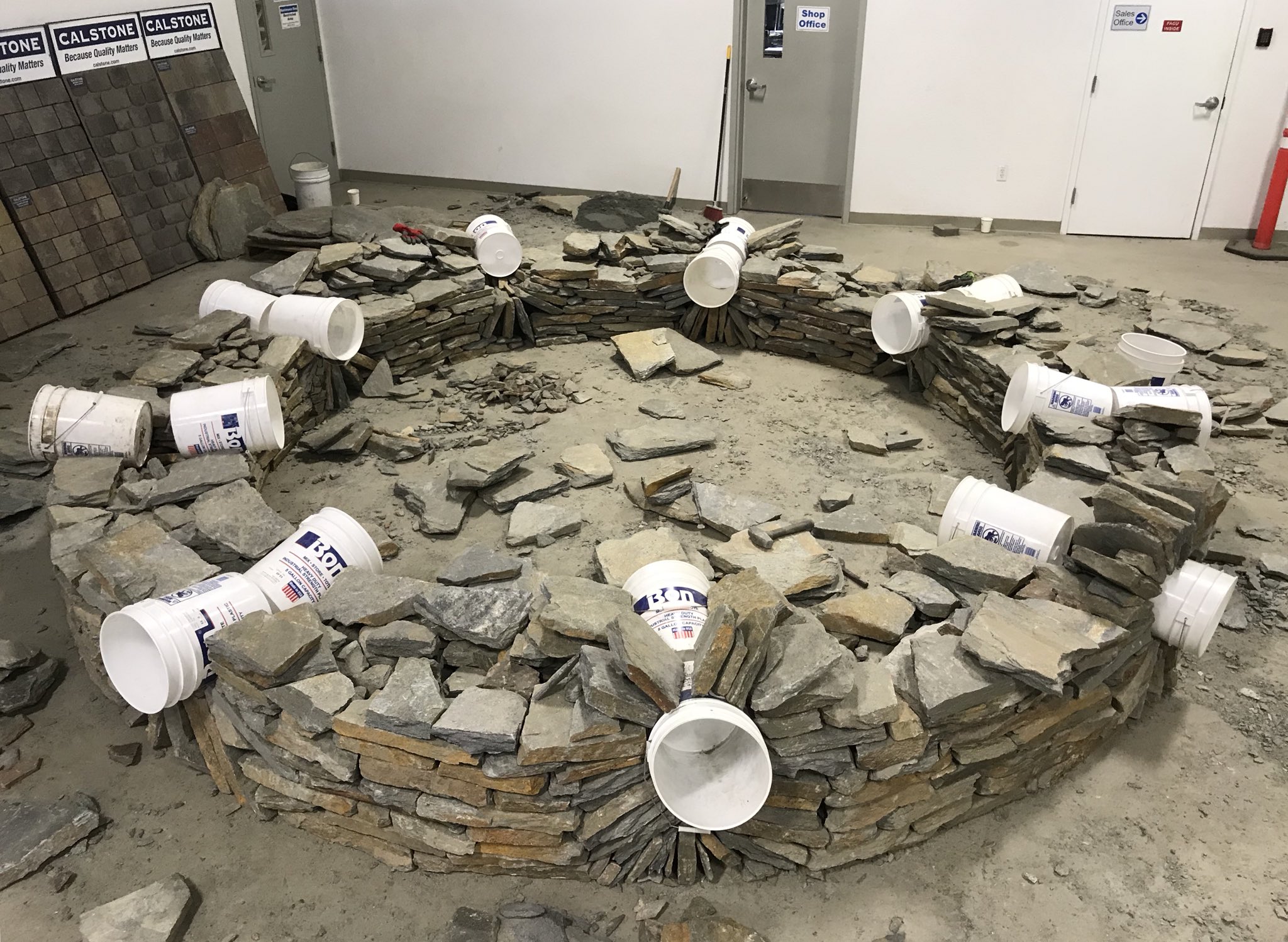
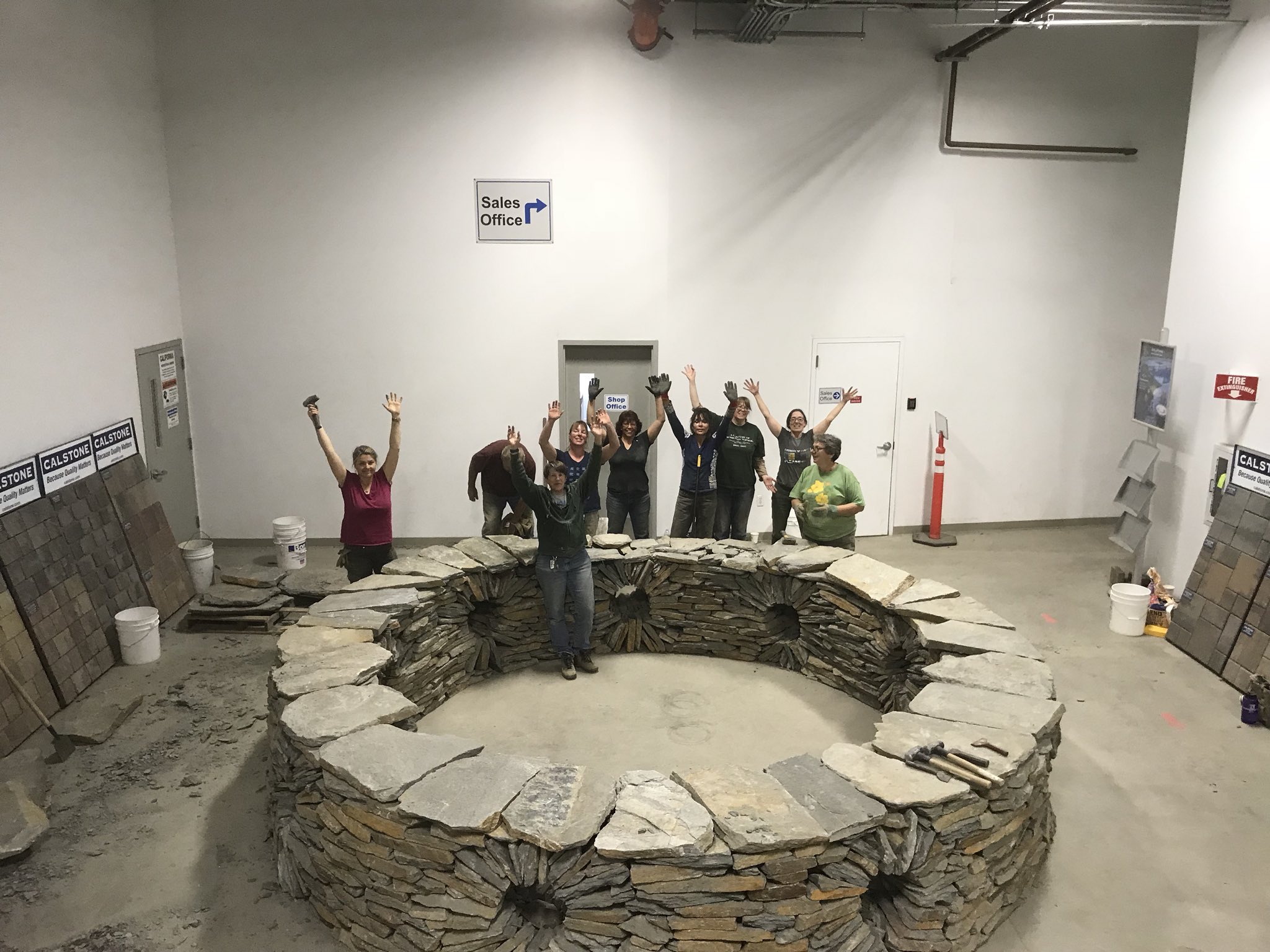
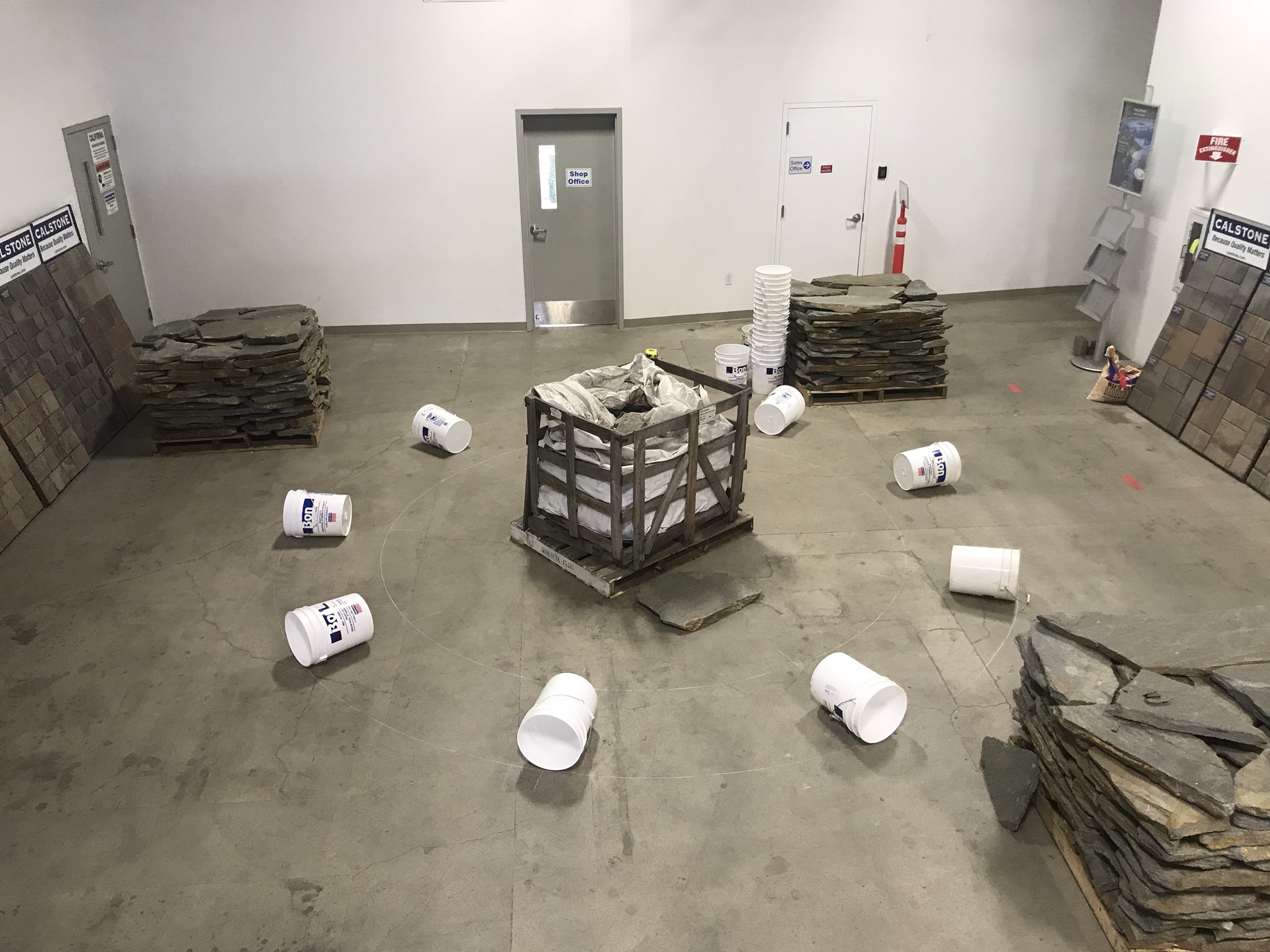
This weekend nine students get to build a circular dry laid garden feature that will have nine mini  moongates built into it, using five gallon buckets for the forms. What's on your bucket list?

Friday, February 9, 2018

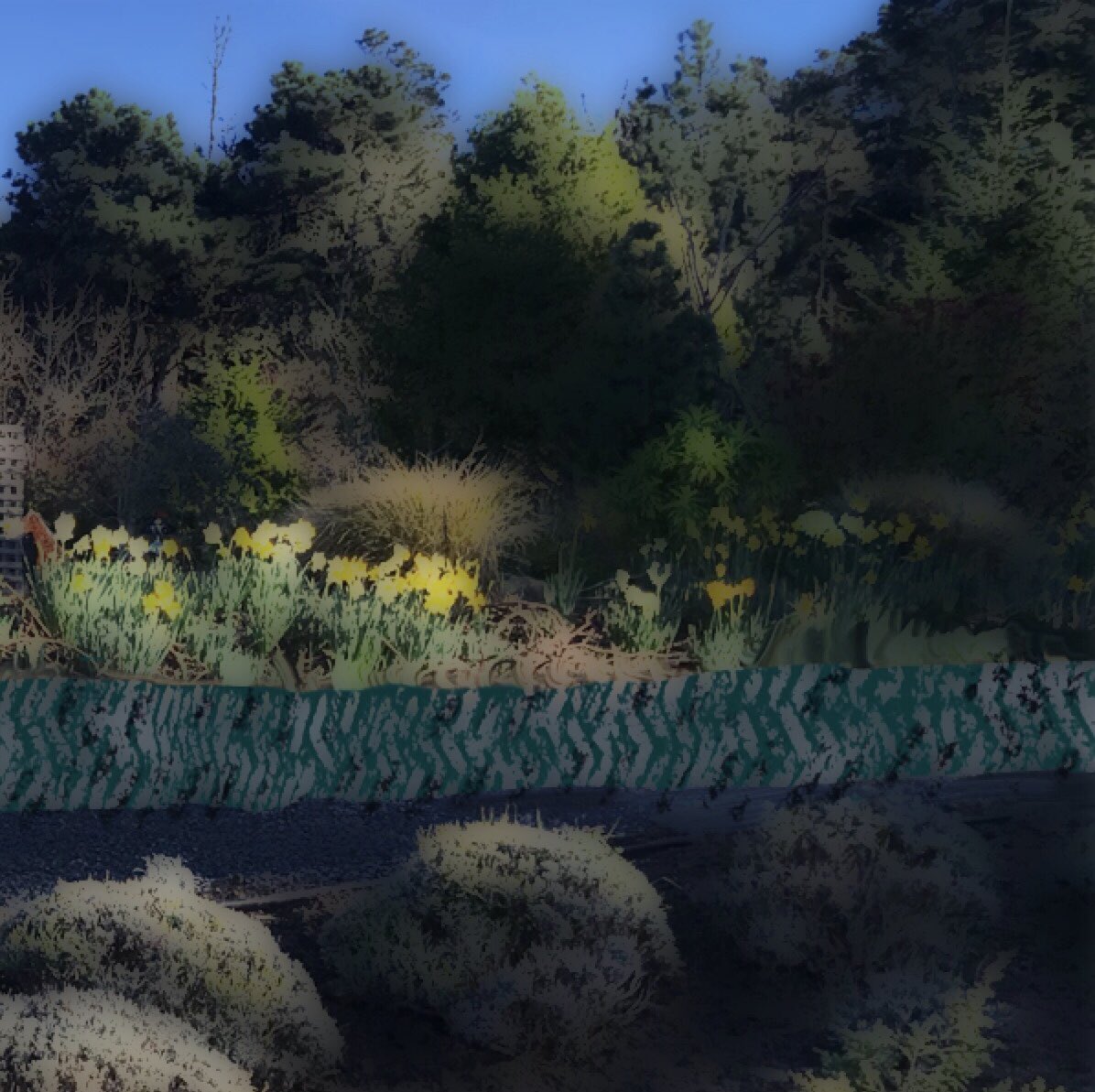
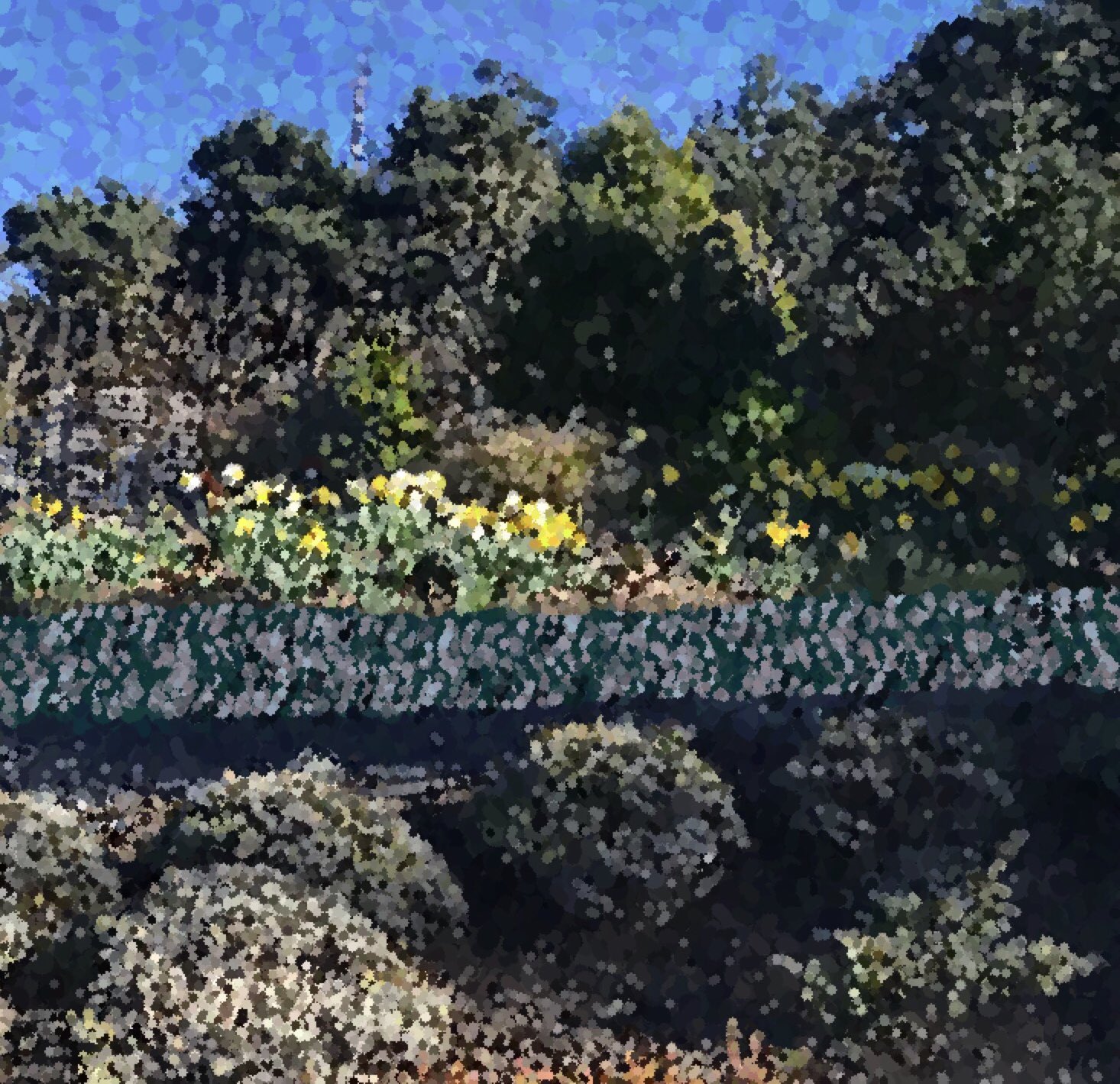
An impressionistic view


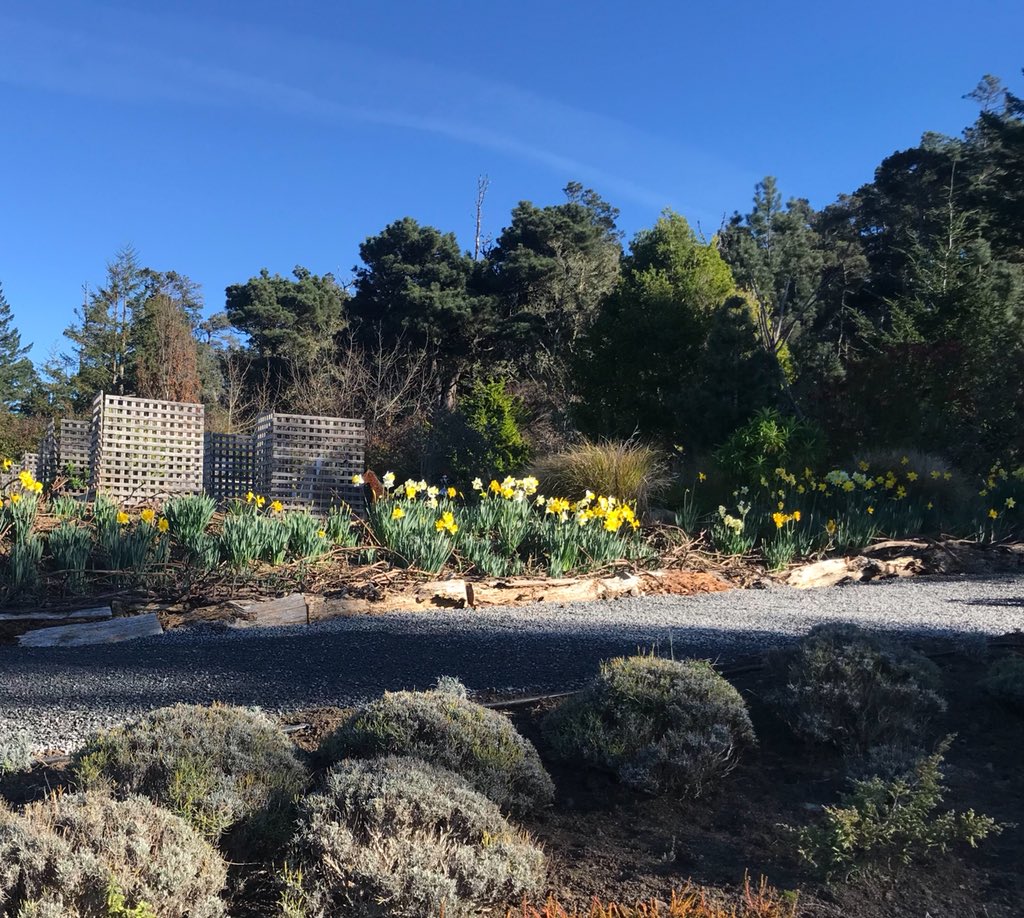
Here’s a beautiful garden we visited yesterday.
Many interesting treats for the eye.
However, one section of old garden border wall has nearly rotted out.
The large redwood logs have seen better days.


I see a low dry stone herringbone wall gracing the perimeter.


Replacing the decaying wood border, with a stone wall, could make a good impression.


Wednesday, February 7, 2018

Floating Boulders


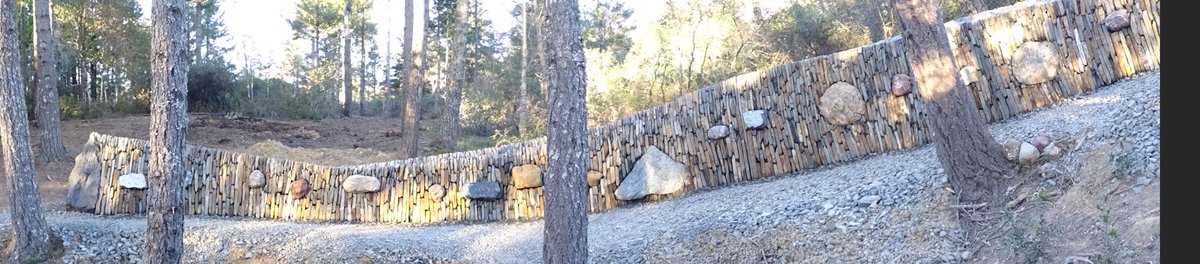
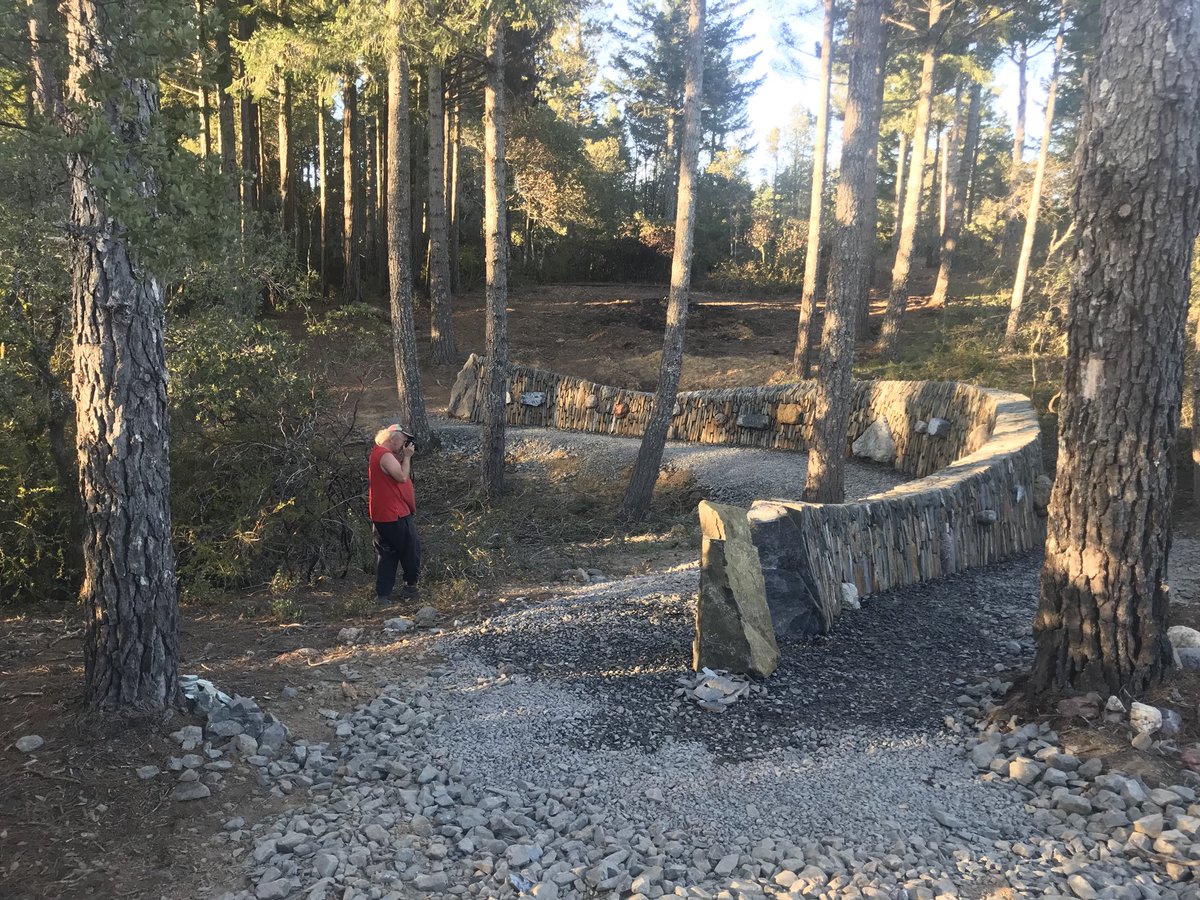
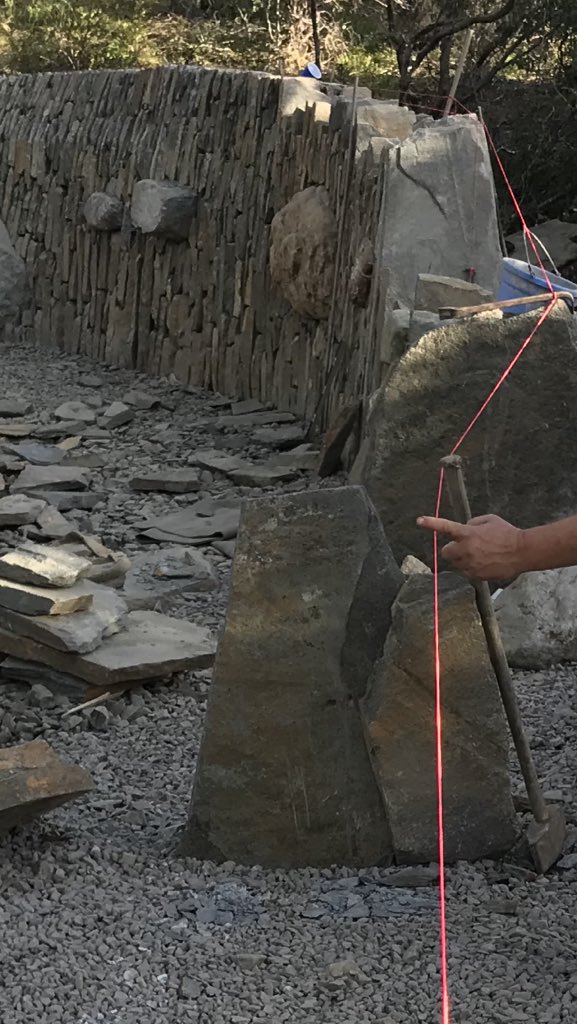
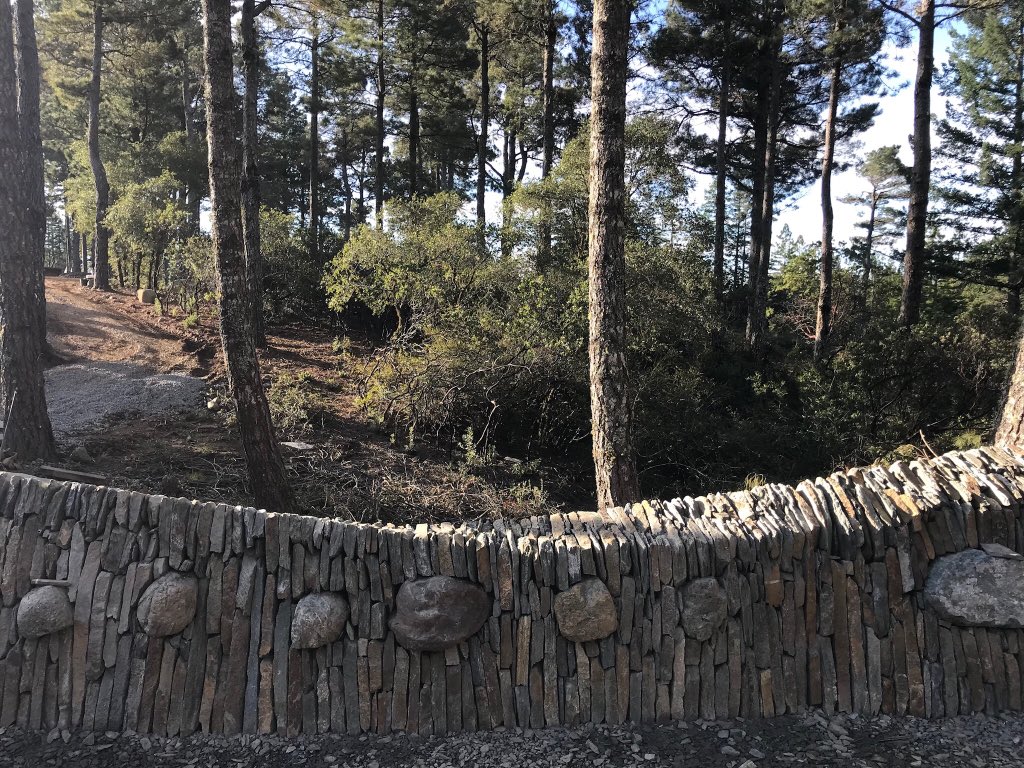
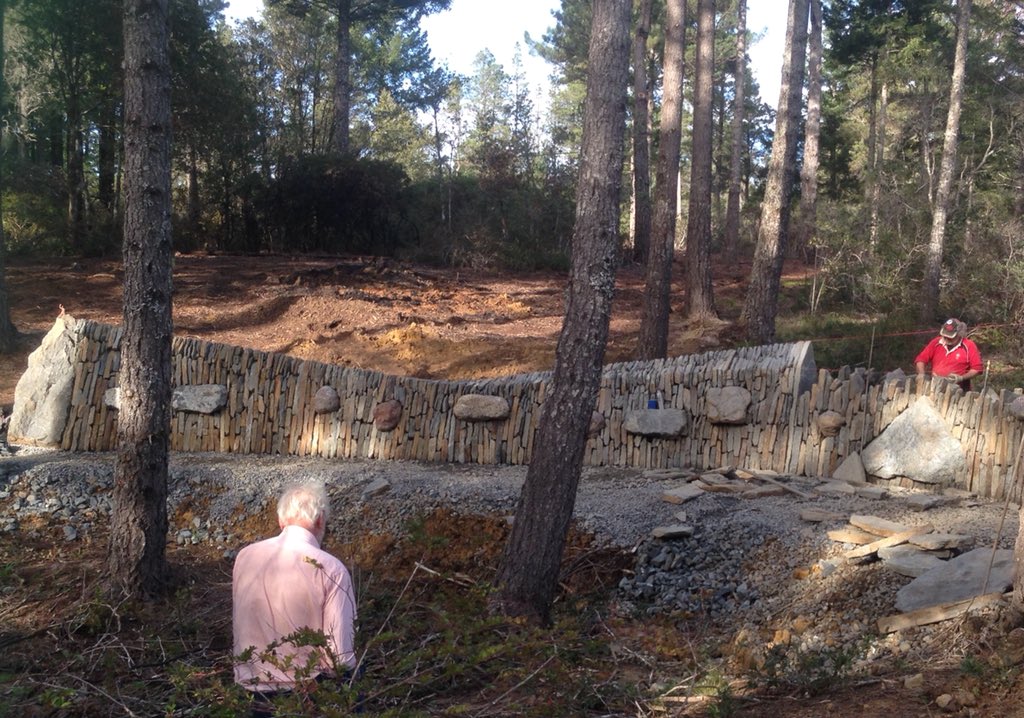
Rather than us being in full control, this project morphed into something i think the stones and the landscape needed it to be. Mark Ricard , Sean and I worked in harmony together with a winning selection of material, jasper, mica schist, basalt, serpentine and gobs of local blue slate  . Almost no saw cuts at all. Just fiddly crunch pulverizing with hammers shaping, and careful finesse fitting. A kind of acoustic unplugged piece that definitely 'sings'.  The rolling curving wall  is framed beautifully in a specially prepared clearing, (what Peter likes to call The Glen). 
It was a pleasure to collaborate with Sean Adcock on this, an original design of mine, which had way more life and vitality waiting to be released than we realized when we first started building it . 
It seems you can't take a bad photo of it . Sean Adcock has proved it .

Photo above by Sean Adcock


Thanks too for hearting help from Melissa Hall. 

Tuesday, February 6, 2018

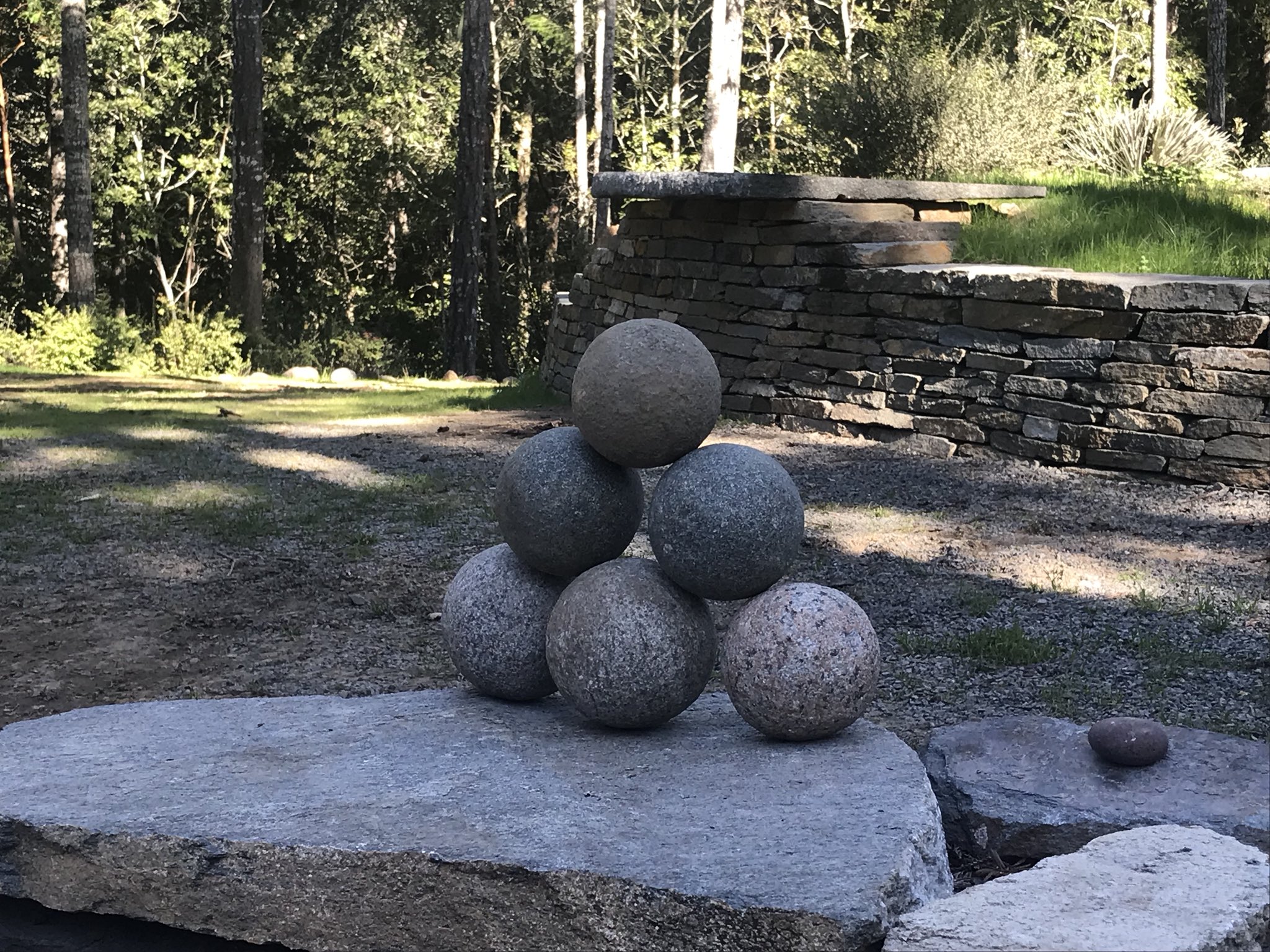
Five high or six in a pyramid .

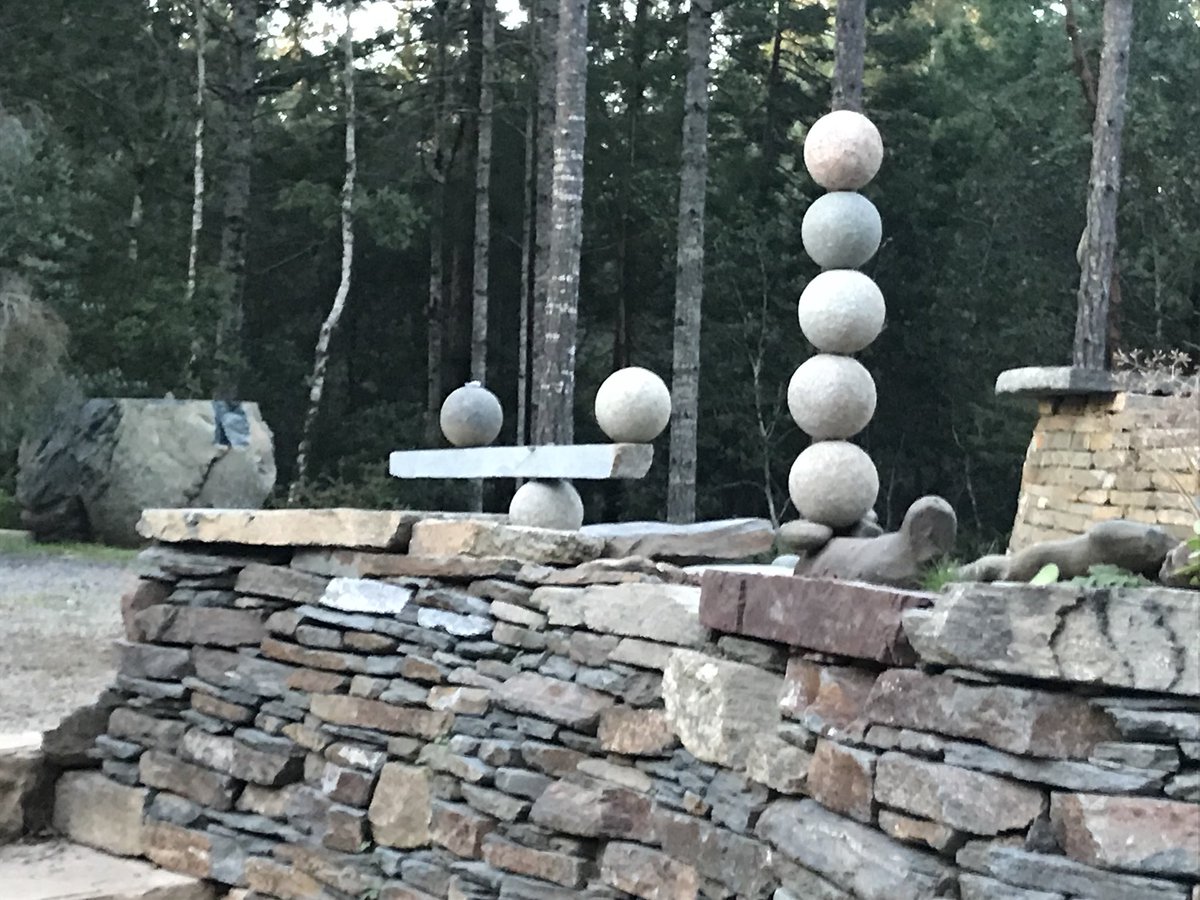
David Allen of stonepointstudio did some amazing stone ball balancing while he was here at Fishrock  


I tried my hand too and was able to get 6 into a pyramid    Which would you say was harder to do? 

Sunday, February 4, 2018

Lines and Curves

Lines help determine curves . But curves look wrong if they have straight sections or annoying kinks in them. It is the finessing of the curve and the lines ( the feathering out of all the angles)  that determines the flow and creates a kind of a slow dance. The stones line up to learn their part within the choreography of placement.

Saturday, February 3, 2018

The Team


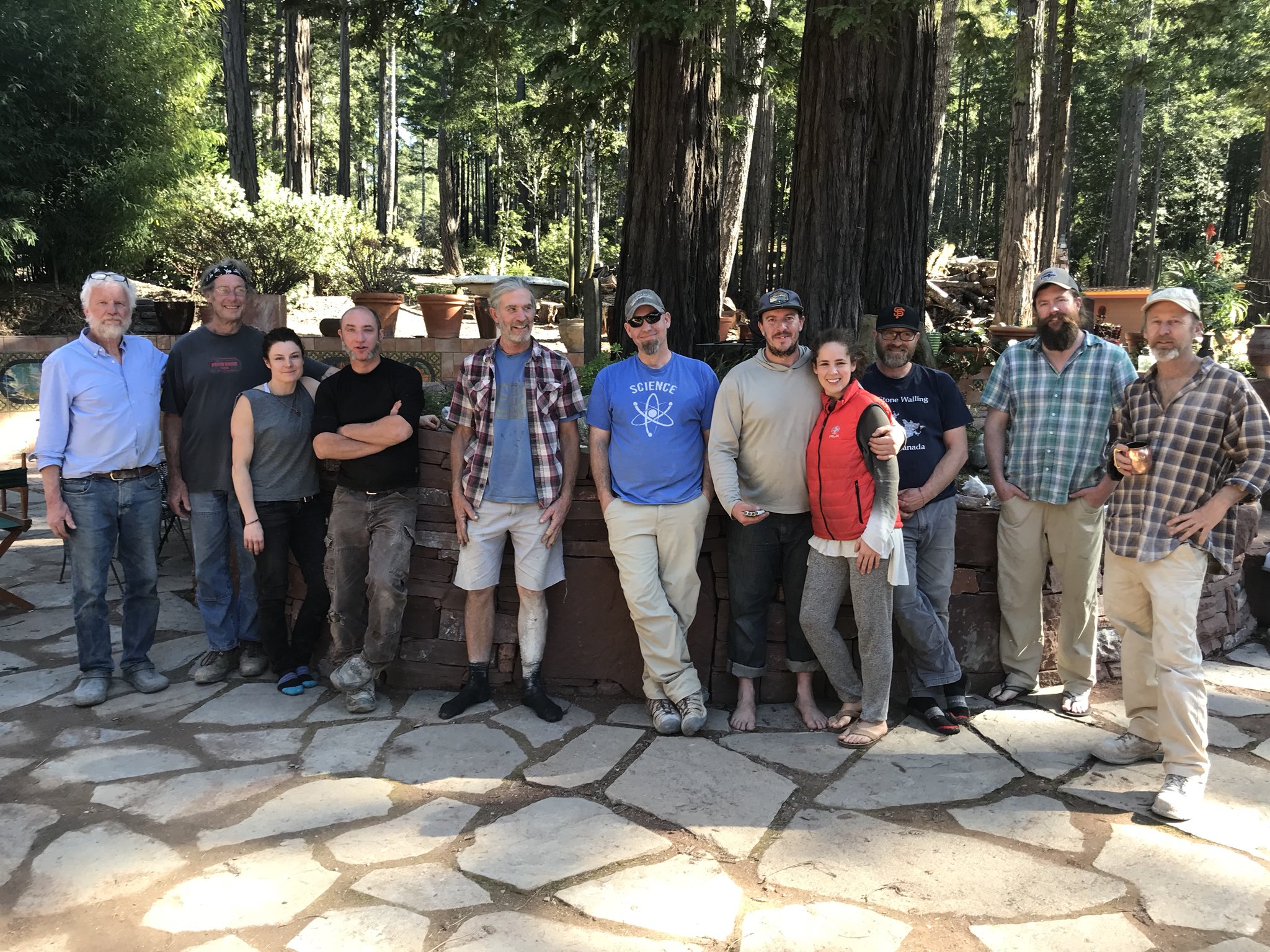
Some of the crew that performed their stone (and food) magic over the last few weeks at Fish Rock  (minus Alan , David, Sean A, Amanda, Sheri,Julien, Robert and Vieve ) ( and Gerry ) Well done guys.

Friday, February 2, 2018

A Portal with Every Stone

David Allen's granite portal installation is completed . It focuses your gaze out over the Pacific Ocean. As with many of his other painstakingly well-crafted pieces the stones focus your view through an opening and some how make  everything your looking at and through more dramatic.

Thursday, February 1, 2018

Curve Appeal

Part of the attraction of building (and looking at) a curved stone structure is the variation and graduation,of lights and shadow that happen over the course of the day. A straight wall usually is lit only from one side or the other and has far less interplay of shading and colour. Our floating boulder wall we are building has a swooping curve that catches the light progressively around its contours creating a dynamic merging of structure and movement.

Tuesday, January 30, 2018

Making it’s way.


Our floating boulder wall is slowly making its way through the glen. Or, should I say, we are making it’s way?


I took time off last Sunday to try to paint it.


Monday, January 29, 2018

Paul Lindhard at Fish Rock

Paul Lindhard of Art City in Ventura installed his wonderful onyx stone sculpture he calls Passive Sun for last Sunday's Gualala Stone Zone open house 

Sunday, January 28, 2018

Looking back on another amazingly successful festival


Frontenac Heritage Foundation video production of the rebuilding of the historic walls at St Marks church in Barriefield Ontario during the Dry Stone Canada festival last summer.

Friday, January 26, 2018

Sprucing up the place.

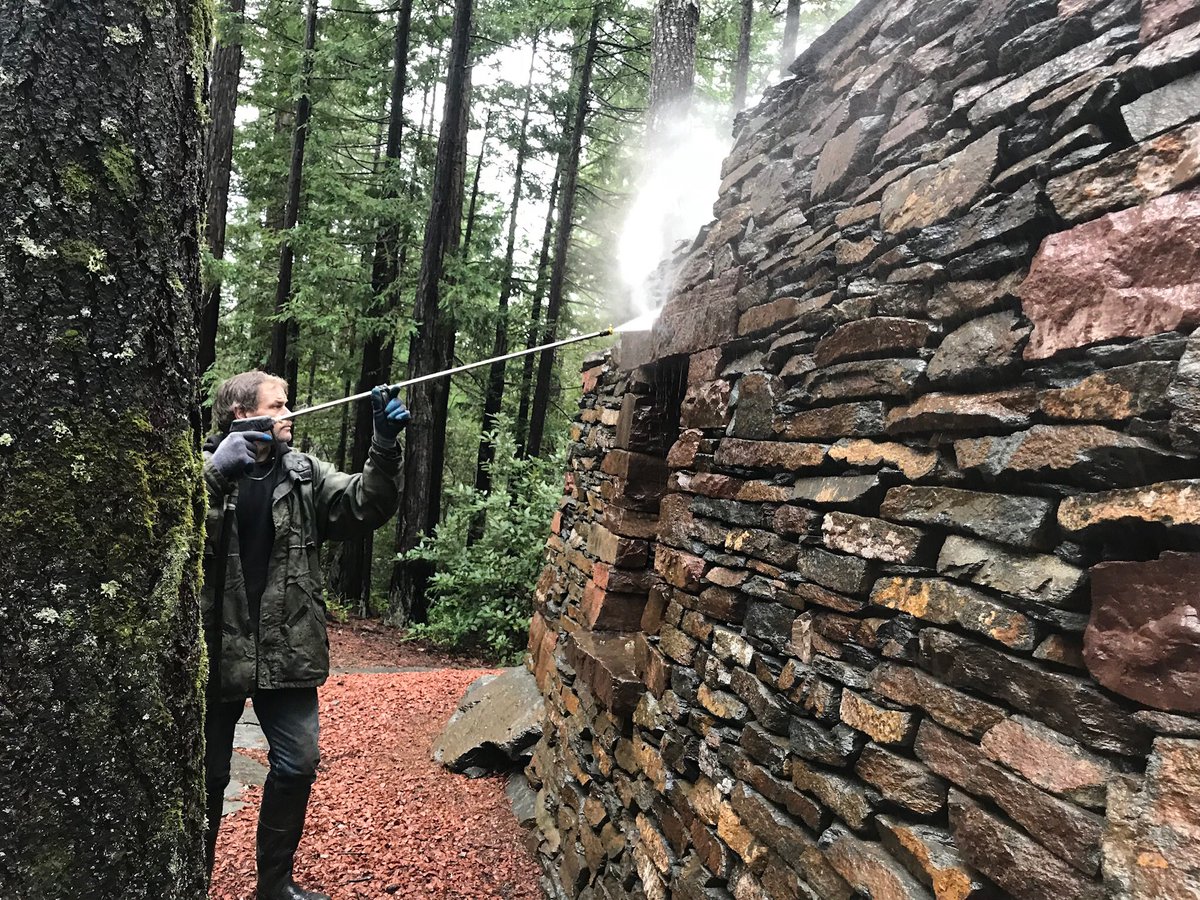
Jerry is power washing our old dry stone stagecoach house for next Saturday,s open-house-come-meet-the-artists event at Fish Rock road California.

Do follies need de-mossing?   I don’t know.

Come and join us and tell me what you think. 

Thursday, January 25, 2018

Sean Adcock’s continuing walling project back in Wales


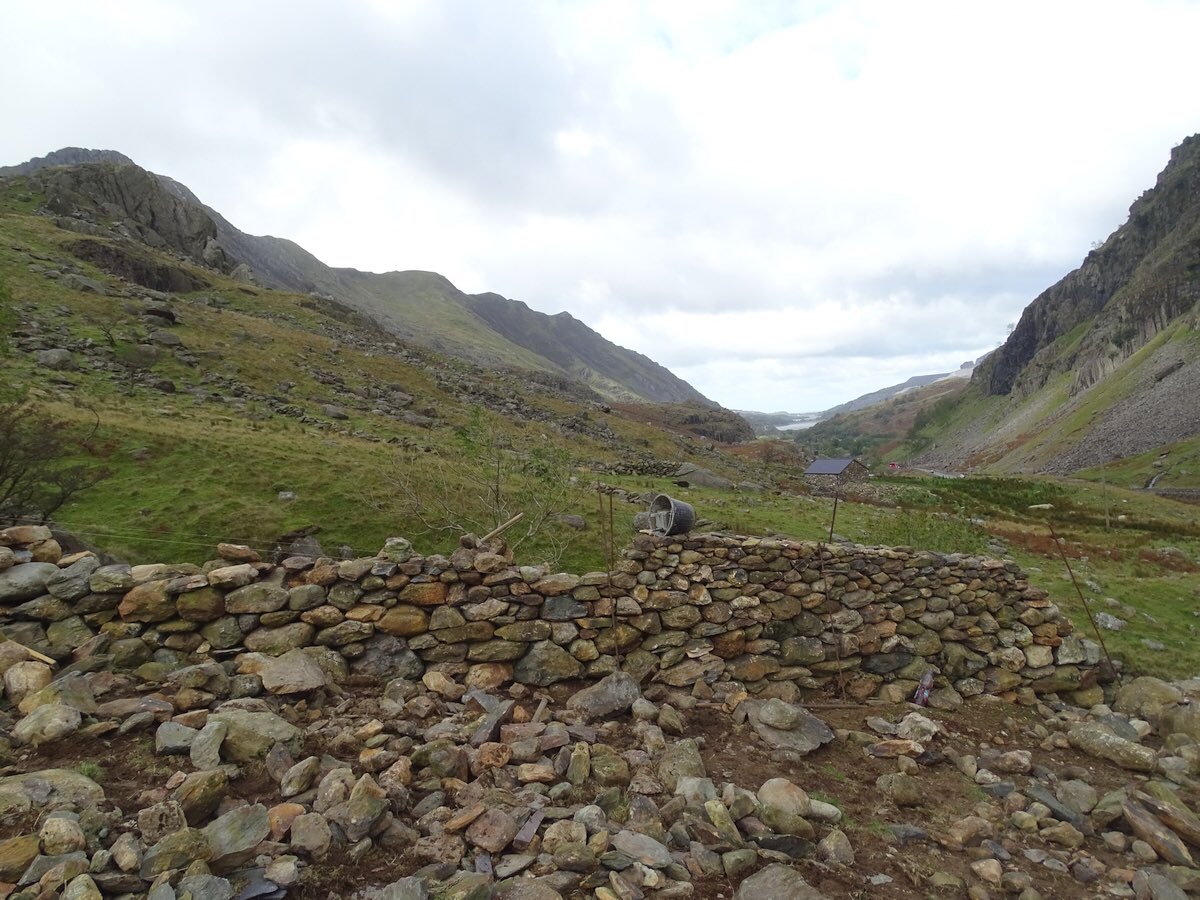
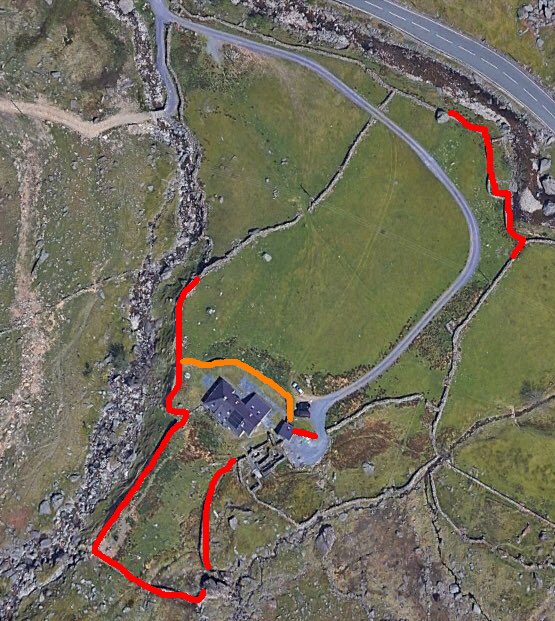
Sean Adcock does a lot of field walling where he lives in Wales. He was explaining to me that Blaen y Nant, in the Llanberis Pass, below Snowdon the annual rainfall is 130inches and regularily has 40-50mph winds.  The above photo shows where his main worksite has been for some time and the 2nd main propery in terms of amount of work done.

It is private land where he's been restoring many many meters of old field walls that mark property boundary.  Most of the walls run along the transition from flatter field to land sloping down to streams.  Walls are minimum of 5 feet including coping on low side, downhill side is usually around 6feet, tallest is about 9 feet.

Several good Canadian wallers have gone over there to improve their skills and to learn from Mr Adcock. People like Andre Lemieux, Kenny Davies, Akira Inman and Evan Oxland to name a few have worked on this particular site with Sean over the years ... There is a blog post back in April 29 if2013 . The first photo is Andre on downhill side of section they worked on when he visited and also a photo of him coping.


The google map photo shows what Sean has done at the  Blaen y Nant property. The red walls are boundary, the orange wall is just under 5 feet on field side, and is mostly retaining(garden). This years work was the extension of the back garden wall beyond orange wall on the  left hand side. The photo at the top of the page was taken about a third of the way along it from orange wall, looking down the valley towards Llanberis. Very Approxmately 40 linear metres and 800 square metres in total between other jobs over last 7 year.

Tuesday, January 23, 2018

Alternative Rock

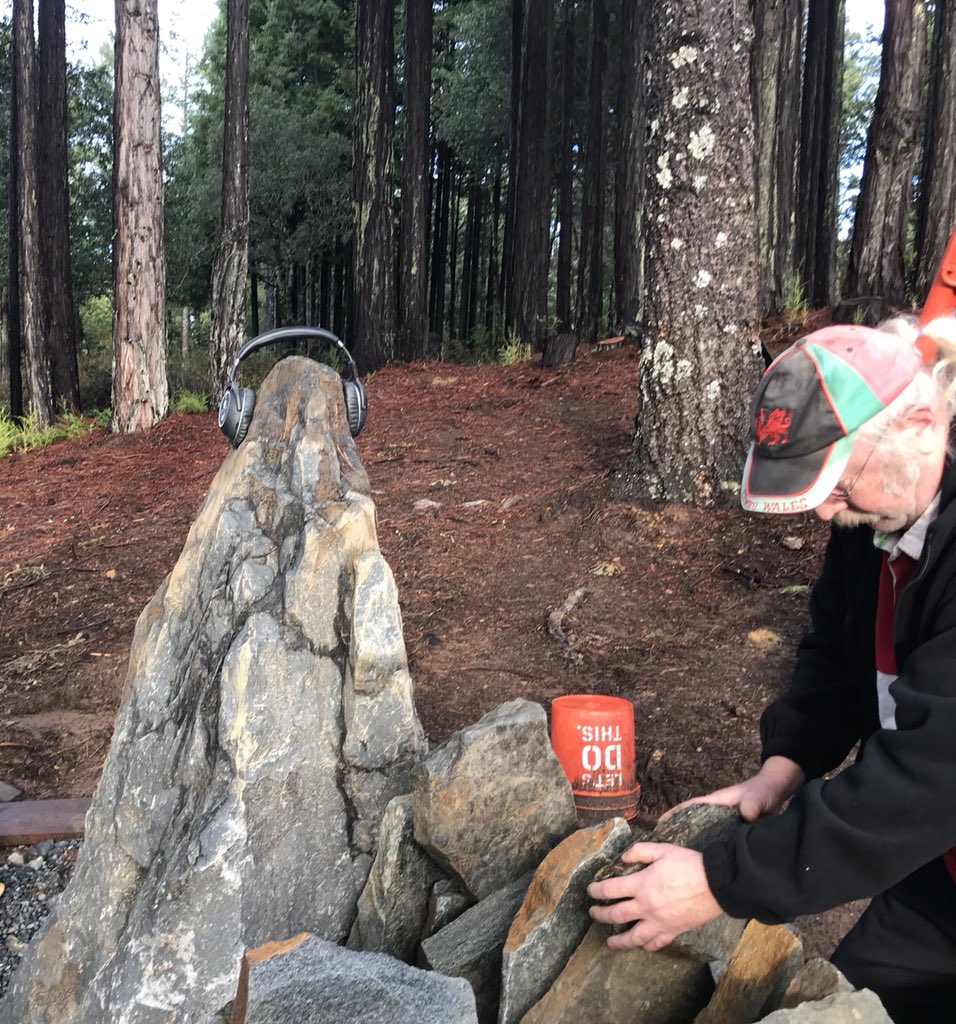
Our old friend Sean Adcock from Wales has recently arrived in Gualala, joining Mark and I on this our latest very challenging walling project. He says he hates working while we have our music playing, so we’ve had to put our headphones on in order to listen to the stuff both of us like.  I don’t know what the boulder is listening to.

Monday, January 22, 2018

Saturday, January 20, 2018

David Allen


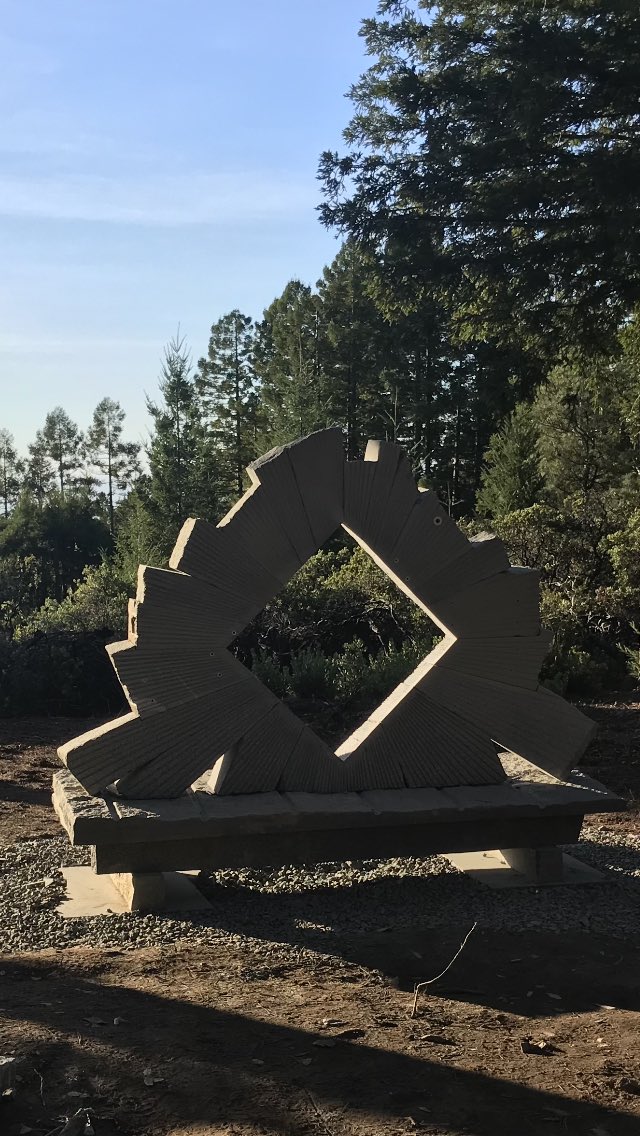
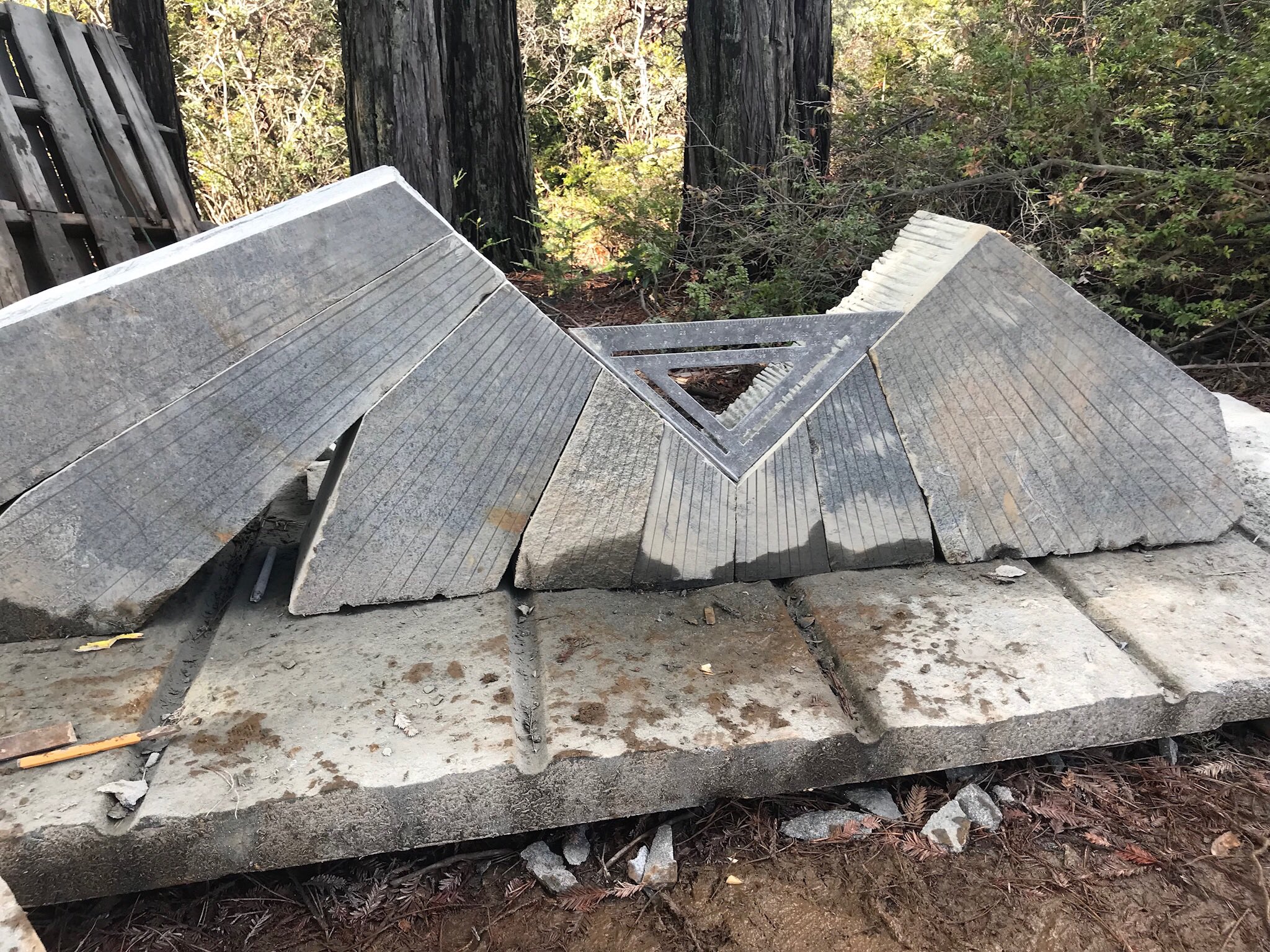
David Allen stone artist from Maine and sole proprietor of stone point studio is doing a granite diamond shaped portal opening at Fishrock Road this week.  It involves precise measuring ,much grinding and lots of patience. Check out his Instagram web page stonepointstudio


Friday, January 19, 2018

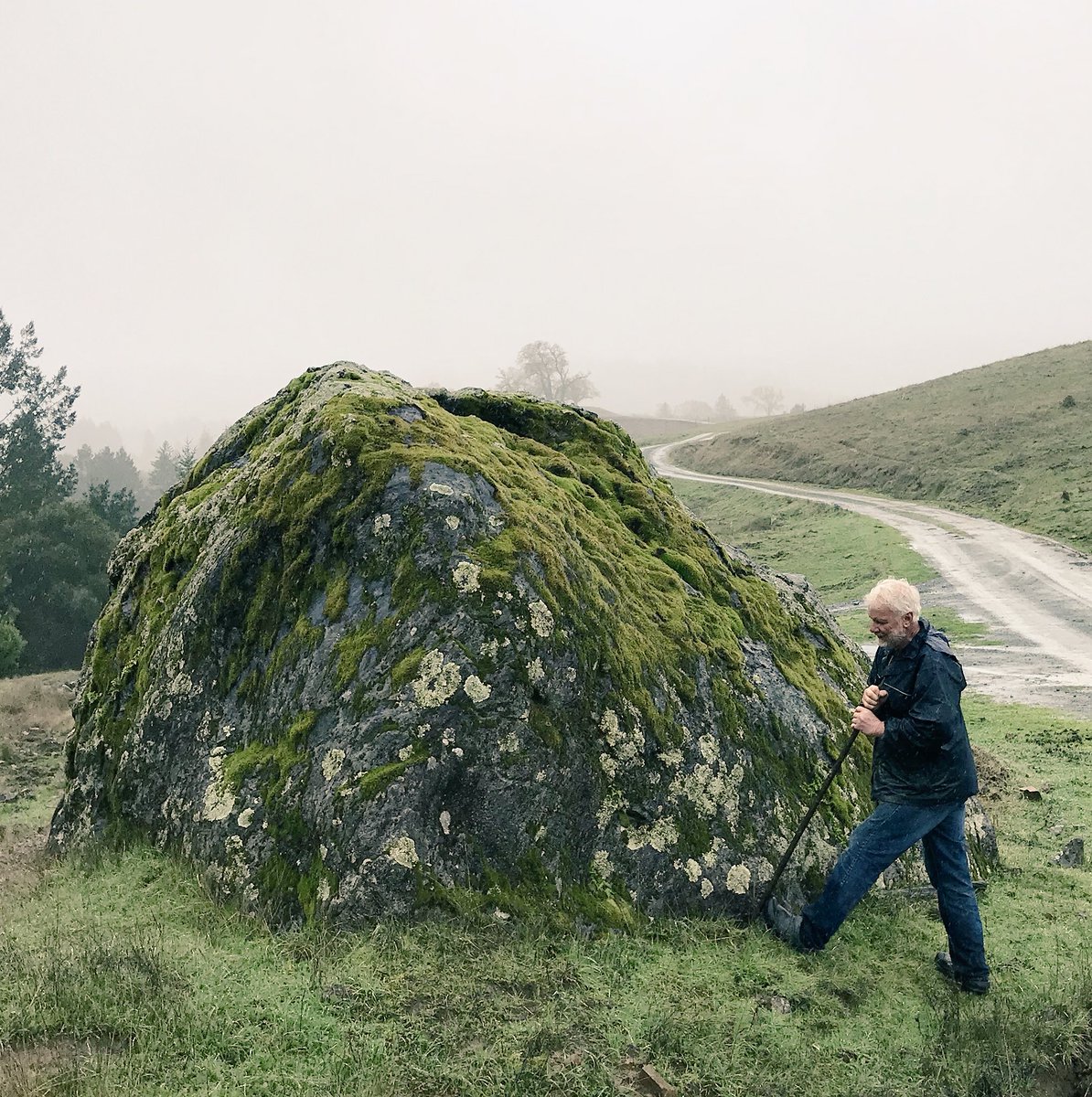
Is there such a thing as an immovable object?

The contradiction contained in the concept of Omnipotence - that of being so powerful that you can actually make a stone so heavy that you can't move it. 

Wednesday, January 17, 2018

Comparing with the book .


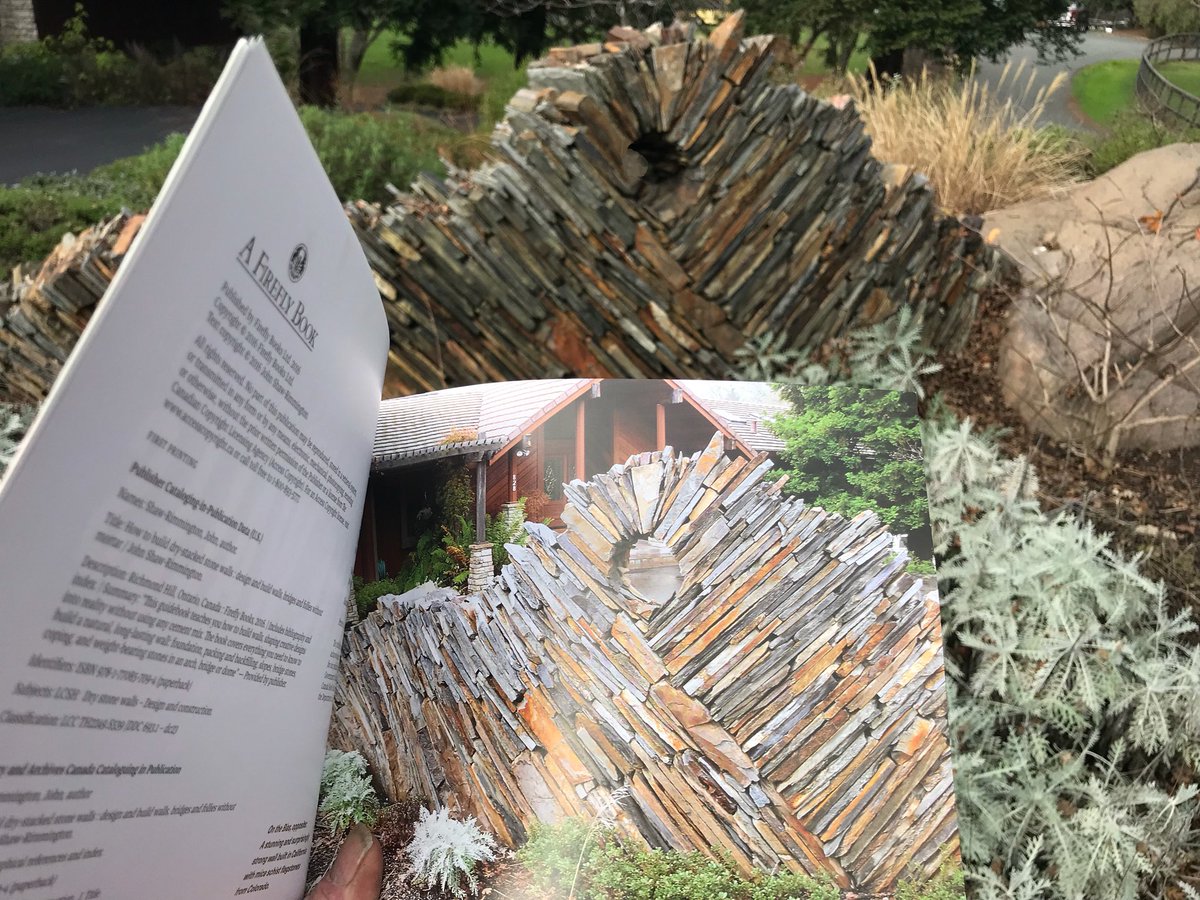
It is often quite rewarding to go back and visit projects we’ve done a long time ago. This one was looking well, with all the young plantings ( seen in the photo in my book) now grown in and framing the small portal installation so nicely. 

Though he had insisted we. Build the small hole in the wall and very much liked it, the client had told us after it was built he wasn’t expecting the opening to last with the frequency of sizmic activity they had in that part of the state.  However the niche piece and all the surrounding walls we built on the property were all very much in tact. Neither the structural integrity of the walls or the colours of the stones had deteriated from what the original photo in HowTo Build Dry Stacked Walls shows .

Thursday, January 11, 2018

Boulder Wall


How do the little stones escape the pull of the boulders? 
There has to be an explosion
But can it be delayed?
Deconstructed?
Like some clever food preparation.
Or
Let the stones be like words 
Describing the main thoughts.
The sentence structure alluding to a central theme that ties the boulders together,
Yet each is mysteriously held in space 
As if unsupported
Floating
The arrangement of 
smaller boat's with their flags (flagstone?) celebrating the arrival of a large ship into the harbour
Not touching.
Excitedly
Circumnavigating.

How many variations can there be ?
Radiant spiral herringbone horizontal vertical
Or what ?
Random? 
Never random!
They must have a sense of something?
Symmetry perhaps.
Or order of an unconscious kind
Ramblings But always with a strong sense of meaning.
Nature rambles for a reason.
Man must understand and not just create meaninglessness. 
Ironically
Repetition is the clue - And the technique. 
Transforming nothingness into something
Beautiful..
Even the
The circle can transition into something other. 
And not just the common spiral,
It can tip toe into all kinds of lacy positive/negative spaces.
Where the axis become a doorway
Into another changeless allusion to infinite mass.
The boulders perch united by distance ,
Held together like a tapestry 
Of ideas trying
Different approaches to the same question -
What are these stones doing here ?
How are they making a statement? 
The artists goal -
How to make them not seem tame or timid or merely set in another clumsy installation
Simply put

What is a bolder wall ?

Wednesday, January 10, 2018

Thinking with clay.


As a dry stone waller I find modelling clay (plastercene) is the most creative block you can have.


Don't just sit around all day like a lump of clay.  Start thinking with a clump of plastercene in your hands and watch the creative ideas in stone start to materialize.


Monday, January 8, 2018

A great article in the Yorkshire Post

editorial image


William Noble has always had one foot in the past. 

He comes from a long line of master craftsmen and has spent a lifetime keeping the art of dry stone walling alive. 

However, the 73-year-old has recently embarked on a mission to preserve another of the county’s ancient traditions. Along with his son and daughter, Cuthbert and Lydia, who are also dry stone wallers, Mr Noble has recorded an album of Yorkshire folk songs whose roots can be traced back centuries. 

He said: “I grew up in the Holme Valley in the 1950s and back then everyone knew the words to a dozen or more traditional tunes. From quite an early age I would go to folk festivals and I learnt so much just by listening to the various musicians and singers. 

“Folk music has a story to tell about the landscape and the people who live there. It tells us about our past and over the last few years it occurred to me that some of the songs I first learnt as a child would be unfamiliar to many youngsters now.

“In another few years there might not be anyone to pass the lyrics and music down the generations and that’s when I had the idea of recording them for posterity. Once I had decided that, I knew I wanted Lydia and Cuthbert to be involved. 

“Not only are they blessed with lovely voices, but folk singing is about the family and it felt right that the three of us embark on this project together.” 

There are a dozen songs on the CD, including Watter Rattle, The Outlandish Night, Boys of Marsden and The Brown Hare at Whitebrook, and Mr Noble hopes that it will prove to people that there is more to Yorkshire’s folk heritage than On Ilkla Moor Baht’At. 

He added: “This county is blessed with a rich heritage of traditional music, some of which dates back to the 1600s. The Brown Hare at Whitebrook is probably my favourite – it has a great story and a great tune which is everything a good folk song should be. 

“It’s about a group of huntsmen setting off to catch their prey, but they return empty handed. Like the very best folk songs it tells a great story. 

“During the 1970s, I would regularly sing at the hunt suppers of the Holme Valley Beagles, but while I might have been born and bred in the countryside I hate the idea of anything being killed. There is something that appeals about the hare getting away for once.” 

The CD, Gritstone For Me, which takes its name from one of the tracks, is now available for both sale and download and if his singing career is as successful as his dry stone walling, Mr Noble could well be heading for the big time. 

“People look at a dry stone wall and think, ‘that must be easy to do’, but it isn’t. There are certain techniques you can teach people, but to be really good you just have to have an eye for it. 

“When I was younger I won lots of competitions for dry stone walling. It is an art form and it is enjoying a bit of a renaissance. When I was first starting out, the bulk of the work was repairing farm walls, but now it’s much more design-led. 

“I still keep my hand in, but it’s nice to have passed the mantel over to my son and daughter. Lydia recently won a top award for shelter she built in the shape of a beehive, so I have no doubt the family craft is in safe hands.”

Read more at: https://www.yorkshirepost.co.uk/news/ballads-of-the-dry-stone-wallers-1-8944388

Sunday, January 7, 2018

Obstacles to progress?


I’m reading a new book, Sapiens, right now, by Yuval Norah Harari. In it, he totally questions whether the 'progress' our species has made in the last 10000 years has been in anyway advantageous or constructive or logical, from any sociological or historical perspective. The change from a hunter gather lifestyle to agricultural was the biggest mistake of all time, apparently. 

We gave up the pleasant and nutritionally varied and physically beneficial nomadic occupation of searching out food, for a back breaking, toxic and monotonous farm economy and the inevitable explosion of cities and factories, overpopulation and a modern lifestyle full of stressful meaninglessness. Sapiens became the losers, unknowingly outwitted and controlled by a few clever plants – wheat, corn, rice and potatoes.

Here is a paragraph about about wheat's rise to importance and how millions of humans are more or less compelled to eat it to stay alive rather than enjoy a much more diverse variety of edible plants readily available to our species on this  planet, before it was domesticated.

'According to the basic evolutionary criteria of survival and reproduction, wheat has become one of the most successful plants in the history of the earth. In areas such as the Great Plains of North America, where not a single wheat stalk grew 10,000 years ago, you can today walk for hundreds upon hundreds of kilometres without encountering any other plant. Worldwide, wheat covers about 2.25 million square kilometres of the globe’s surface, almost  ten times the size of Britain. How did this grass turn from insignificant to ubiquitous? '

'Wheat did it by manipulating Homo sapiens to its advantage. This ape had been living a fairly comfortable life hunting and gathering until about 10,000 years ago, but then began to invest more and more effort in cultivating wheat. Within a couple of millennia, humans in many parts of the world were doing little from dawn to dusk other than taking care of wheat plants. It wasn’t easy. Wheat demanded a lot of them. Wheat didn’t like rocks and pebbles, so Sapiens broke their backs clearing fields. Wheat didn’t like sharing its space, water and nutrients with other plants, so men and women laboured long days weeding under the scorching sun. Wheat got sick, so Sapiens had to keep a watch out for worms and blight. Wheat was defenceless against other organisms that liked to eat it, from rabbits to locust swarms, so the farmers had to guard and protect it. Wheat was thirsty, so humans lugged water from springs and streams to water it. Its hunger even impelled Sapiens to collect animal faeces to nourish the ground in which wheat grew. The body of Homo Sapiens had not evolved for such tasks. It was adapted to climbing apple trees and running after gazelles, not to clearing rocks and carrying water buckets. Human spines, knees, necks and arches paid the price.’

So if wheat doesn’t like them, then it stands to reason that farmers are not going to like rocks either.

Reluctantly, and with much cursing I imagine, the huge boulders and rocks were tugged and shoved off to the sides of the hardscrabble fields that needed to be cleared long ago, so that food could be grown on the land

By contrast, hunting and gathering for stones (from fields, forests, shorelines and rocky outcroppings) for many of us dry stone wallers, is something we usually enjoy.

Saturday, January 6, 2018

Returning to a 'Hunter Gatherer' lifestyle. A true story.


Back when we were on the farm, before I was walling full time, we had cows. I slaved day after day bailing hay stacking it, working 50 acres, planting pasture seed, fixing fences and carrying water and getting feed to them.

Then one particularly gruelling hot day of bailing hay, I wiped my sweaty brow and squinting through the dust and humidity, looked up over at my cows grazing contently, and thought, hay, wait a minute!  All you cows do is lounge around watching me while I struggle to make sure you have enough food for the winter.

After ten intense years on the land, it seemed the joy of farming had somehow started to dwindle. I began to focus my attention on a far less agricultural pursuit, that of learning what to do with all the rocks I had in my fields. 

Farm equipment and rocks don't go together. They smash up on them and get broken all the time. That's why anyone who farms hates rocks and wants to get rid of them. 

But I didn't hate them. I enjoyed collecting rocks and got pleasure out of carefully stacking them in piles around the fields .

I realized that hot August day, dreading having 20 more acres of hay to bring in before it got ruined by the rain forecast for the next day, that I was not cut out to be a farmer. 

I didn't know it at the time but I was beginning a personal reverse journey in time, sociologically . In terms of the evolutionary path of the Homo Sapien species, I was about to  discover what being a hunter gather was all about. And, I was bailing from ever having to do anymore haying.  I had decided to become a dry stone waller.


... to be continued


Friday, January 5, 2018

Caption


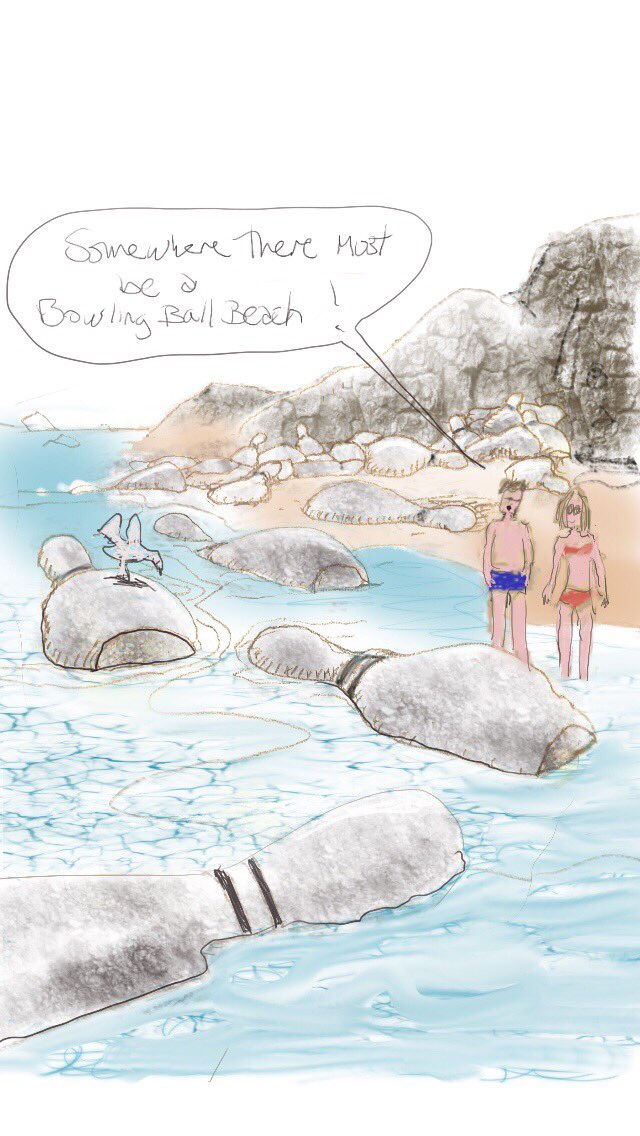
Been doing lots of drawing on my iPad this week. I need a caption for this one.

Thursday, January 4, 2018

Seeing what we are looking at.


Reading How-to books about painting and drawing, they always tell you to paint what you see, not what you know.
So I try, but
It’s hard to turn your mind off and see something, especially something familiar, without turning to formulated techniques and standard approaches as to how to paint things.

But then, we are not looking.
We are imposing our preconceived notions. There is nothing new. At best we are only reinforcing conventional ways of seeing and painting
To really offer artistic insight we have to create outside the box, which starts with appreciating that there IS an outside to the box. 
And then we have to risk trusting what we see there.
Rather than rely on accepted depictions, we commit time and effort to discovering less familiar interpretations of the thing we see in front of us.

How does this apply to the world of stone ?
Maybe all it means is not loosing sight of what working in stone is all about.
Technique should be a means to allow others to see what it is that we see in the material and why it is we are passionate about it, not a formula or a mindless fabrication.
It should involve an element of risk, and even desperation, if we are really probing the material’s potential.

If we can use stone as we see it, we won’t let it become standardized.
We won’t create boxy stereotypes, nor will we allow ourselves to become too familiar with it.
We will avoid taking the accepted route as much as possible and explore approaches that make for vitality and creative individuality, appropriate to the wide variety of shapes, textures and sizes this wonderful material comes in.
We have to see before we make. 
We have to SEE stone.

And we as professionals, have to be humble enough to not think we 'know' what we see yet.


Wednesday, January 3, 2018

Our Walls


A music video I made showing sample photos taken between 2003-2012 of Irish, English, and Scottish walls, and lots of Canadian ones built by me, my students and members of what was then called Dry Stone Wall Association of Canada, but now is Dry Stone Walling Across Canada.

Words and music by Norman Haddow's friend Tom Ramage