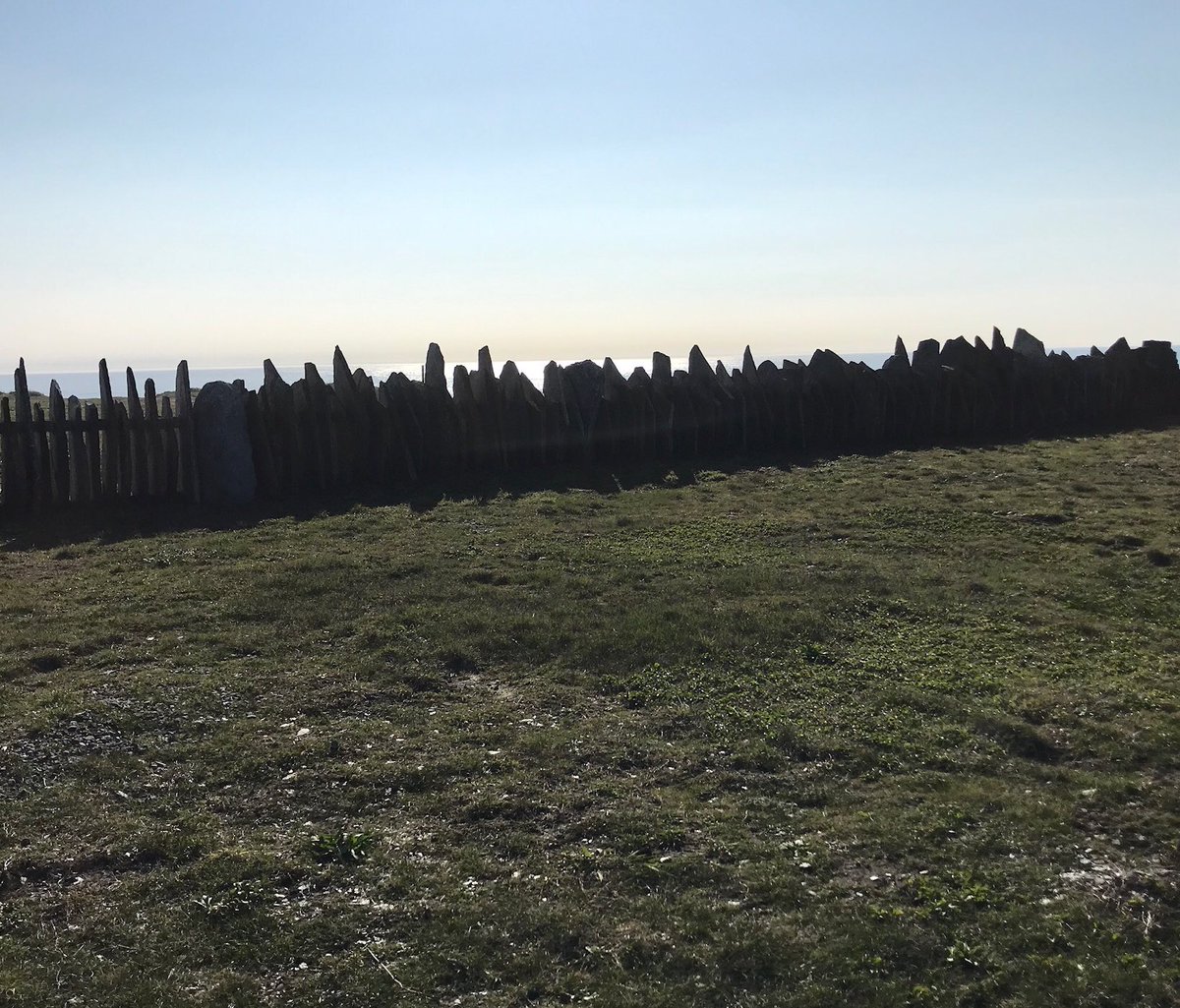
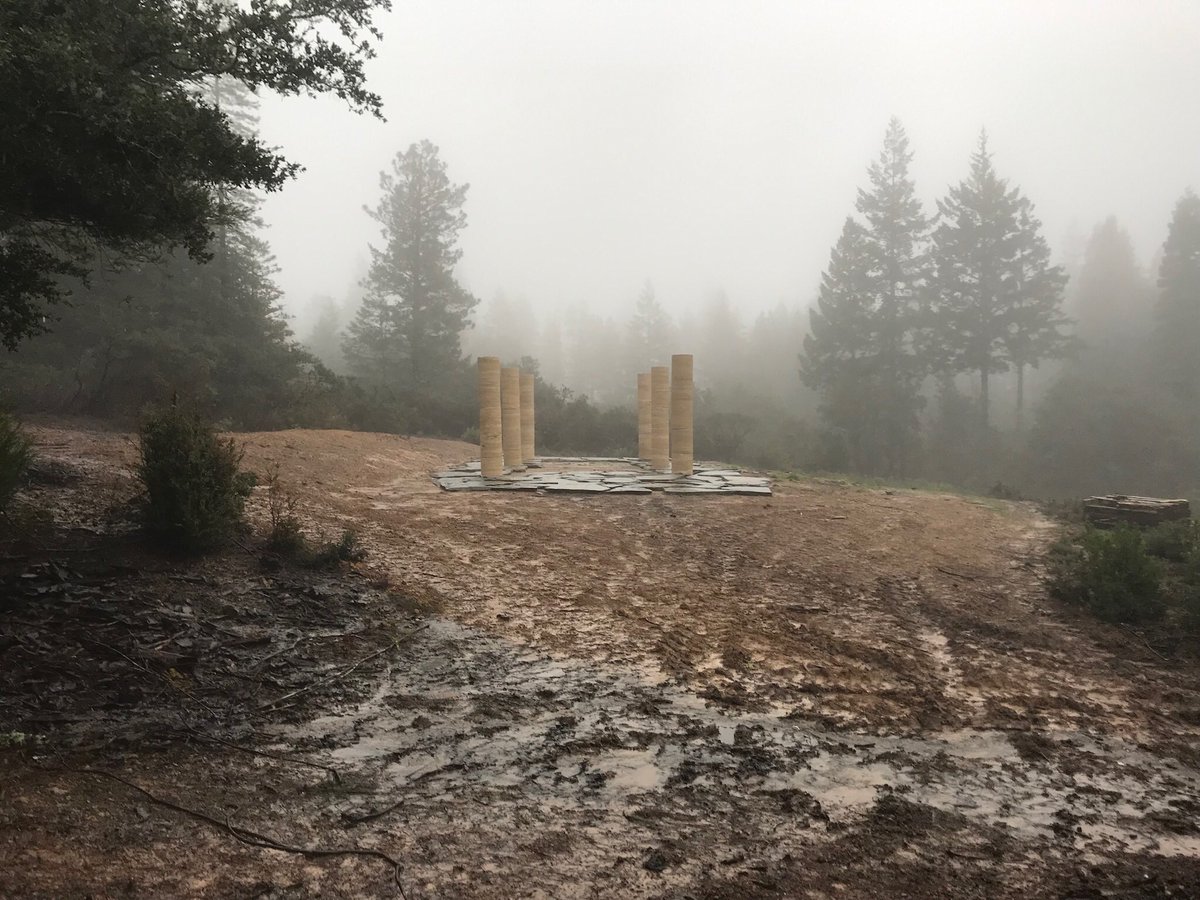
Friday, February 22, 2019

Wednesday, February 20, 2019

What stones are like.


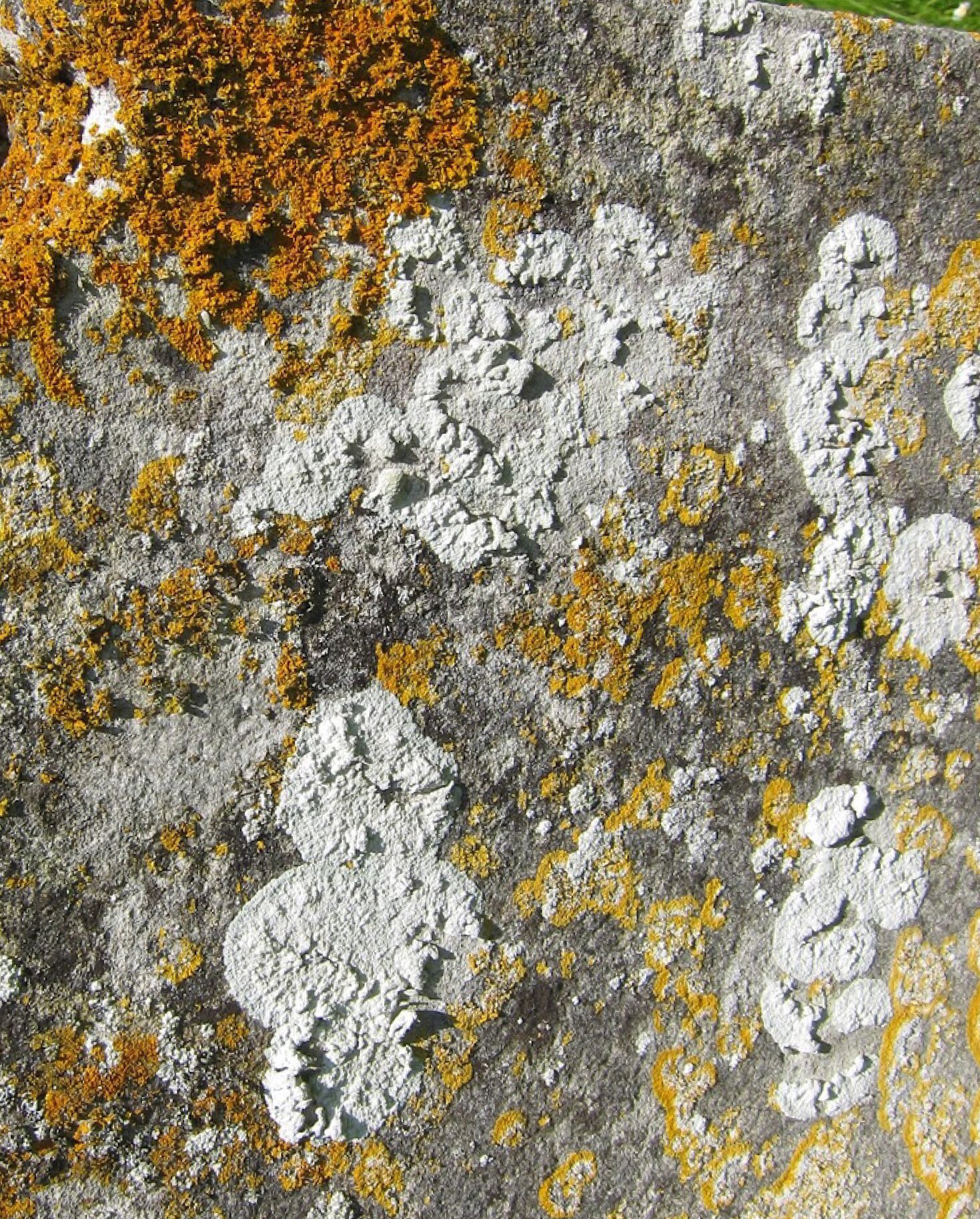
The colourful pattern of living material that grows on stone is ‘lichen-elegy’. It remembers for us the merits of stones we might have long forgotten.

Tuesday, February 19, 2019

Monday, February 18, 2019

Time Lapsing Lichen


Imagine if you had the time and were patient enough to watch lichen growing on rocks.


Sunday, February 17, 2019

Saturday, February 16, 2019

Flat to the fireplace


Think about it. If you we’re thinking about remounting that ‘flat to the wall’ back up there, after youve had that newly-built,‘real stone’ fireplace put in, what’s the likelihood you’d find anything better to watch on the screen anyway, than the beautiful stonework behind it? Okay,you might need to see some antlers on the TV too.

Friday, February 15, 2019

As high as we’ve gone so far


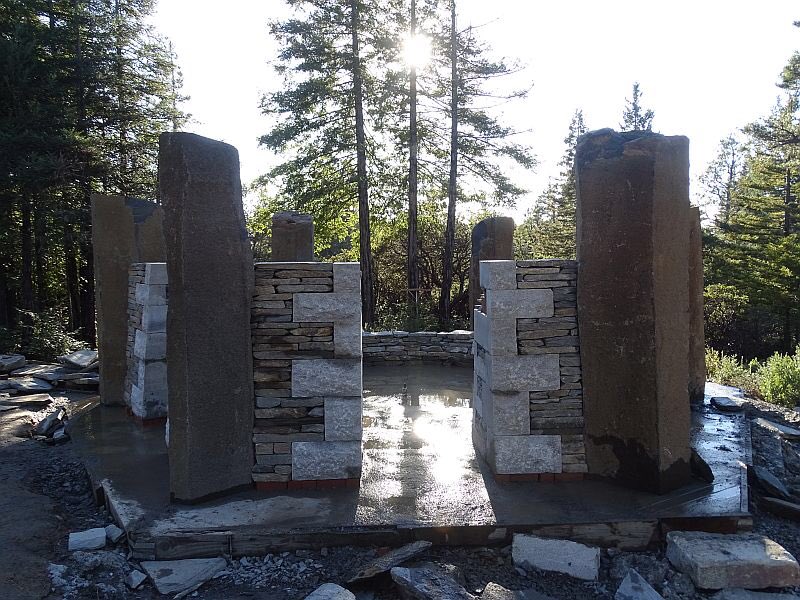
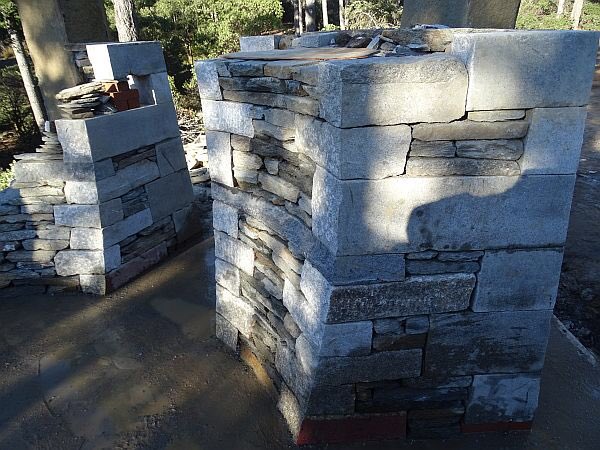
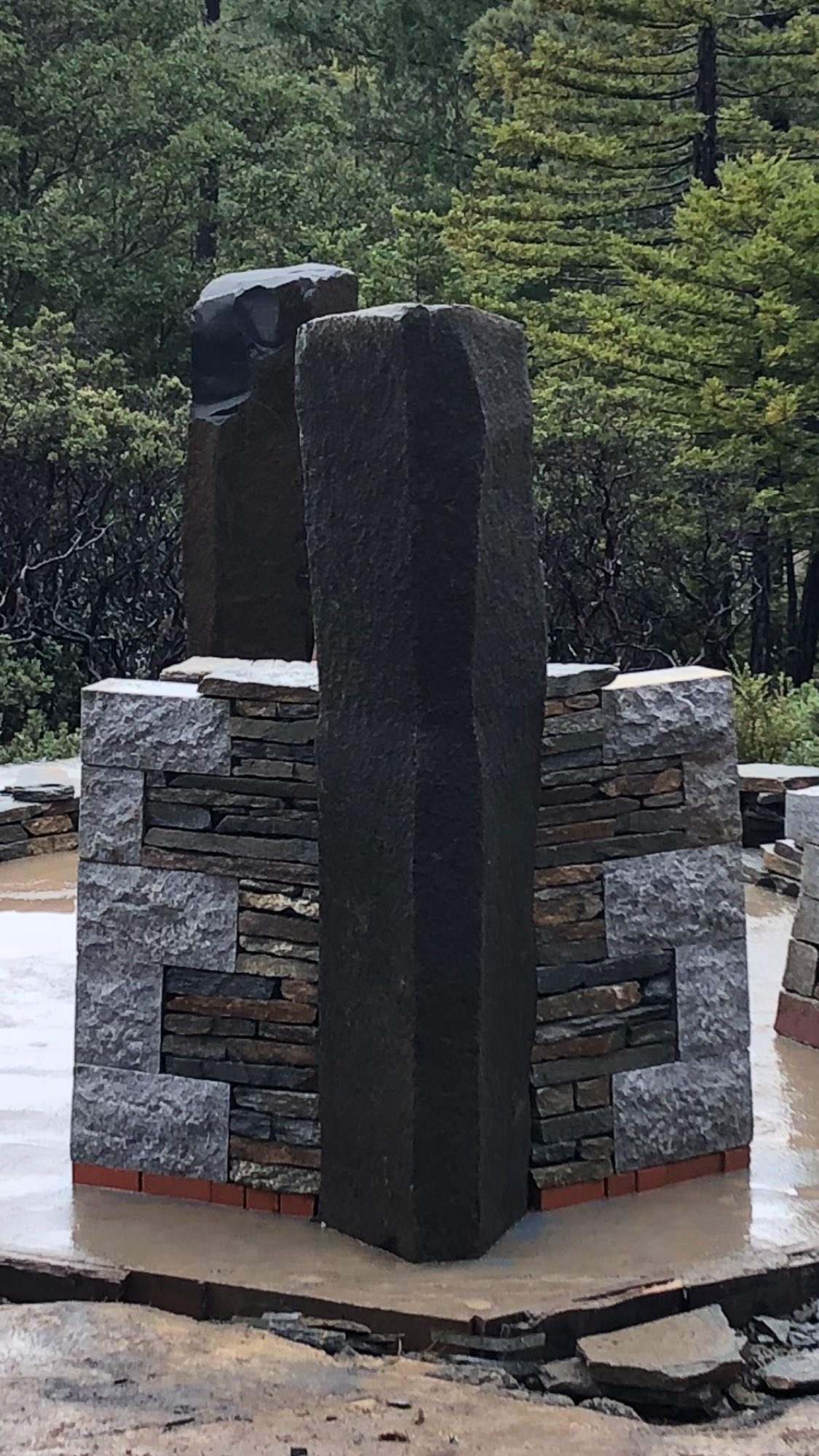
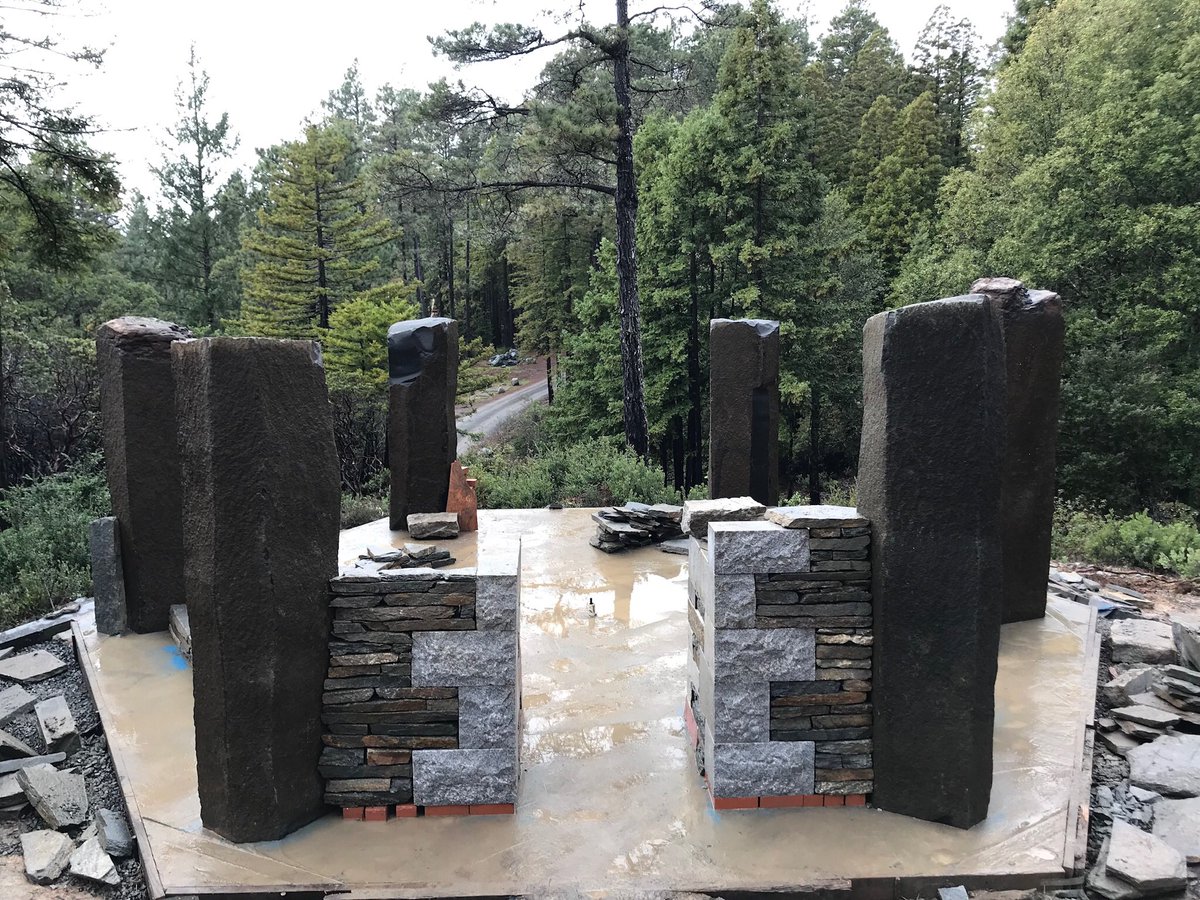
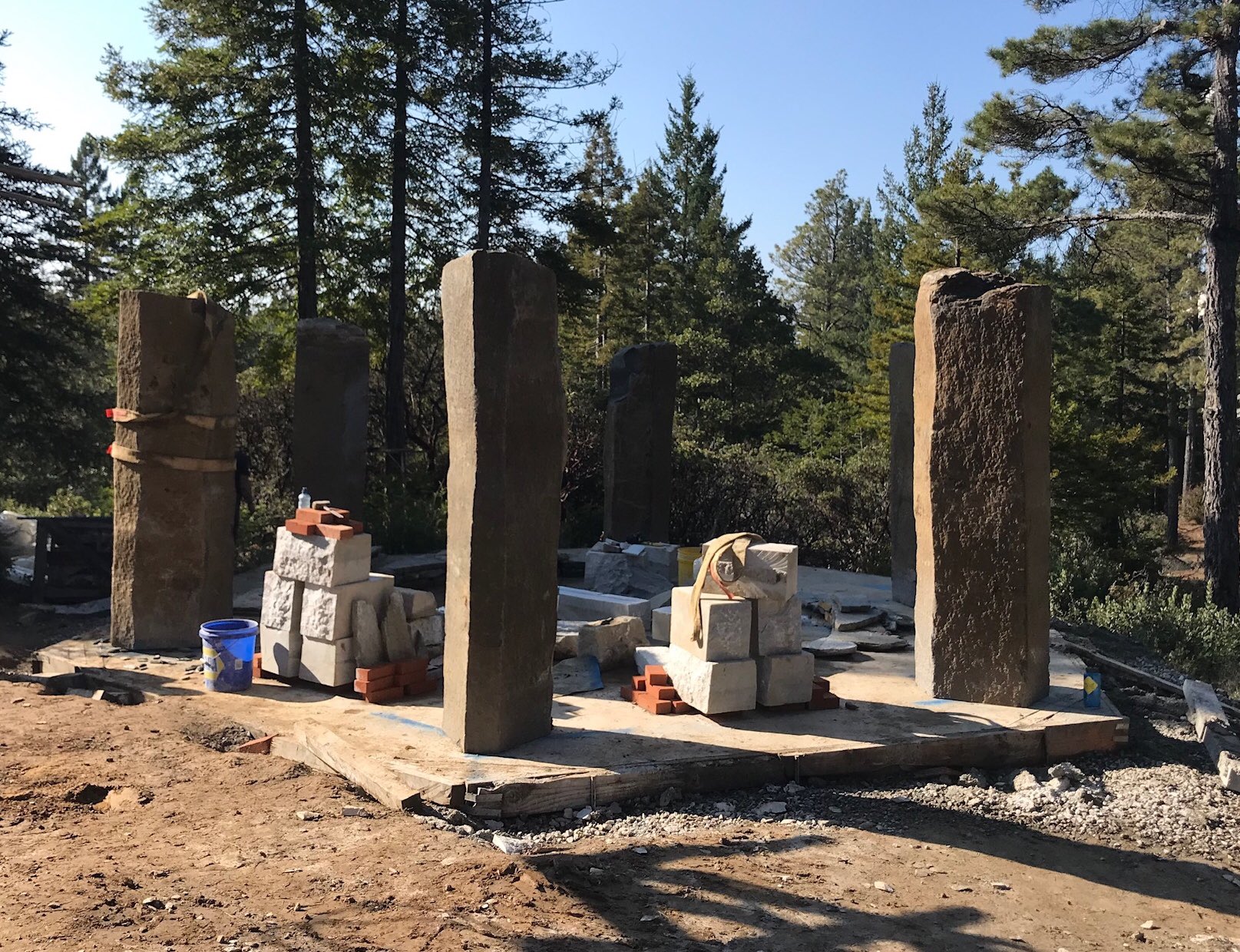
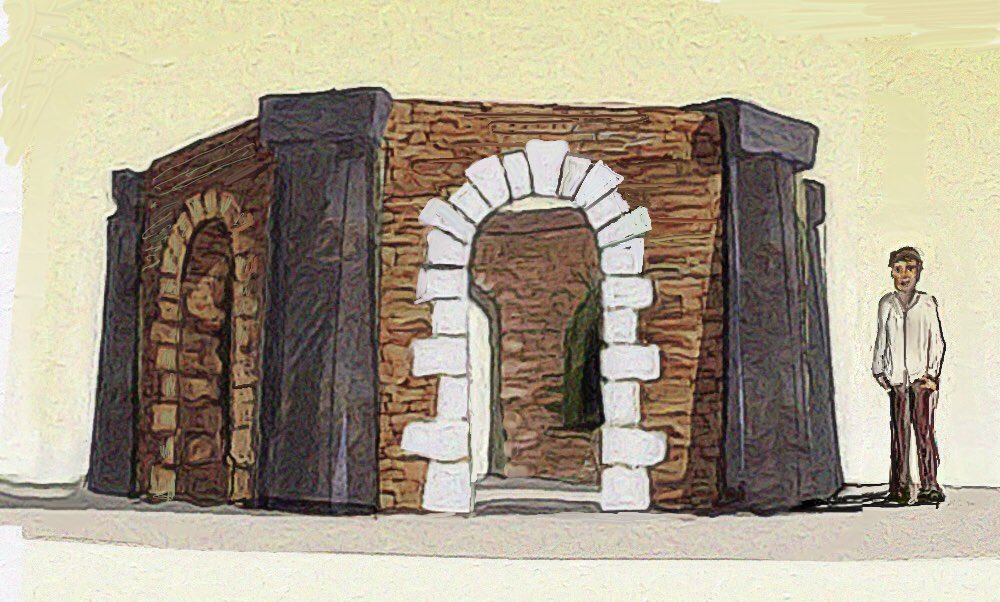
Here’s the outside or the hexagonal temple (hexatemple) so far.
Below shows the inside scoop.


Photos by Sean Adcock

Thursday, February 14, 2019

I ❤️ Rocks


Big ones, small ones
Fat ones, tall ones

Heavy ones, light ones
Dull ones, bright ones 

Weighty rocks, hard to lift
Pebbly ones, that fingers sift

Flat ones and ugly ones  
Smooth ones and rugged ones

Square ones, round ones
Tossed ones, found ones

Faceless or faceted'
Time worn ones, or just blasted

Polished ones and precious stones
Fosiled ones with tiny bones

Layered ones with veins and stripes
Building stones of different types

Perfect ones for building walls
Or awkward ones to use at all  

Boulders stretching out for many miles
or gathered stones in tiny piles

Always do I think about 'em
And what 
would I do 
without them.

There'd be no shores, no mountain tops
No cliffs, no canyons, no stone outcrops
No quarry yards with tons of stone
Just emptiness, a rockless home 

There'd be no stuff to make concrete
To build our buildings and our streets
No beach with smooth stones fun to find
No gems or minerals to be mined
Fields and forests would all be bare
No lichen covered moss rocks there

How do I love rocks? Let me count the ways.
I love them to their depth and breadth and height
A stone can reach where nought else might
For they end up being such ideal shapes.
I love them in great Teutonic plates
Most quiet forms, that speak their wisdom thus
I love them freely, and love how they love us
I love them purely, in tumbled mass
I love them in the way they last and last
In my old griefs, and with my childhood's faith.
I love them with a love I seemed to lose
With my hurried ways---and misspent youth
I love them in their simple life --- and, if they choose,
I shall but somehow put some to even better use.

Tuesday, February 12, 2019

Looking round the Corner


Focusing on the hexagonal corner being constructed (between two future arches of the structure, yet to be built) it is clear the contrast of not just the materials, but how they’re used, achieves a very pleasing visual. The formal granite quoins are stately, somewhat impersonal and have a kind of monumental poise. The basalt column with its unusual length and apparent natural geometry is the hexagonal antithesis of the granite cubes. The rhythm and the rugged horizontal pattern of the mica schist softens and humanizes the two. 
I’m just hoping the balance can be maintained as we get higher and likely have to add a fourth material to the mix

Monday, February 11, 2019

Taking Shape


We start to fill in the shape of the dry stone hexagonal structure now with quoins we’ve dressed from reclaimed San Francisco granite curbs, inter-fingered with Sydney Peak mica schist flagstone.

Sunday, February 10, 2019

stonewart


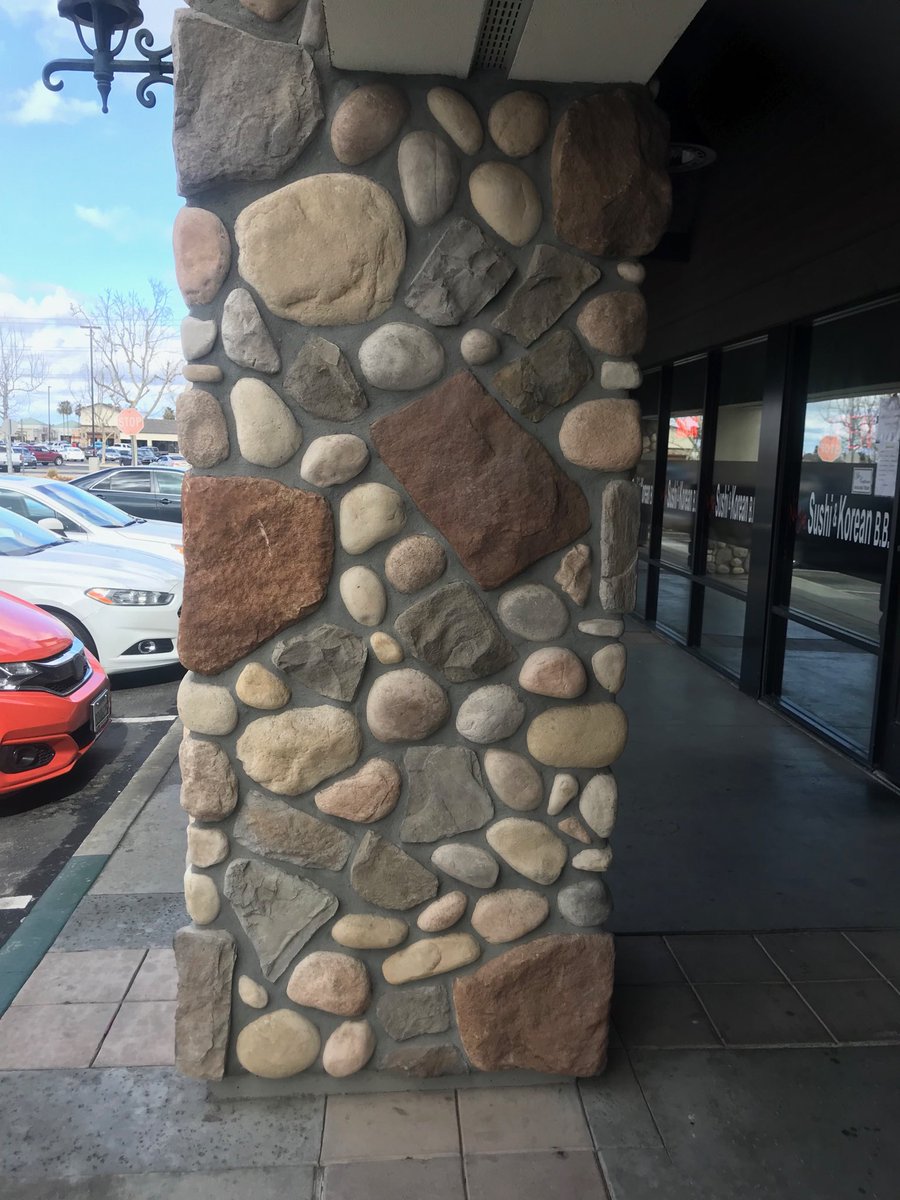
Stonewart seems like a pretty good name for this type of appalling approach to working with stone.  You're supposed to work with stone, not against it. These stones were crying out not to be used this way. The fact that they were trapped in this column should have been a warning to us. We were trying out a new place in town to have lunch. The food was awful there. I think this is just another example of how the universe is always trying to make contact with us and send helpful clues all along the way, if we just pay attention.


Saturday, February 9, 2019

Basalt of the earth men.


The basalt columns are now lowered into position. These will be the six corners of the dry stacked hexagon structure. (The granite quoins which were precisely stacked in position, had to be disassembled and neatly stacked to the sides so as not be in the way of maneuvering in the basalt columns.)


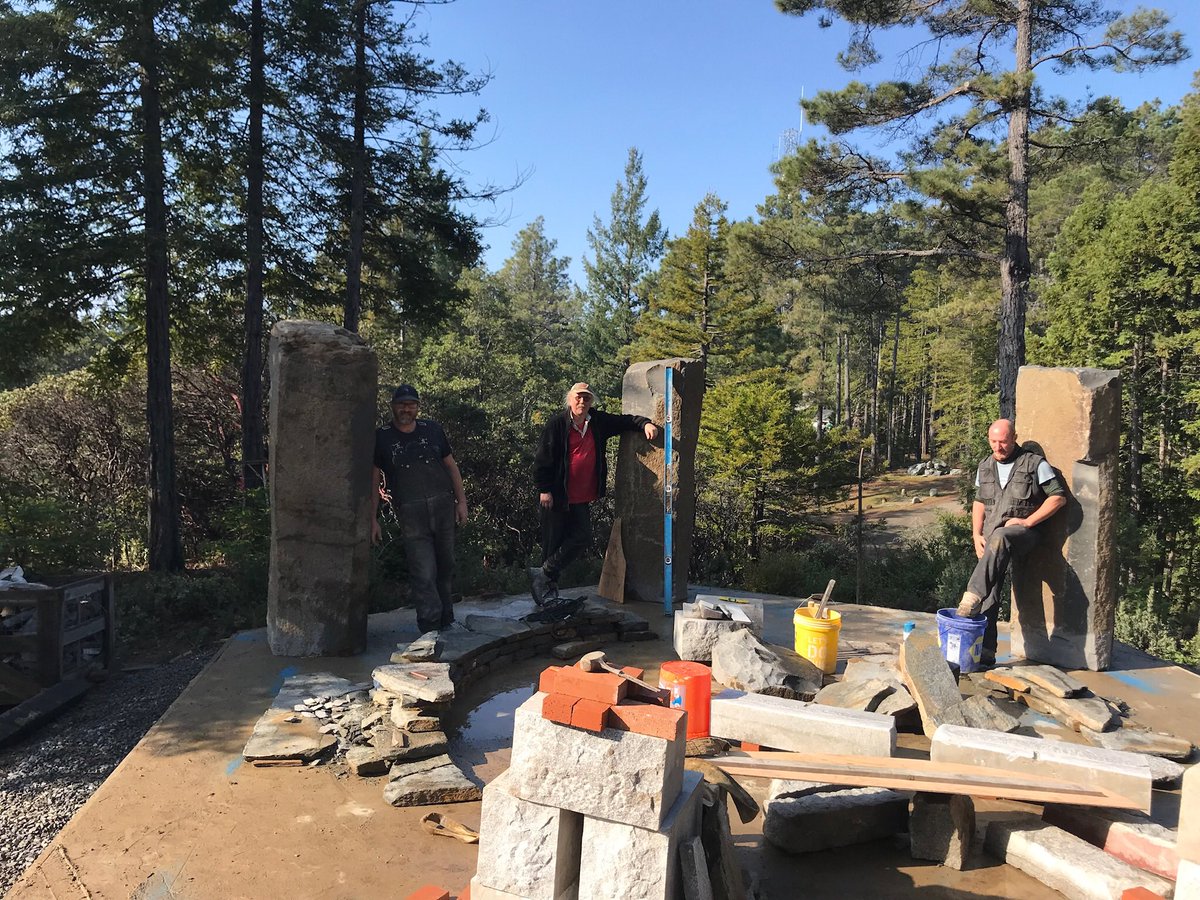
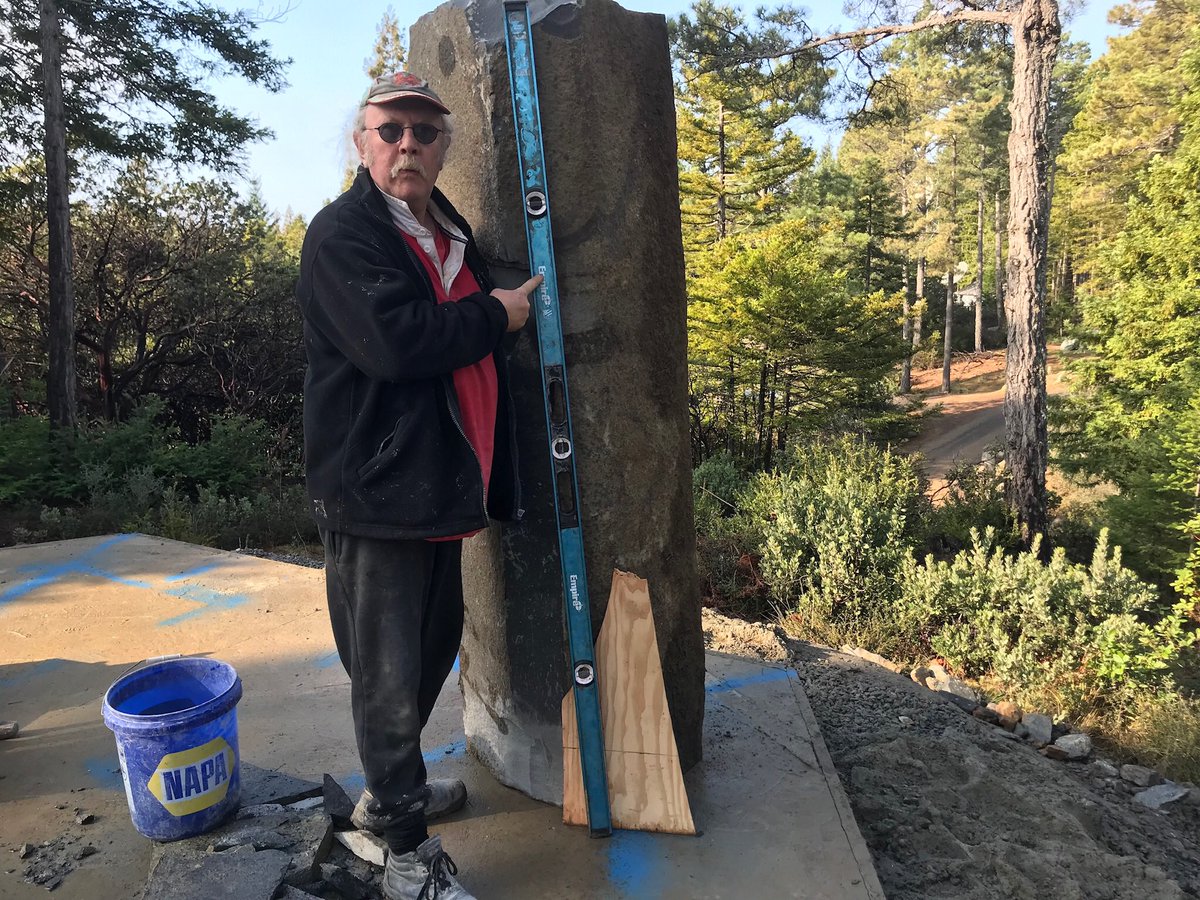
The proper measuring of the columns so that the bottoms were cut square was essential. Then each column had to be skilfully rigged with sturdy straps and lifted into place in its proper orientation. These silent sentry columns final placement depended on a crack team of rock stars. Mark R, Sean A and Shawn K. The Gradall operated by Peter M. did the necessary usual amazingly precise lifts.


Sean A complains a lot.  Please caption this one.


Friday, February 8, 2019

Moving in


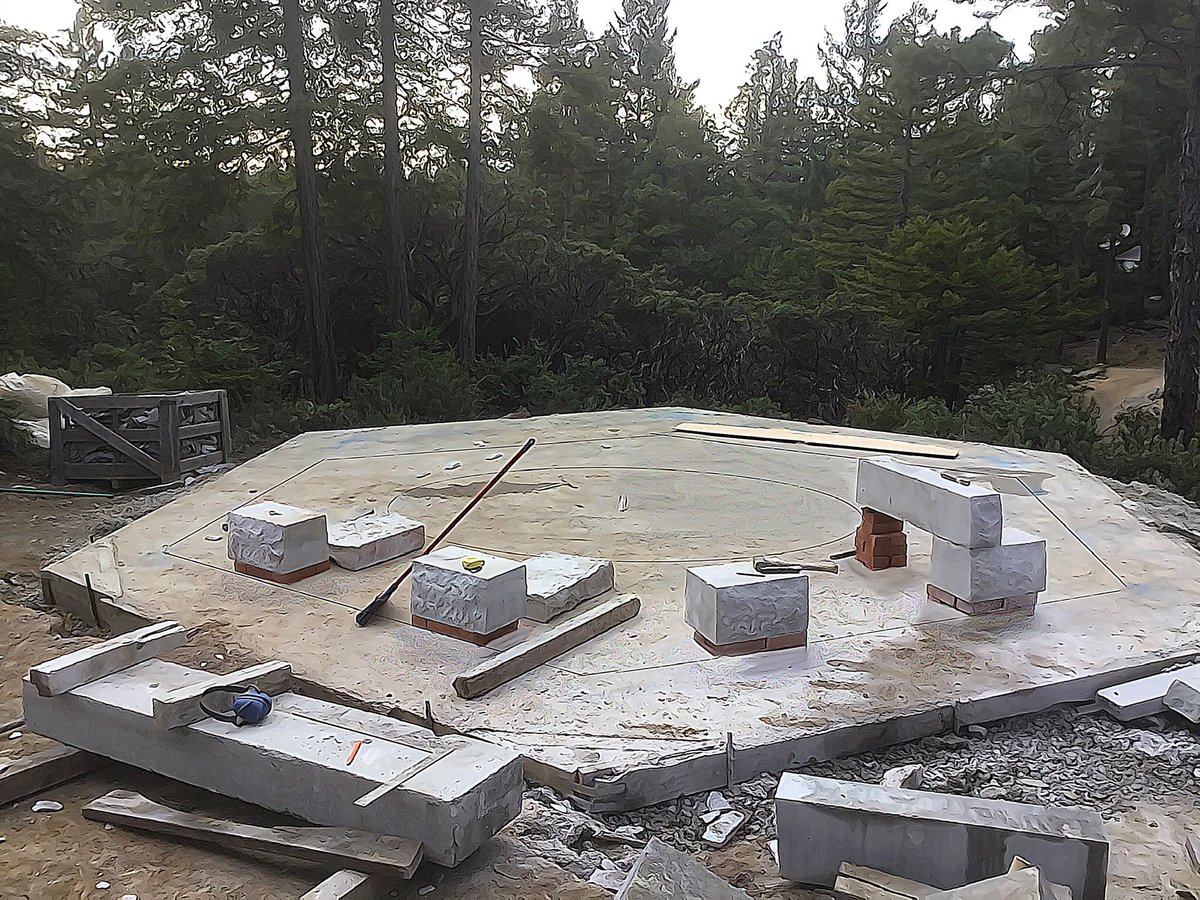
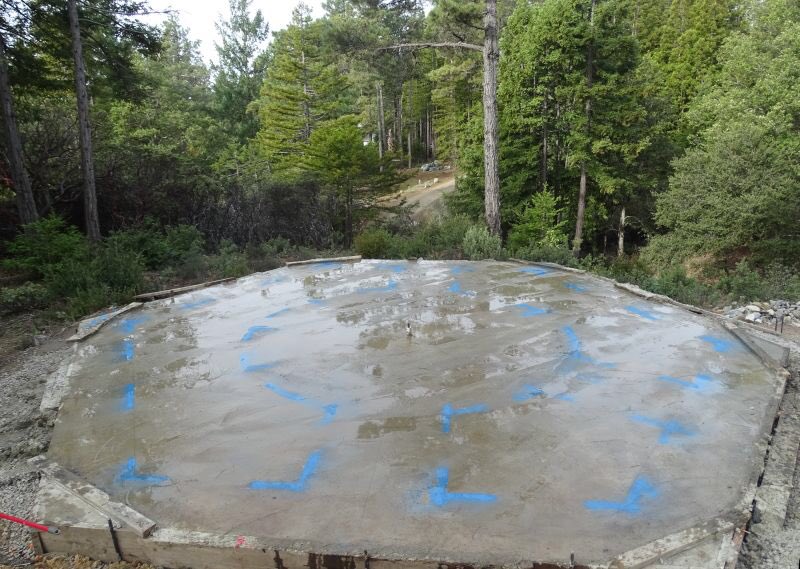
After the concrete is cured enough, we can move on to the pad and measure out the dimensions and permanently scratch in the footprint of the structure’s hexagon shape with a nail. 
Next, the first of the granite quoins we’ve cut and dressed are ceremoniously moved into place, either side of the arch openings that we’ve marked out. 
This is a pretty auspicious occasion for these chunky fellas. Who can blame them for looking so excited. Because really,  there isn’t a newly shaped building stone I know of that wouldn’t love to have his very own pad.

Thursday, February 7, 2019

Hexa going going gone


There are times even in dry stone walling when pouring a pad is the best way to go. So that’s the way we’ve gone We decided that the arched hexagonal structure I had designed previously for another area of the property needed even more of a level solid base of concrete now so as not to leave any possibility of the ground shifting .


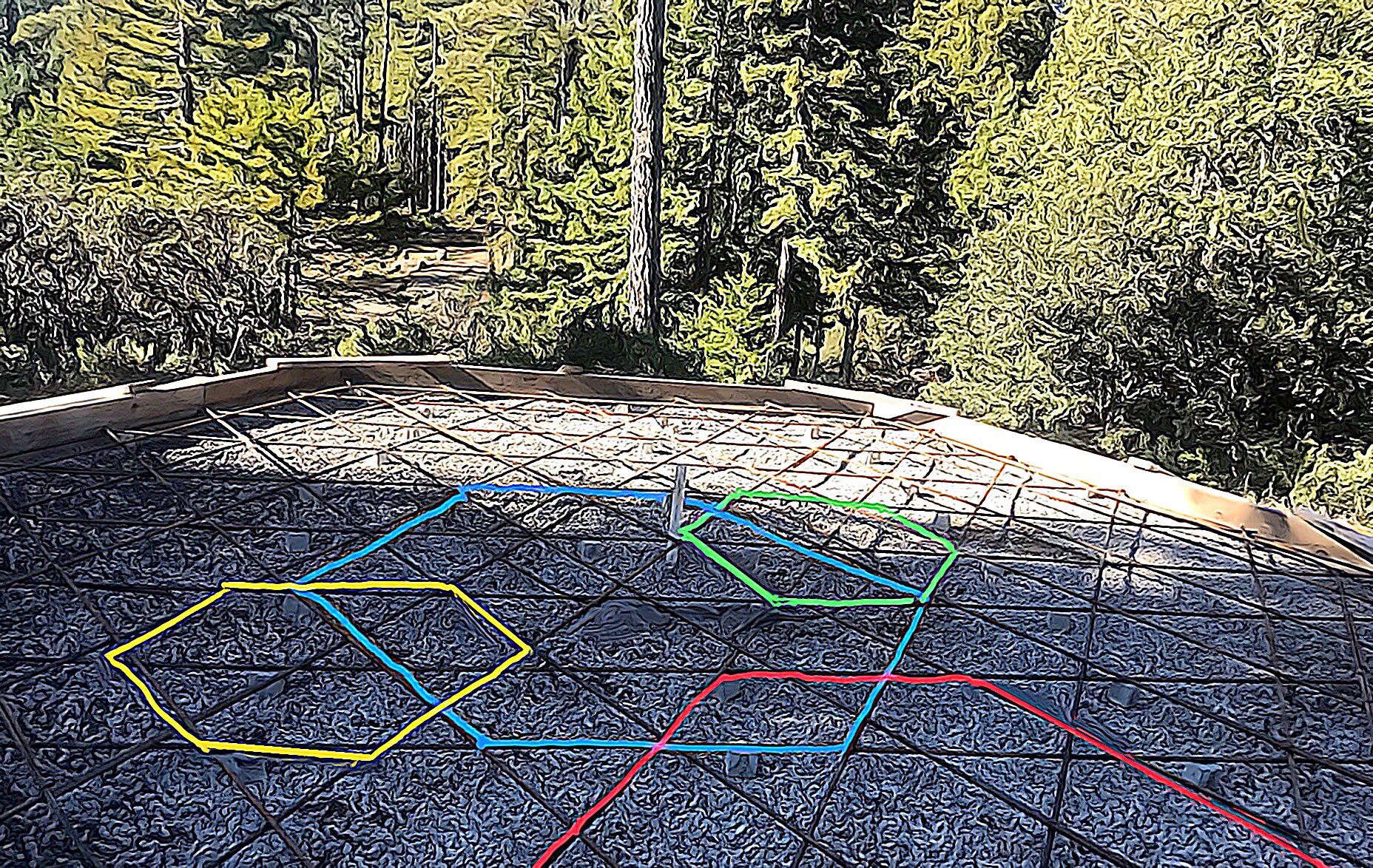
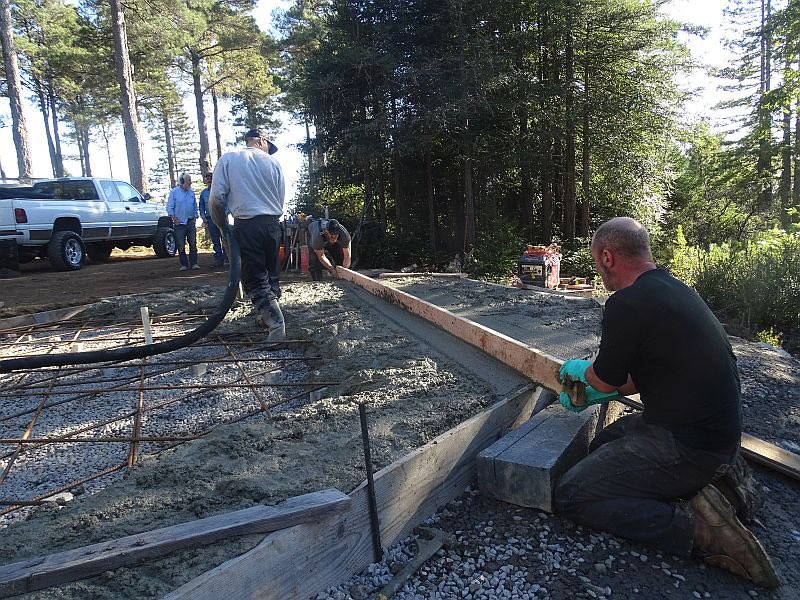
We formed the sides, compacted the middle, and then, cleverly reinforcing the hexagon theme with an appropriately configured pattern of rebar, we filled the entire shape with 9 inches of concrete, which ended up being the whole nine yards. (actually, more like eleven)
After leveling and smoothing the pad, we agreed to wait five days before starting to build.
Finally, after days of planning and measuring,and much back aching labour, (and many hosings down of the pad to ensure proper curing of the concrete) the hexagram project was on its way.
I’m delighted to tell you, the hexa’s gone well so far.


Wednesday, February 6, 2019

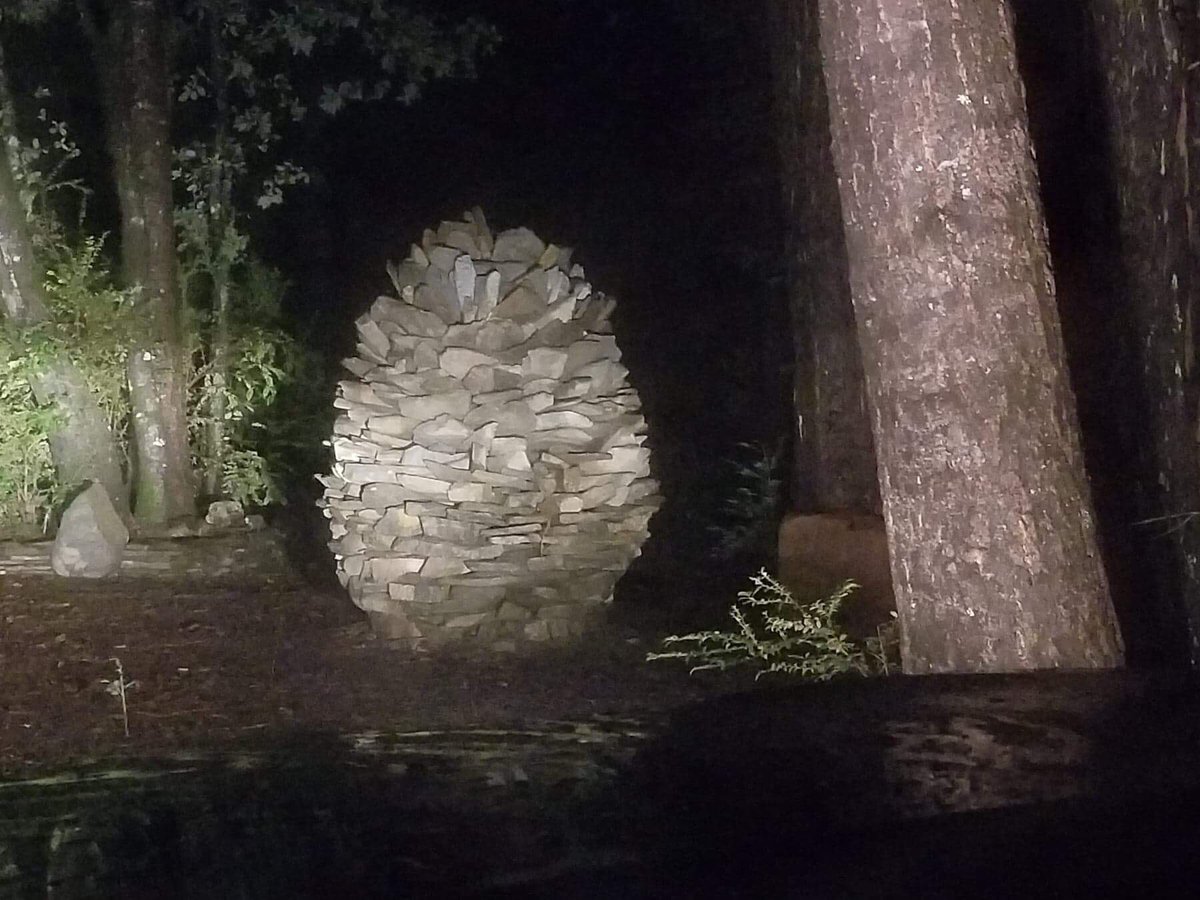
Watch out for pine cones’


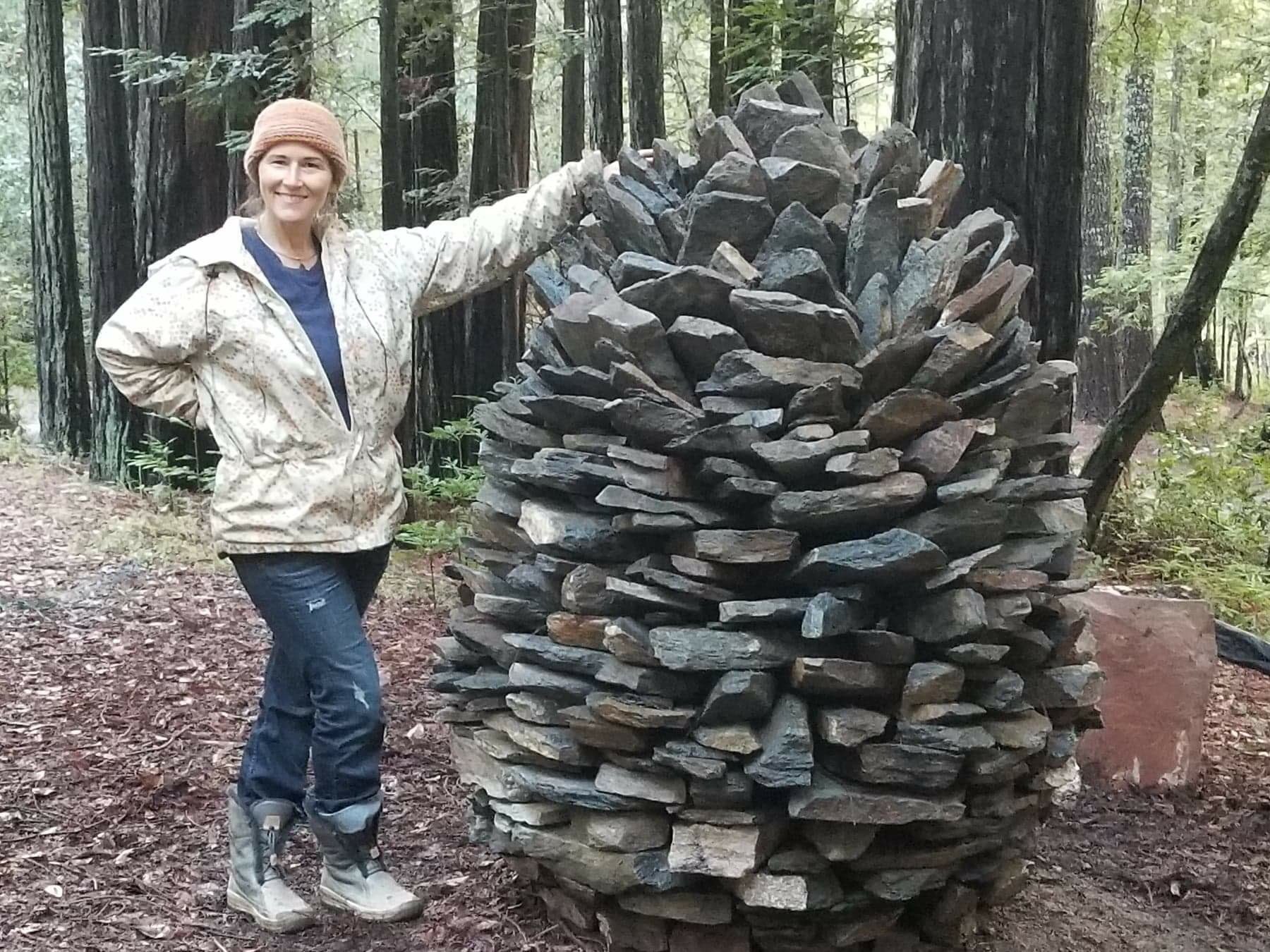
It has that kind of ‘stoned-pine-cone-in-the-headlights’ kind of look.

Tuesday, February 5, 2019

Seed of an idea.


‘PineStone‘  A selection of reclaimed stones, large flakes of lovely Bouquet Canyon mica schist flagstone, gave me the seed of an idea that the material might be coaxed into the likeness of a large pine cone, like the ones we keep coming across here in California. The installation ended up being a rather random matrix of cone/stone petals. 
Sappy idea ? 
Anyway. Thanks Amanda Means Stinson for your help with finishing this piece.

Monday, February 4, 2019

What the hexagram is it?


This week we are starting to get more of a rough idea of what we’re doing.

Sunday, February 3, 2019

Pondering Pine


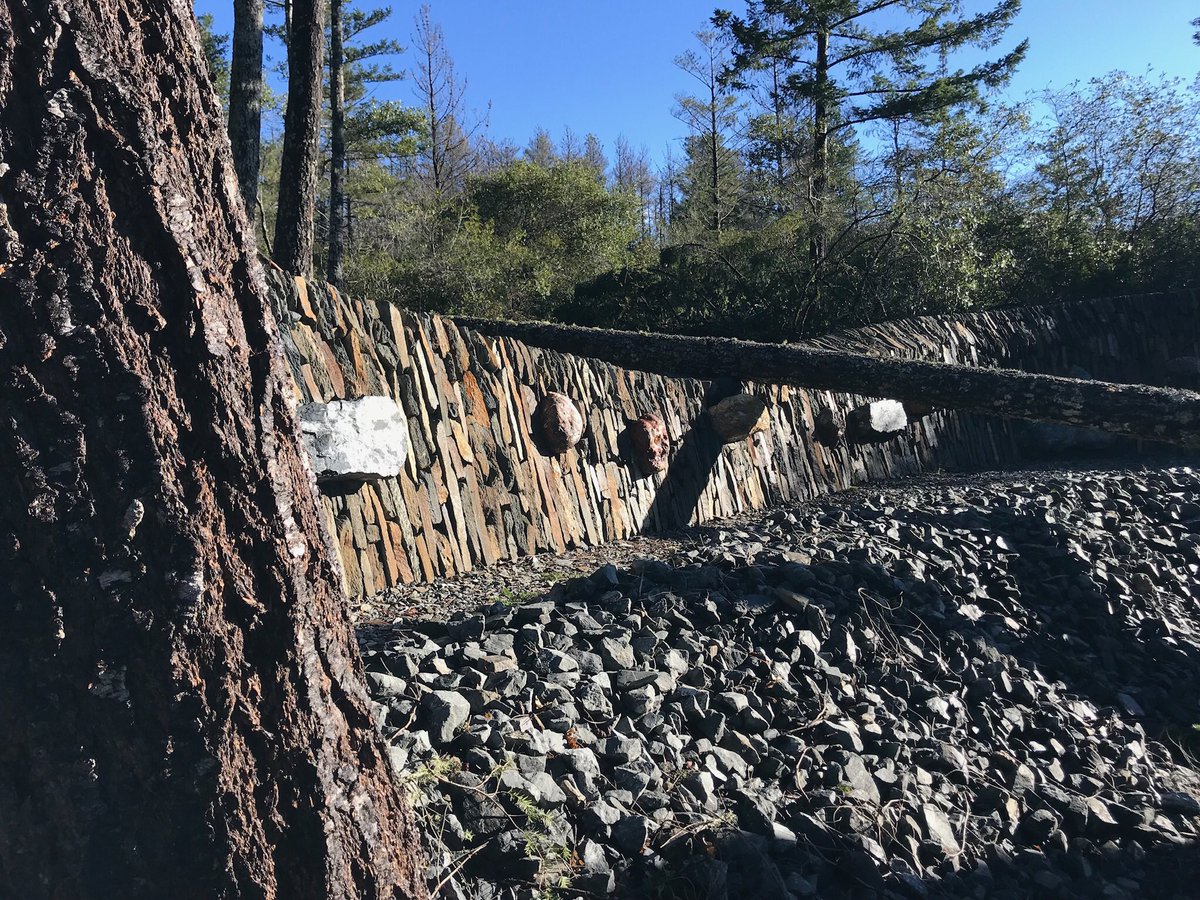
This tall pine tree fell down onto our floating boulder wall during a big storm recently. Surprisingly there was no damage to the wall!  The tree could have fallen in dozen other places along the wall and yet it fell in a direction that let the wall take the full blow without a single cope stone budging. 

Perhaps the tree, having stood there for a year, almost to the day since the wall was built, had pondered where best it could come to its final resting place and do the least damage to our installation. In deference to its thougtfulness we have not moved it away or cut it up. It becomes a new part of the overall experience as you come over the hill to see the wall. I like to think nature does its part to collaborate with us if we are open to surprises .

Thursday, January 31, 2019

Pine Cone Design for the Stone Zone.


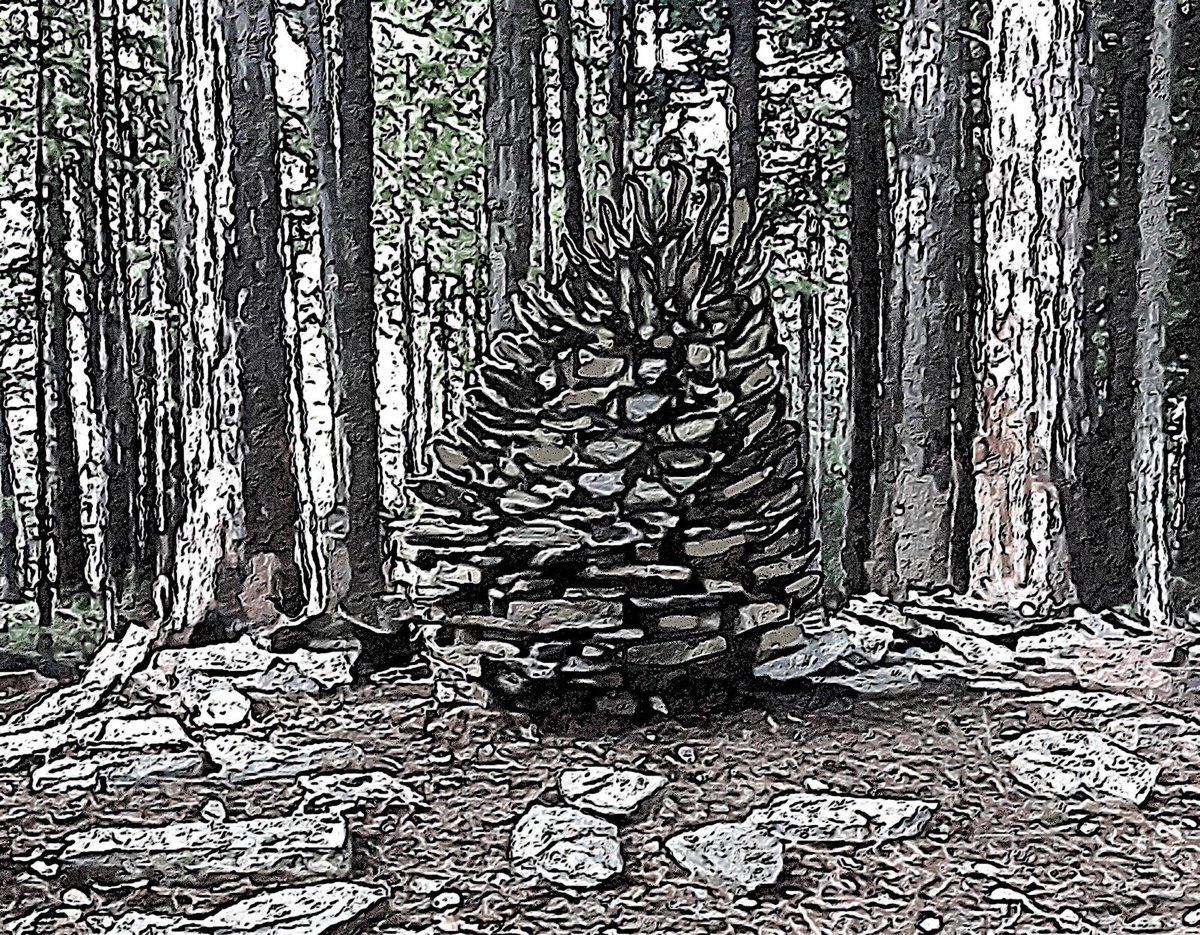
We’re going to have a very enjoyable opportunity turning ‘stone to cone’ soon.  Let’s see how close we get to the thing looking like this rendering.

Monday, January 28, 2019

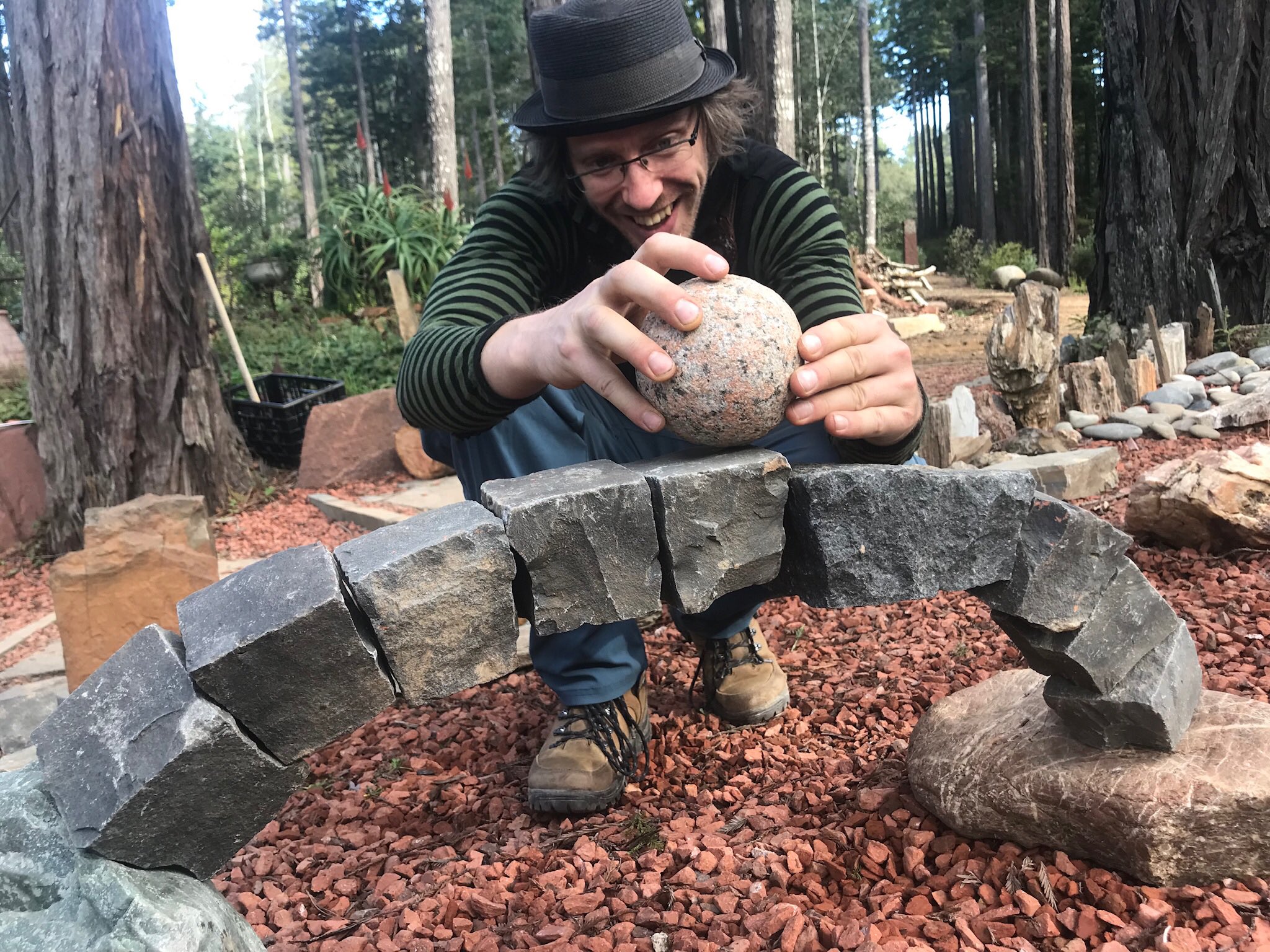
Gravity Glue meets Dr Who

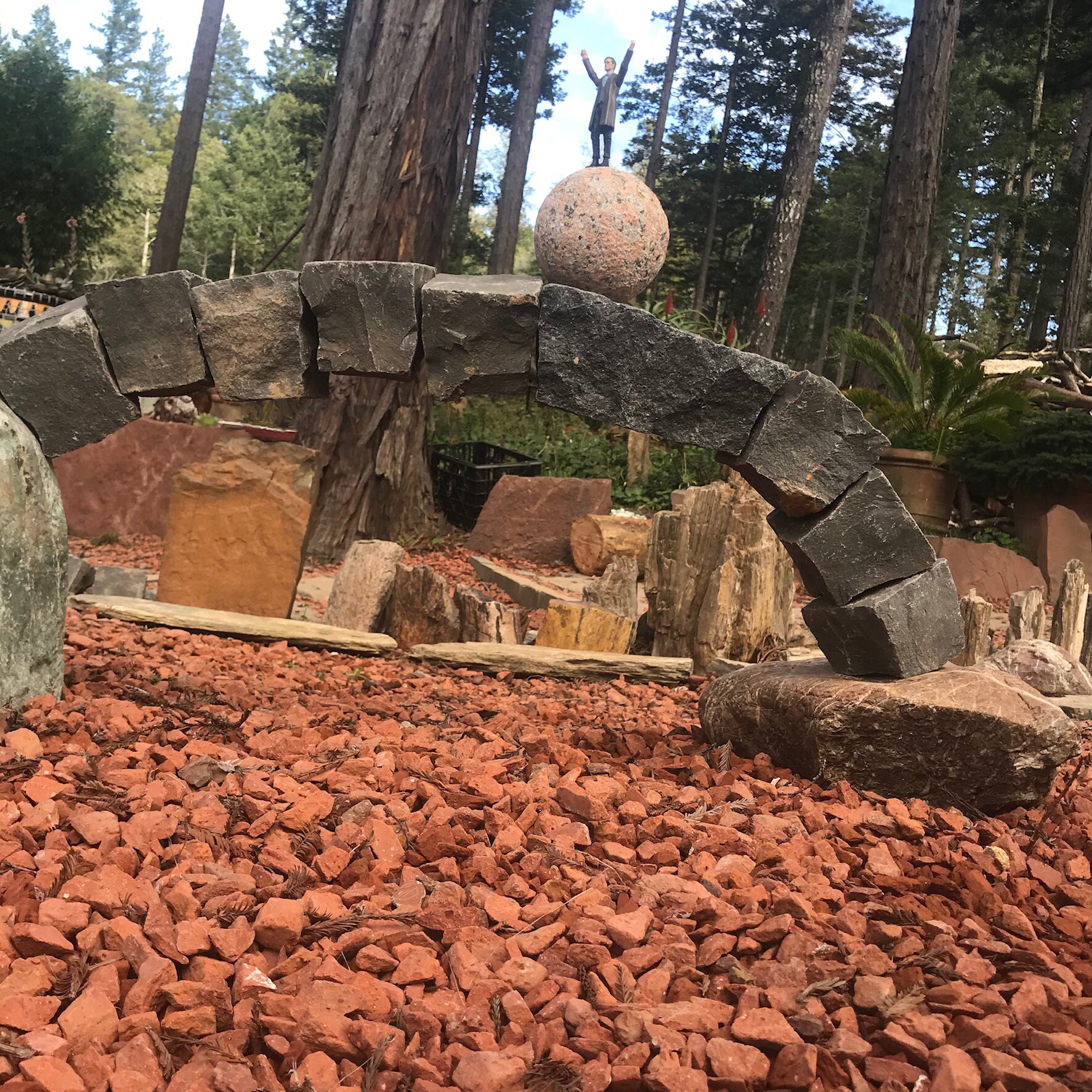
Gravity Glue (Michael Grab) and Dr Who (me) collaborated on this blocky stone balance arch yesterday. Wonderful joining of stone energy and creative passion.


Saturday, January 26, 2019

Filling the crags


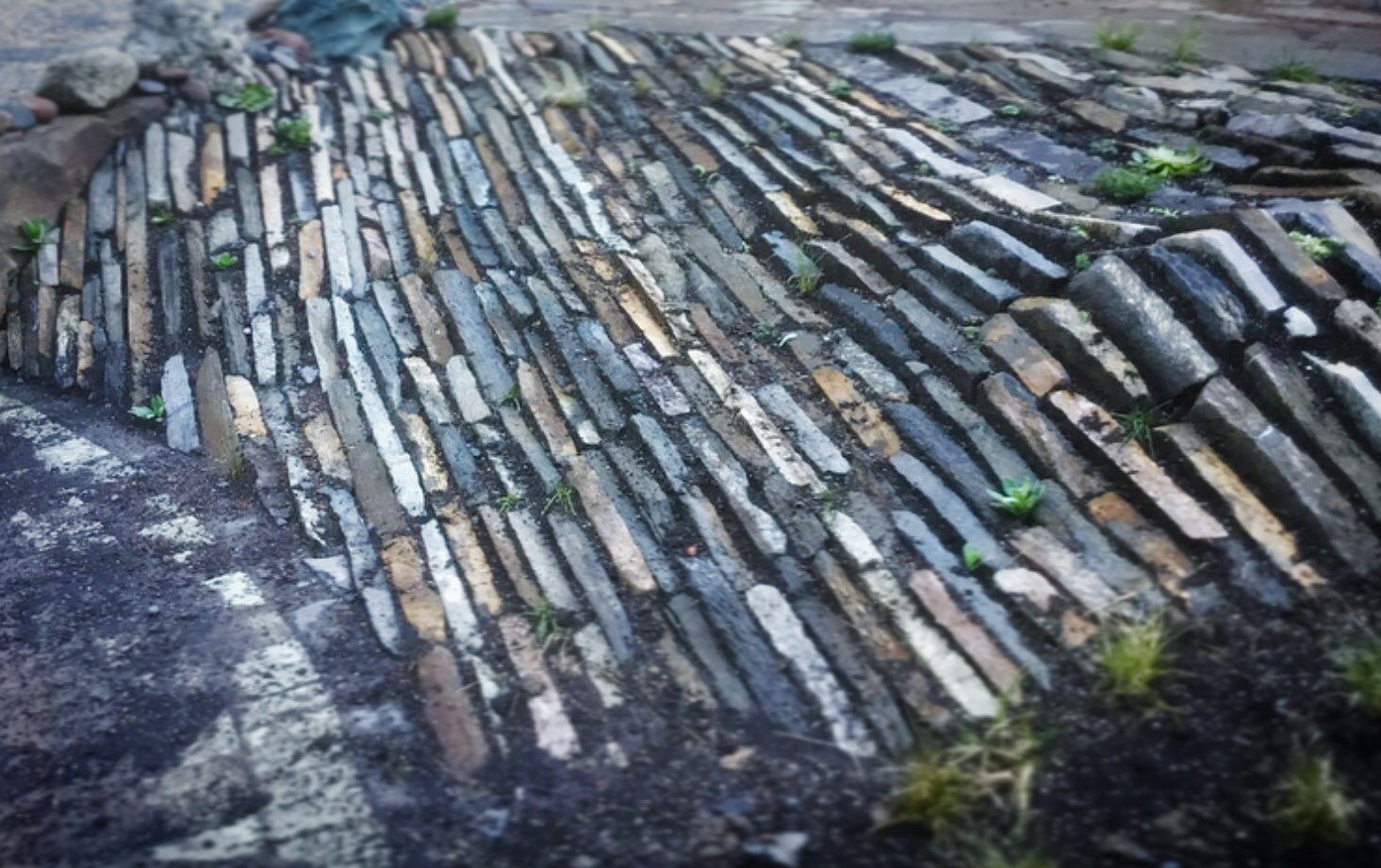
After packing soil between the rows of upright flagstones in the newly created garden topography, we begin to give the crevice stone floor a flora flourish.

Friday, January 25, 2019

Now the fun begins


Time to get creative with the flagstone . The crevice garden starts to look like a contour map flowing up and over the ridge that is being retained. Big chunks of granite are introduced to add some dramatic topology.


Thursday, January 24, 2019

Crevice Continued

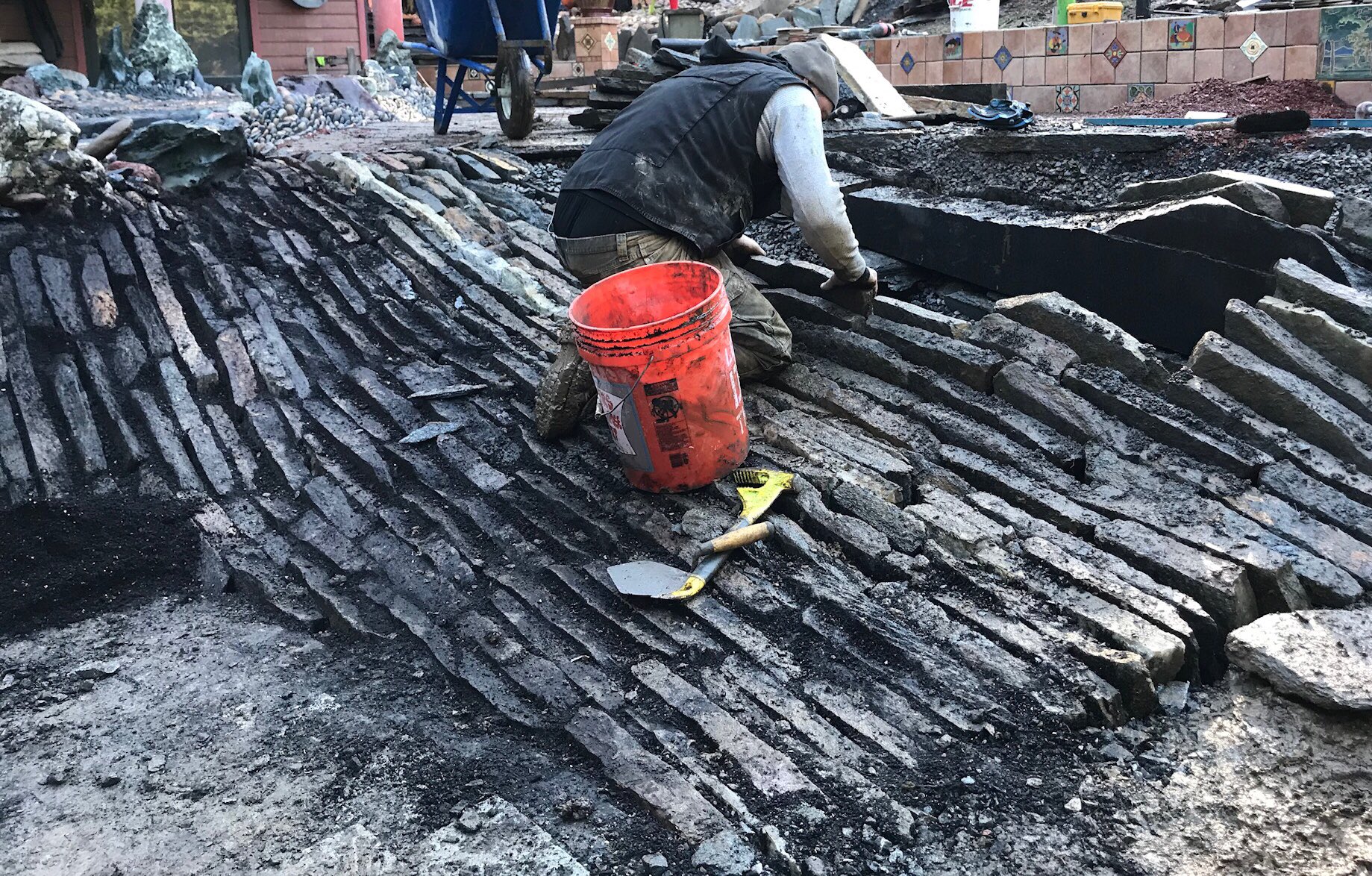
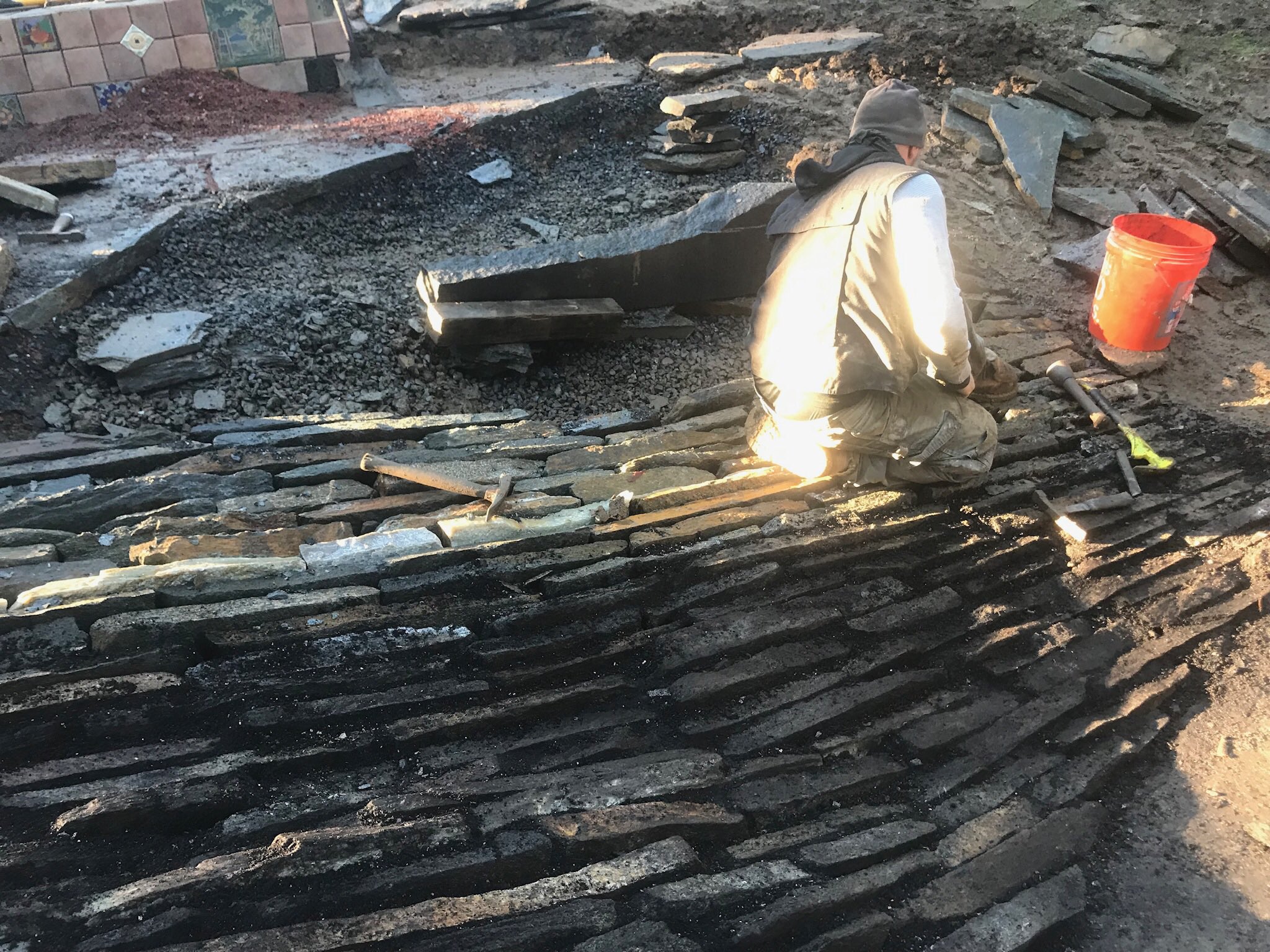
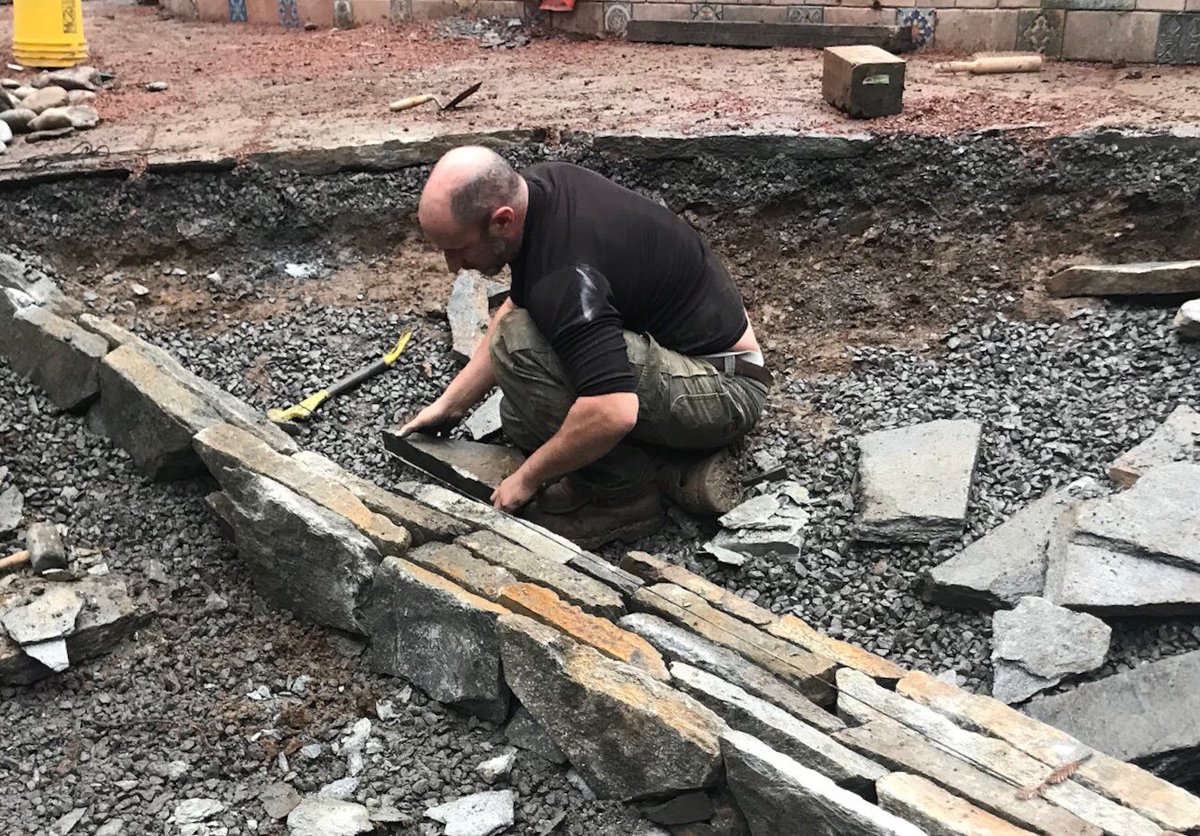
Align the stones in the crevice garden in rows and bed them the way you would bed cobbles


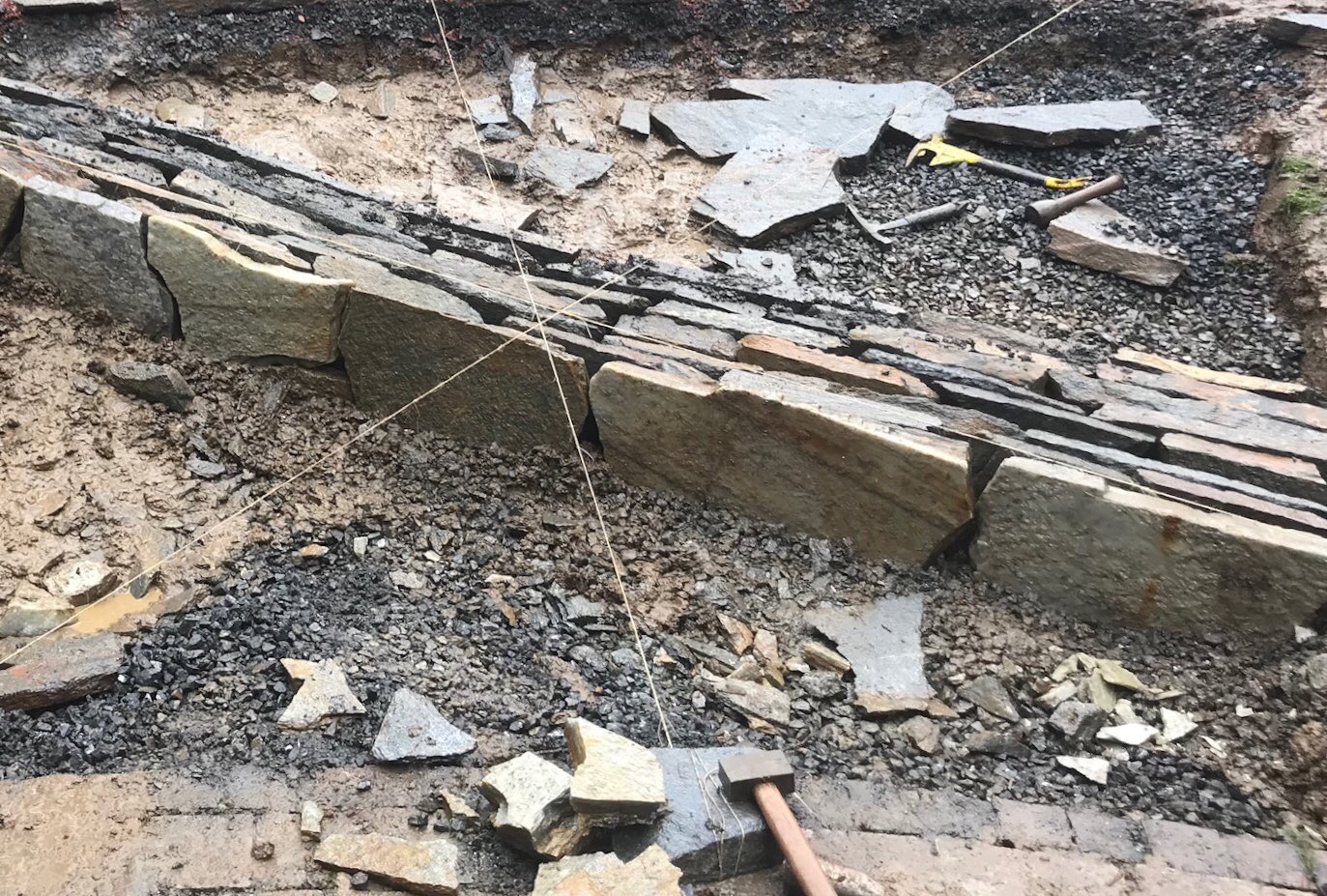
String lines in several directions can help give an idea of the sweeping slope of the grade, but the final surface needs to be a gentle convex or concave curve, or a combination of swoops.

Wednesday, January 23, 2019

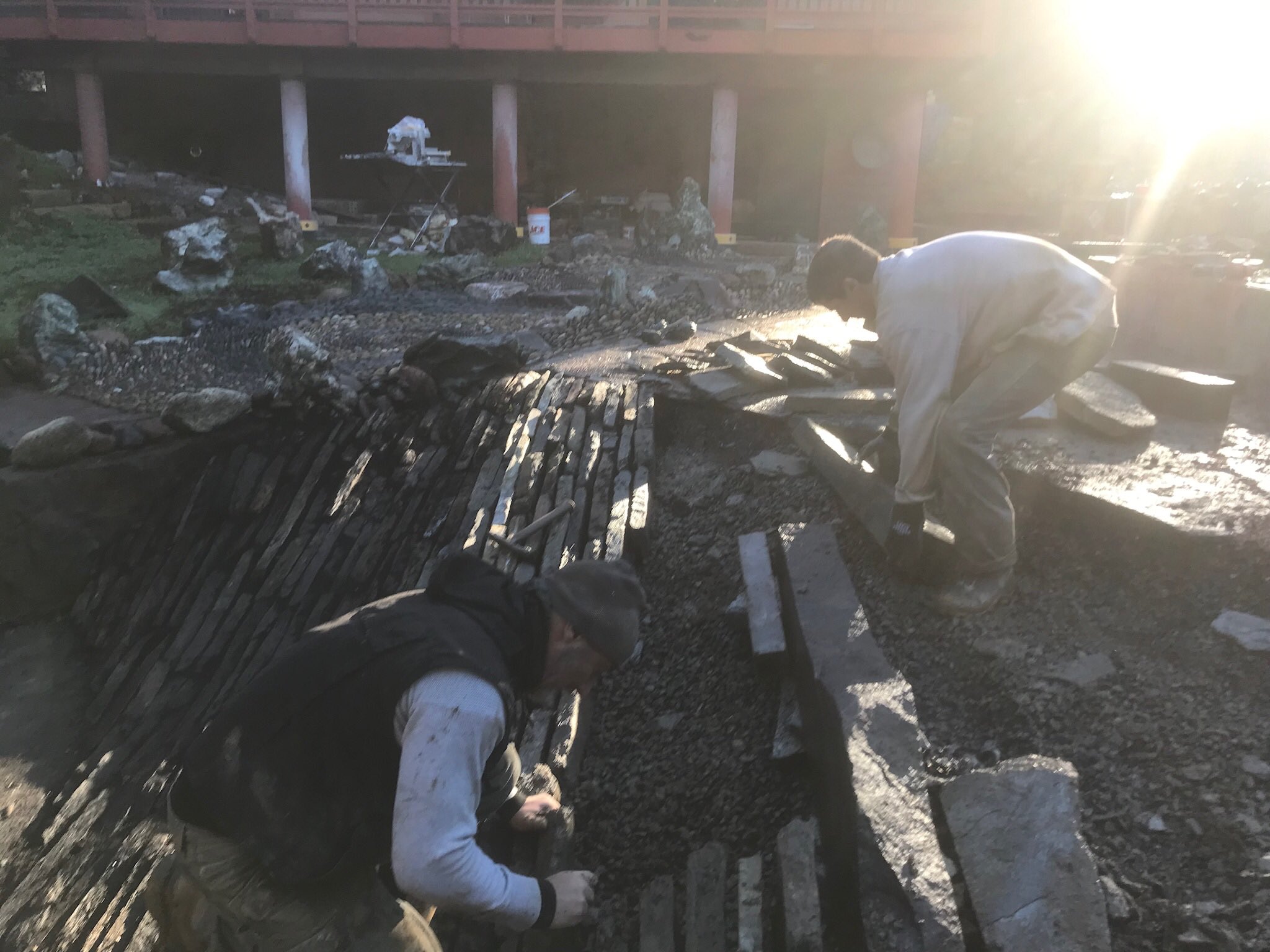
Crevice Garden preparations


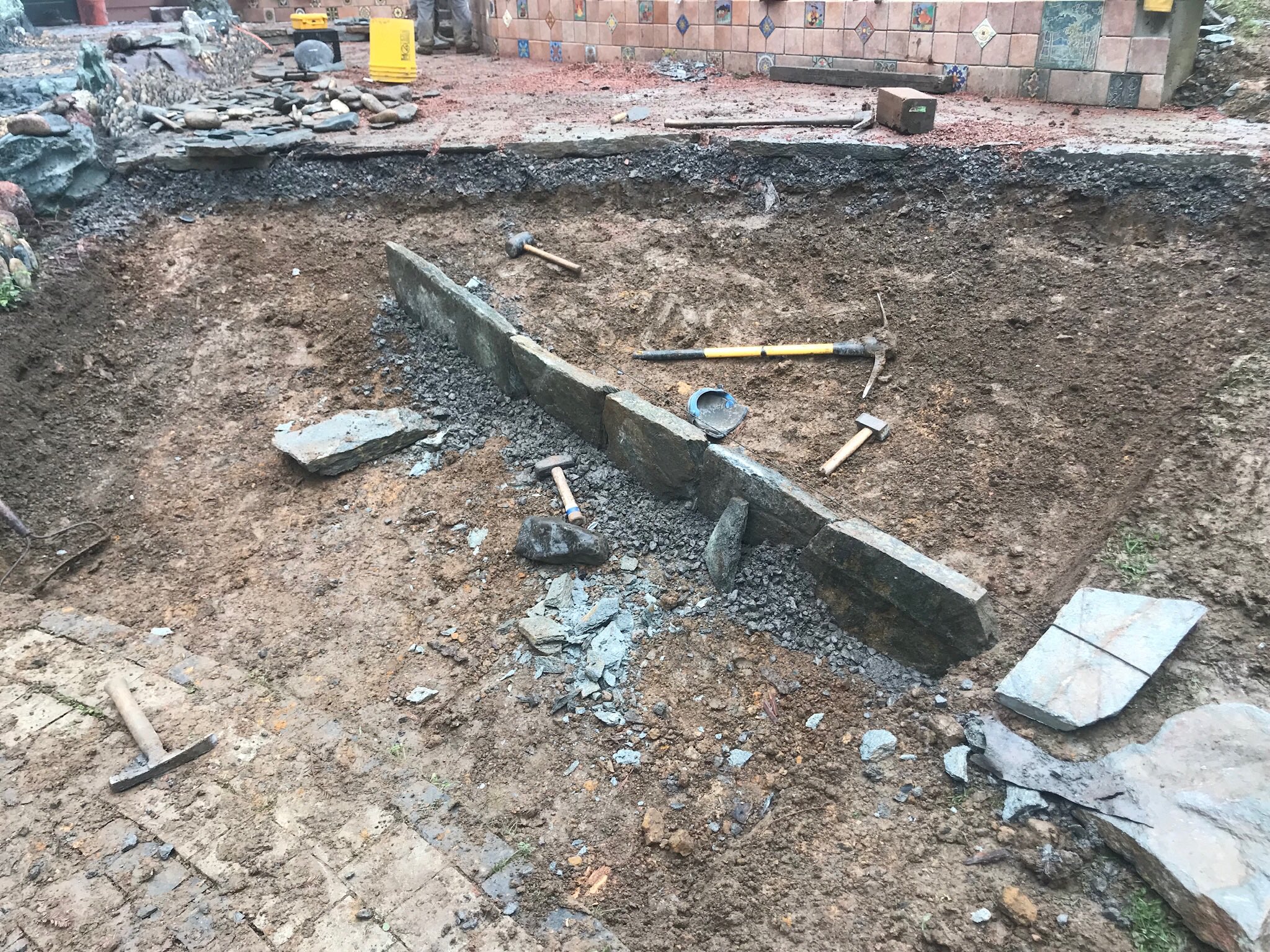
Work began last week on the new crevice garden.
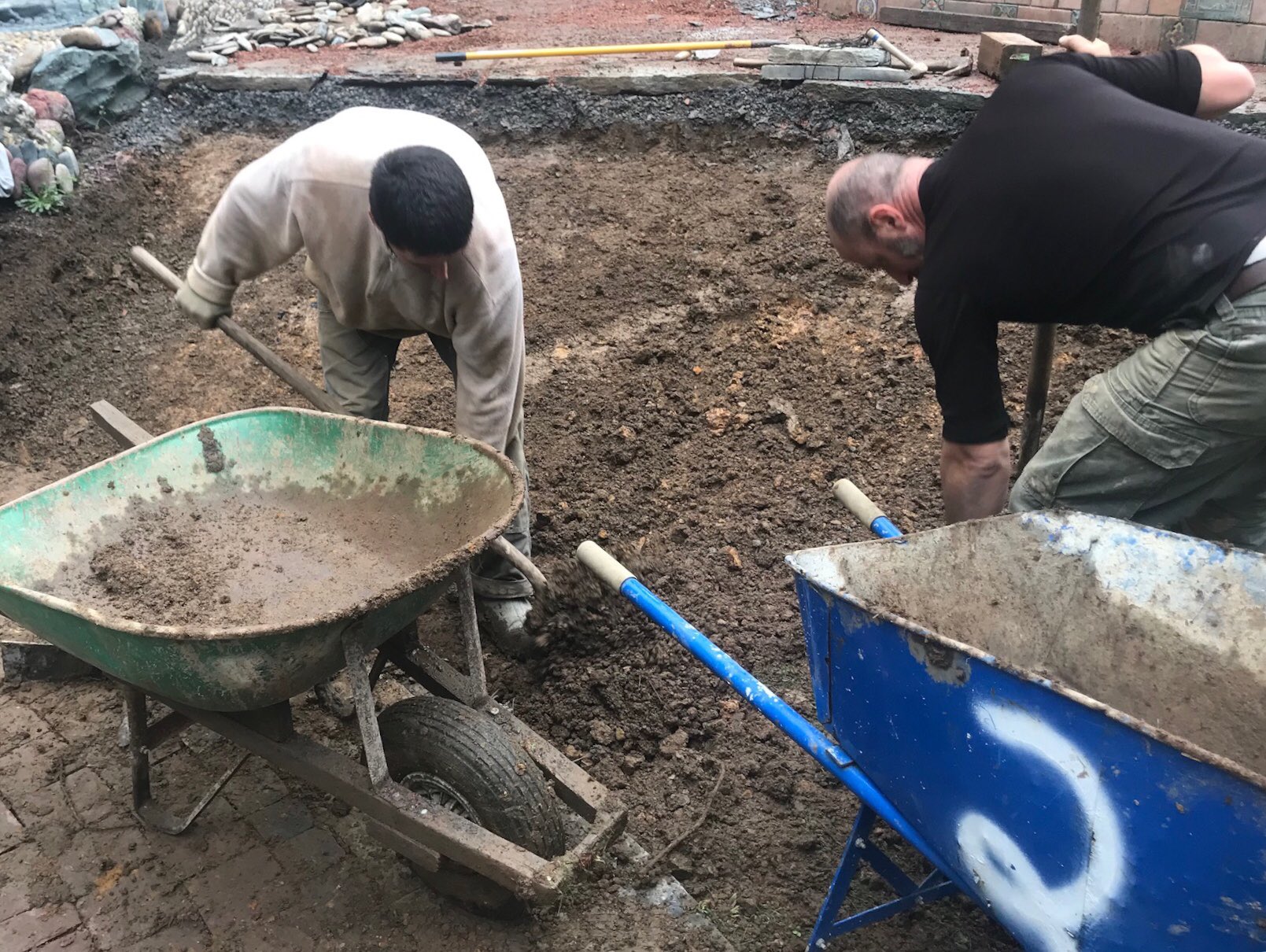
The prep work involved mostly digging in the mud removing twelve inches of soil.


The first row of lags are laid upright in a diagonal row across he middle of the space. The line of the  tops of the flagstones determines the general swoop of the topography from upper patio thu the middle to the lower walk. 
The beauty of the crevice garden is that it is beautiful AND does away with the need for a conventional terrace wall, while still retaining the slope and grade of the hill. The stones in the crevice garden create a gentle rolling slope, something you can walk down rather than step off and fall over. 

Tuesday, January 22, 2019

The tallest of the three


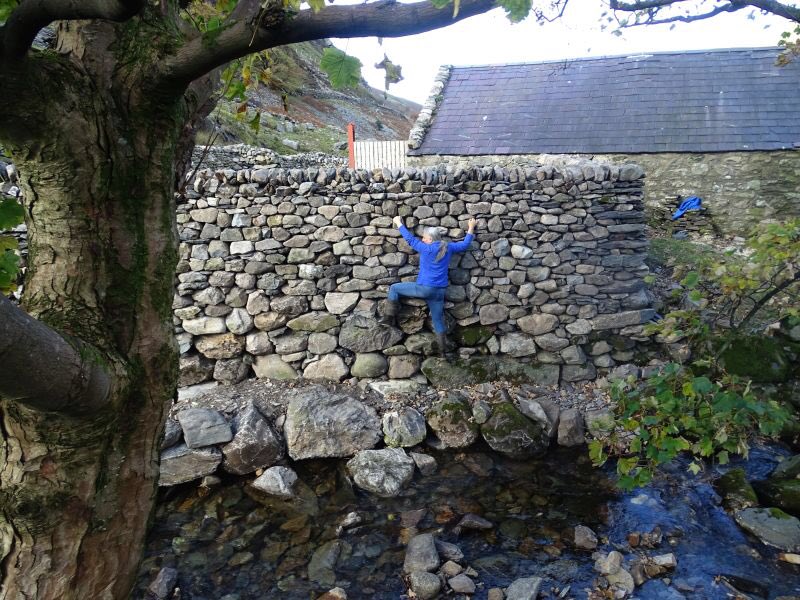
The most recent job Sean Adcock built was a third tall wall, this time a garden wall in Beddgelert, North Wales.
About 8 feet high (8-10 inches buried),this wall made of slatey material had lots of tracing in the bottom half especially. The throughs were put in at approximately  24 and 42  and 60 inches, all laid 36 inches apart. The batter was about 1:8 ( Sean usually does 1-6) becaue the wall needed to be around 16 inches at top for coping.  A seven foot wall (before copes) would have had to have nearly 4 feet of base At 1-8 batter, only a three foot wide base is needed.

The reasons a wider base was not thought to be a good idea were many, including the fact that the original wall was 3 foot narrow presumably allowing  more garden room.
In the end the owner, a builder suggested he lay a 3 foot concrete slab footing for the wall (the appropriateness of which is an argument for another day perhaps). 

Monday, January 21, 2019

Tallish Wall


Ruthin wall, in North Wales, was built last year end of September 2018. It’s worth taking a long look at this wall. Single skin retaining wall, most of the stones in lower half are 2-3 foot into bank. The footings and end were done with machine but all the rest wrangled into place by hand. Sean says, maneuvering a big stone up to the wall is often harder than putting it into the wall.


This magnificent wall is just over 6 feet, including coping.  

“Nothing hugely special”, says Adcock, “taller than I normally get to buid , built just before the Blaen y nant wall.   It’s my favourite type of stone for building, slightly rounded glacial bouldres/fieldstone, and of many, the only one I am reasonably happy with (bearing in mind I am never happy).”

Sunday, January 20, 2019

Tall Wall


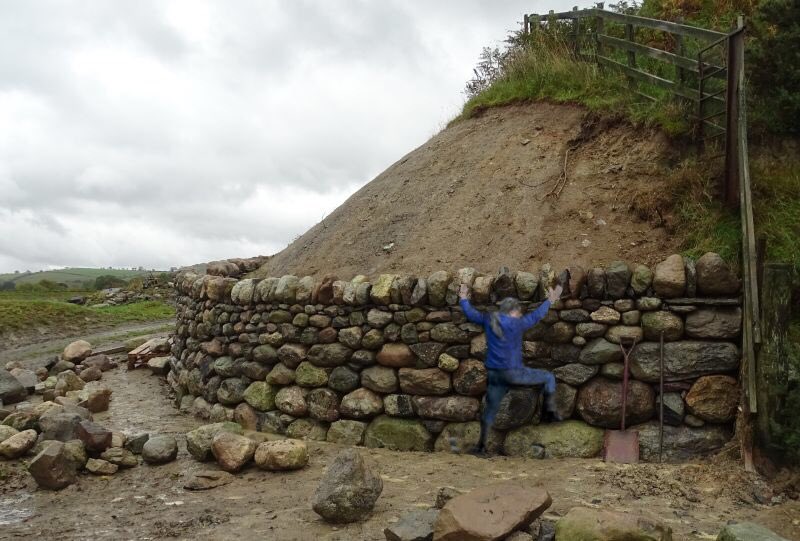
Sean Adcock did this major repair to an agricultural wall in Blane y Nant,Wales, last year.  It’s a sheep pen, partly retaining (about four feet)and the rest just under six feet tall of free standing wall, (on the uphill side). Where Brenda is climbing it is nearer eleven or twelve feet. 
Sean says he dug out below stream level and wrestled into the base a row of massive boulders each weighing a ton or more then immediately behind these a row of slightly smaller stones were set as the footing for the wall. The first two courses were all stones that were too big to be moved by hand ( track excavator was used) This more or less brought the wall to ground level. 
The wall was a little under 4 feet wide at ground level and from this point was built almost entirely from the uphill side!  Battered 1:6 it is around  24  inches wide below cope. The cope is formed by an irregular cover with a rubble cope on top.  There are no throughs .
 “The stone was plenty big enough anyway,” says Sean, “ ie at through stone height it was around 3 feet wide and the building stones still met/overlapped in the centre of the wall” 
Sean remembers it was horrible stone with “all sorts of silly shapes”
This Property used to be Sean’s main site with over 70.000 square feet of wall face surface rebuilt here over fifteen years, now just occasional repairs and projects.
Saturday, January 19, 2019

The Ocean’s Bounty

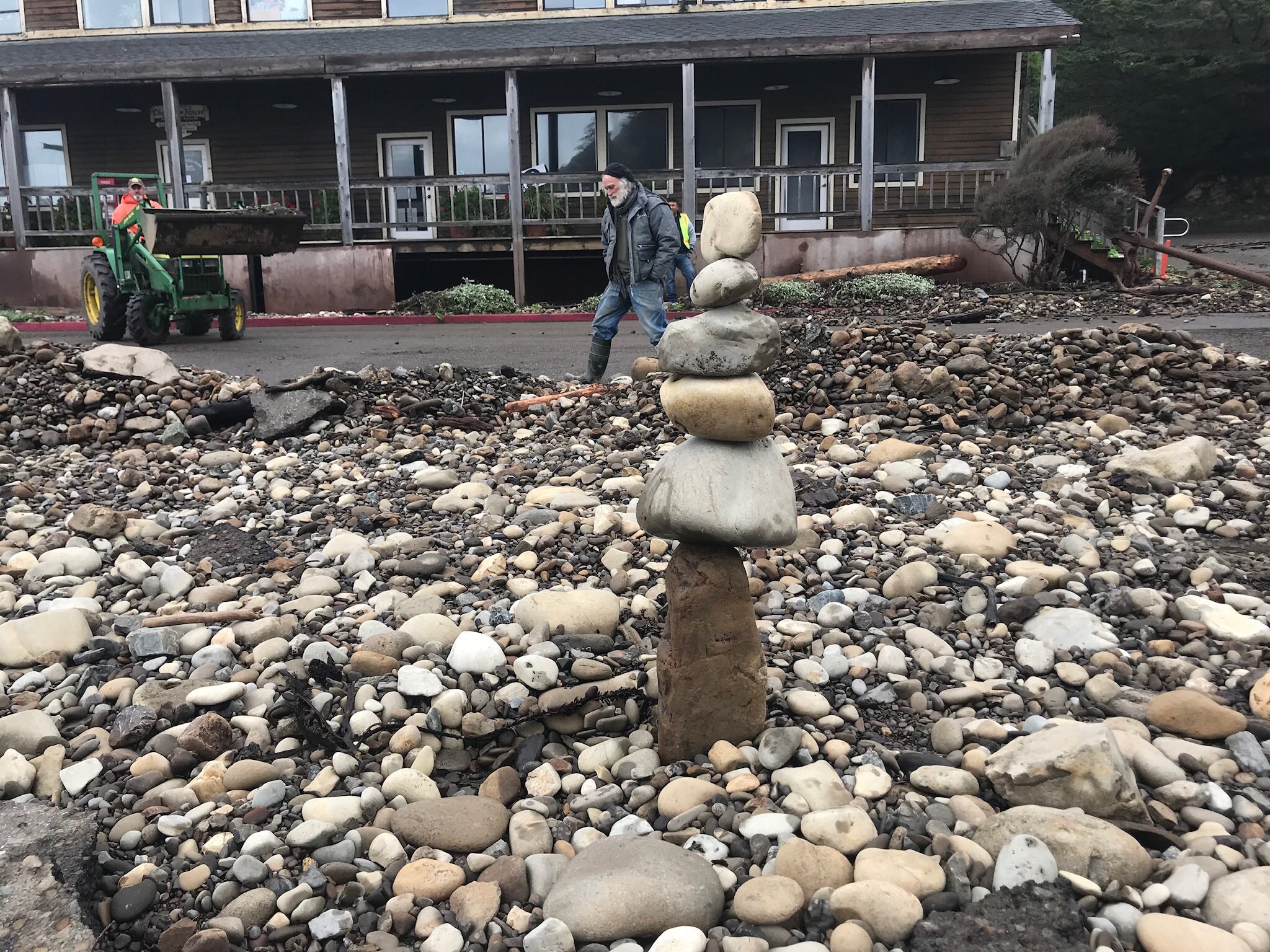
This windfall of rocks, stones and beach pebbles was tossed up onto the parking lot at Point Arena in the big storm last Wednesday. Some of us were there yesterday helping clean up by gathering a carefully hand-picked selection of this beautiful material to be used in future installations back at the Stonezone. And, of course, we had to leave one or two stones balanced, as a thank you to the sea.

Wednesday, January 16, 2019

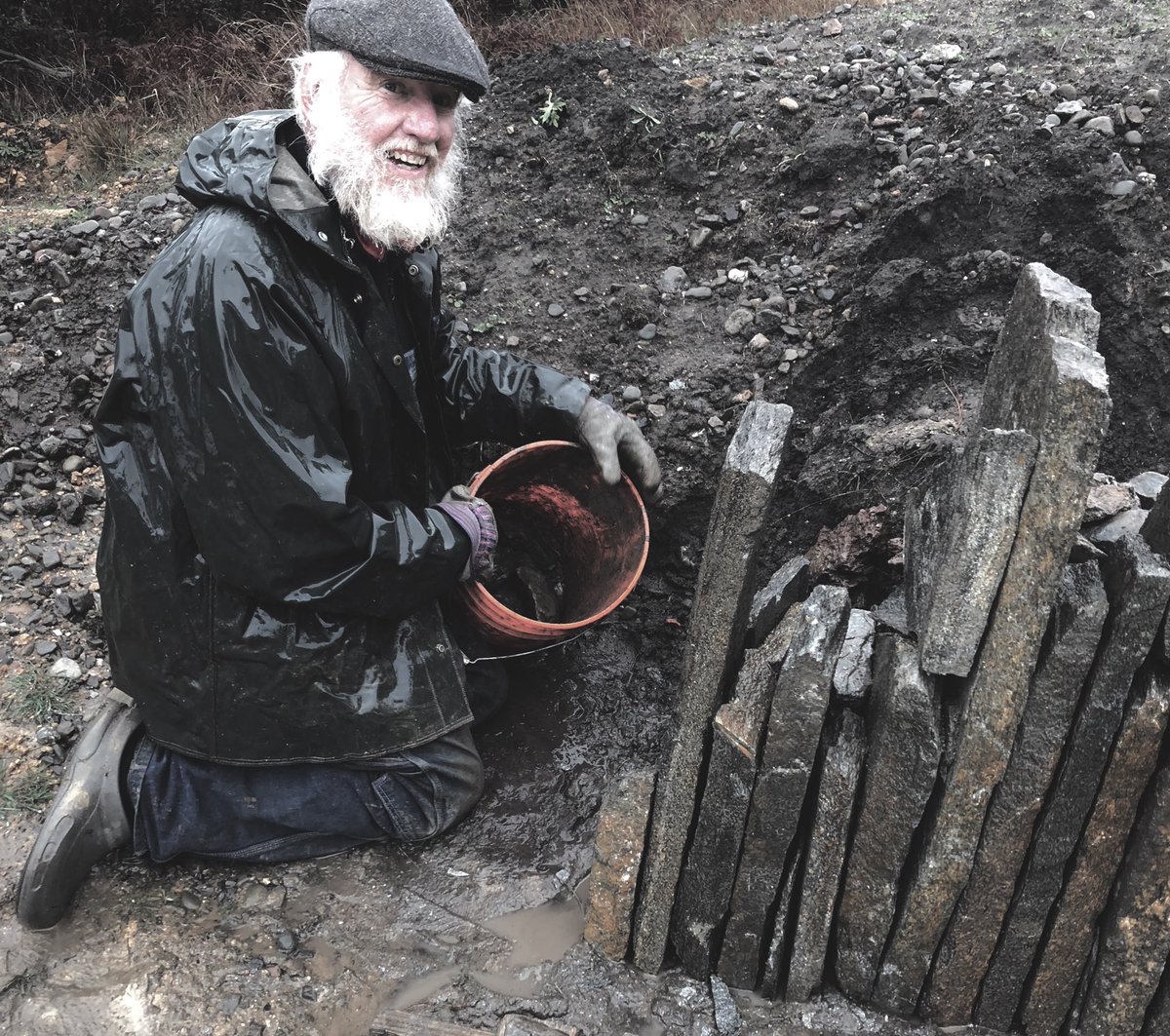
Working in mud and rain yesterday


It’s was not too bad building walls kneeling in the mud, working in a steady drizzle yesterday. That’s because it’s way less difficult than. building in an ‘atmospheric river’, which is what were experiencing today. And so were taking the day off.

Sunday, January 13, 2019

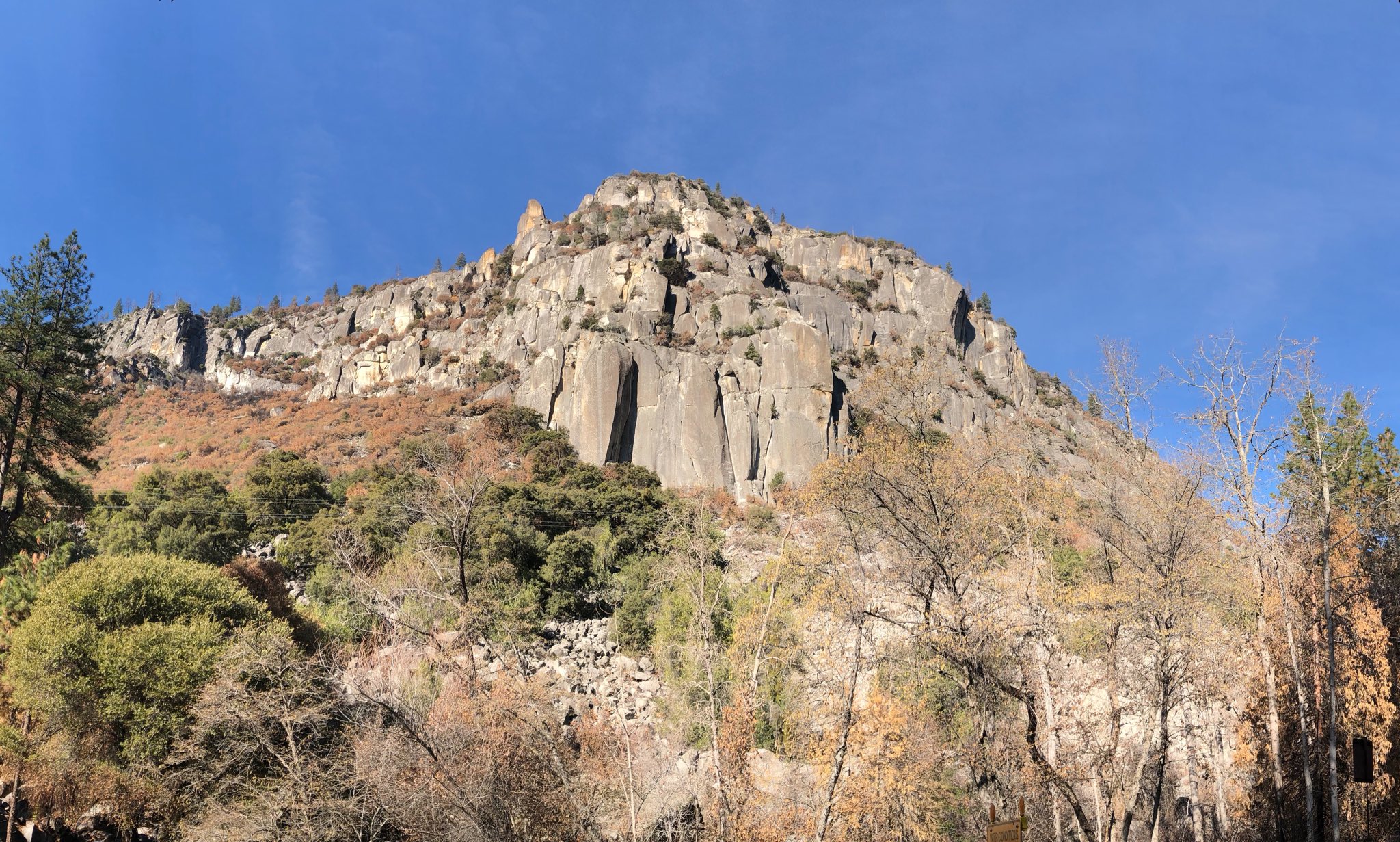
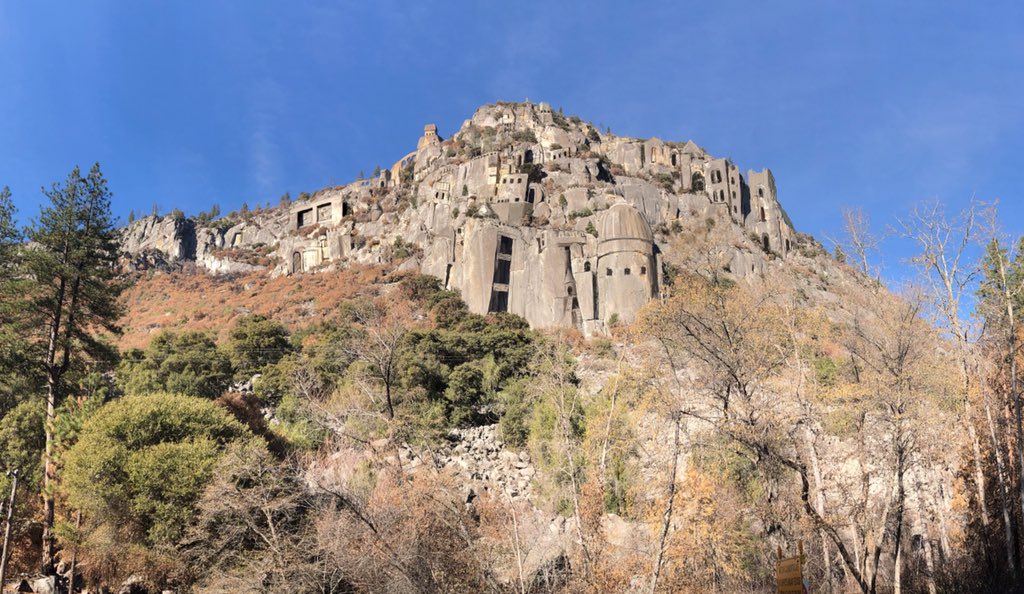
imagining


I imagined that very long ago there must have been an ancient city here in Yosemite National Park 


Saturday, January 12, 2019

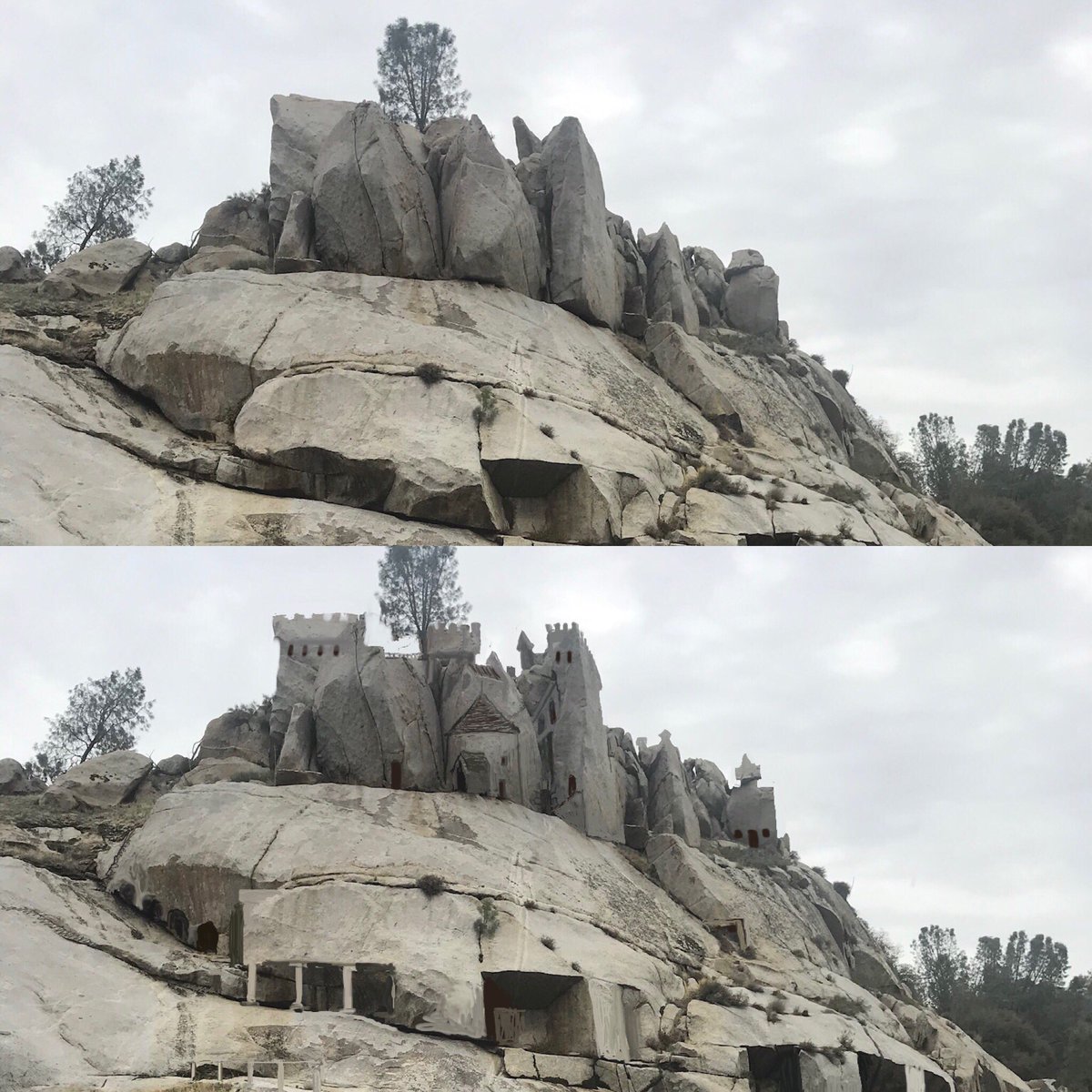
Was there a once upon a time ?


These Kern Canyon cliff formations suggest there was once-upon-a-time likely a civilization of enchanted rock dwellers here in the Sierras, living in ancient structures carved out of the bedrock, creating elaborately clustered habitations for themselves 

Friday, January 11, 2019

Time is an Element


The Squire (the squarish granite rock), having told the other rocks how he had ended up meeting the beautiful round stone Rhonda, when he had been first washed up on the beach at St Bees Head, continued to tell the story of how their friendship slowly evolved.

At first they gave each other a lot of time.   They learned to appreciate each other's various facets. The main thing that they had going for them was the fact that they were both fairly elderly. It was an important part of their makeup. Being many million years old enabled them to have perspective, and not feel they had to rush into anything. The fact that they were both 'mature' was one of the essential elements to their 'getting along, as essential as oxygen and silicon, the other two most common elements contained in rocks.