Wednesday, April 4, 2018

Wall on the Wild Side.

Re-Posted from the Bennington Banner
Posted 
When you think about the iconic landforms of the Northeast, what comes to mind? The mountains, of course. The lakes. Of course. Rivers? Probably.

But there's another. Stone walls. An estimated 100,000 miles of them. They might not be as impressive as the Presidential Range or Moosehead Lake, but collectively they make a big impact on the landscape and the creatures who live there.

Stone walls parse the land into finer pieces, creating diverse microclimates and ecosystems and opportunities for creatures of all types, said Robert M. Thorson, a University of Connecticut geology professor, the founder of the Stone Wall Initiative, and the author of three books about New England's stone walls: "Stone by Stone: The Magnificent History in New England's Stone Walls;" "Exploring Stone Walls: A Field Guide to New England's Stone Walls" and "Stone Wall Secrets" (co-authored with Kristine Thorson).

In "Exploring Stone Walls," he wrote that "when we encounter a stone wall in the deep woods, we instinctively think of the place as being desolate. This is an illusion. Every stone in every wall is animated with life."

Stone walls literally change things from the soil level on up, Thorson told me in an interview. "Think about shade and sunlight and wind and the implications of that for moisture and temperature. Think about the structure of the wall and the conductivity of the stone relative to the ground. They're heat pumps and ventilators."

The base of stone walls might be cool and moist, the crevices like tiny caves. The top might be a desert, dry and barren. On one side of a wall might be woods, the other field. "Walls sort of divide, create and enforce differences," Thorson said. If you have a wall on a slope it might be capturing soils on the upside, while the soils on the downside might be poorer. "That makes shade or not shade. You have upslope and downslope," he said.

Animals of all types utilize stone walls — from foxes to chipmunks to salamanders. Cats and foxes use them as travel lanes, while the extra elevation could help them spot prey, or predators. When my friends at Northern Woodlands brought in their game cameras last fall, they had some great shots of a bobcat and a black bear on a stone wall. Yes, a black bear.

Thorson said Blanding's turtles migrate to breeding sites along stone walls, where the leaf litter is moister and there's more protection from predators.

"It's a wall, but it's also a corridor," Thorson told me. "You get wet and dry, shady, moist, windward and leeward. It introduces a vertical billboard to the landscape and increases habitat diversity."

The immensity of the stone wall landform — New England's stone walls are at least two times the length of the Interstate Highway System — means that is a lot of habitat.

While a single pile of rocks might attract a few chipmunks or white-footed mice, imagine that rodent-friendly habitat chained together for miles. Then think about the minks and snakes, the foxes and owls that prey on those rodents and you see how the effect is multiplied up the food chain. Stone walls can, literally, make our landscape come alive.

"I just think they've made the landscape much more interesting because of the power of plant and animal communities to adapt to the changes they impose," said Thorson.

When talking about the power of stone walls to attract animal life, Thorson likes to use us as an example. Take a bunch of second graders and assemble them in a field between a pond and a woods edged by a stone wall. Tell them to go find nature and they'll head for the pond because, well, that's where they've been taught that nature exists. Tell them to go explore, he said, and they'll head right for the stone wall.

Many of us take stone walls for granted. But they are as vulnerable as anything else to human activity. While there are still an estimated 100,000 miles of them in New England, it's worthwhile noting that, in 1939 mining engineer Oliver Bowles estimated their combined length at 259,000 miles, according to the Stone Wall Initiative.

If the rest of them were to disappear, "a surge of physical and biological changes would ripple through the landscape," Thorson wrote in the epilogue to "Exploring Stone Walls." Woodlands would blend together, soil erosion would increase, and billions of creatures would die, he wrote. What's more, we would have lost a part of who we are.

New England is a place, Thorson wrote, where "human activities are so thoroughly blended into the otherwise natural landscape that the distinction between them is moot and meaningless." Stone walls create, "a landscape in which history and natural history are one in the same."

Joe Rankin writes on forestry, nature and sustainability. He lives in Maine. The illustration for this column was drawn by Adelaide Tyrol. The Outside Story is assigned and edited by Northern Woodlands magazine, www.northernwoodlands.org, and sponsored by the Wellborn Ecology Fund of New Hampshire Charitable Foundation: wellborn@nhcf.org.


http://www.benningtonbanner.com/stories/stone-walls-are-a-habitat-all-their-own,534824

Tuesday, April 3, 2018

The tip of the fork.


This is just a miniature model of the big 4x4 Gradual 534C Forward Reach ‘Forklift’ that Peter uses for lifting heavy rocks and pallets of stone material to our walling projects in Gualala. 

The bigger model has a huge 10,000 pound load capacity and a telescopic arm that reaches 40 feet straight out. It has 'Telehandler' levelling forks, and a levelling frame to stop it from tilting when perched on a grade. It has an impressive Cummins 3.9L 4 Cylinder Turbo Diesel engine and weighs in at 23,900 pounds.


The model looks pretty small next to the real thing.
Unlike the larger Gradual, it can only lift a few small stones.
That's because the toy model doesn't have as much weight.


 My little plastercine guy has to be careful extending the telescopic arm too far when he's lifting stones, if a pebble is too big the Gradual will start to tip over.

Monday, April 2, 2018

Uploading OR downloading


Get your 'fix', everyday. 


'Original material' - streaming into your living area, 
or better yet ...


get it on line.


Saturday, March 31, 2018

What on earth can be made of these?


Let's see. What can we do with this random pile of stones.


I think there's an arch here somewhere.  
(Actually, there is a small one in the photo. Can you see it? )


Same pile, looking south, over the 401.


And now, another arch has risen from the stones  - just a wee bit bigger.


Wednesday, March 28, 2018

Recognizing the Inevitable


Back in early spring of 2012 I took this photo of a pile of stones that seemed to always be calling out to me from the 401 highway (renamed the Highway of Heros) as I drove east out of Toronto.


Last Friday, March 23rd I started building an arch there. I built it partly as a kind of celebration of life, but as I built it became an act of solidarity with those who marched and stood for an end to gun violence, protesting the lack of proper gun control in America, last weekend in Washington DC.


I've decided to call it the 'Arch for Their Lives'


There is an inevitability about stone. Structures of stone, gathered from the land and later, painstakingly laid by hand, one on top of another, can, if you let them, take on a kind of impending nobility that seems to allude to something more than just the pragmatic. 

Whether it be building with stone for a certain specific purpose, or in this case trying to create something merely whimsical, my efforts to connect with that 'predestined meaningfulness' inherit in natural stone, though a very rewarding activity, is an achievement that often is very allusive. 

I think of it as a kind of 'pre-realization' that stones convey. There is an unconscious knowing, in each of us, of what it was (is?) a long time ago, already needed to be done. If it's done right, even if we had nothing to do with creating it, we still recognize its sense of 'eventuality'.

If were lucky and we're open to it, and we are the ones silently building with the stone, a narrative can be inferred that is more timeless than we originally imagined.  It's as if the stones become something that they've always wanted to be and are saying something they've always wanted to say.

The very stones cry out.  

By its very lonely silent presence, this arch newly emerging from the landscape has somehow been released to become what I, having worked on for days, only now am beginning to understand it needed to be.


The arch is for life. It stands for life. 

Silently and powerfully as Emma Gonzales stood too for life, during those poignant minutes at the end of her speech , (symbolically waiting out the same length of time that the gunman spent at Marjory Stonemason Douglas High School  senselessly ending lives) 

May these stones silently speak too. And may the inevitability of the stone arch stand for what inevitably needs to change in the beliefs and actions of those in America who resist laying down (or even just controlling better) their beloved weapons for the lives of others.


Monday, March 26, 2018

The American Garden Conservancy

The Garden Conservancy


Here's an event Im looking forward to....

Sat, May 5 2018
10:00 AM- 4:00 PM

Admission to each private garden is $7 for members and nonmembers without tickets purchased in advance. 
Buy discounted admission tickets in advance! They can be used at most Open Days to make garden visiting easier.
Nonmembers get 6 visits for the price of 5 with advanced ticket book purchase. 
Members get 50% off ONLY by purchasing ticket books in advance.
 Digging Deeper programs:
At the Mullins' Mendocino Stonezone in Gualala:
 Stone work demonstrations and Q & A throughout the day with lead project craftsmen, John Shaw-Rimmington from Port Hope, Canada, Kevin Carman from Art City in Ventura, California, and John Fisher of Fort Bragg, California. Free with garden admission.
2 PM - Bonsai styling and presentation and display with award-winning bonsai expert Bob Shimon. Free with garden admission.
At the Gualala Arts Center in Gualala: Stone work demonstrations with Stone Foundation members/artists Kevin Carman and John Shaw-Rimmington will answer questions about their stone installations at the Gualala Arts Center throughout the day.
1 PM - Executive Director, David “Sus" Susalla will give tours of the Global Harmony Sculpture Garden.
  • Mullins' Mendocino Stonezone
    Mullins' Mendocino Stonezone
    SAT 10:00 AM- 4:00 PM • 44600 FISH ROCK ROAD. GUALALA, CA, 95445
    Situated among the magnificent redwoods of Northern California, this scenic coastal property allows visitors to explore a myriad of whimsical stone structures, garden follies, and sculptural installations...
  • The Gardens at Harmony Woods
    The Gardens at Harmony Woods
    SAT 10:00 AM- 4:00 PM • 44380 GORDON LANE. MENDOCINO, CA, 95460
    The Gardens at Harmony Woods, nestled into a cathedral of redwoods, reflect a penchant for collecting an enormous range of unusual and beautiful plants. The emphasis is on rhododendrons and conifers...
  • Gualala Arts Center
    Gualala Arts Center
    SAT 10:00 AM- 4:00 PM • 46501 OLD STATE HWY . GUALALA, CA, 95445
    Gualala Arts Center is a 15,000-square-foot visual and performing arts venue on eleven acres of redwood forest that sits one-quarter mile from the Pacific Ocean on the Mendocino Coast.


https://www.gardenconservancy.org/open-days/garden-directory/mullins-mendocino-stonezone

Friday, March 23, 2018

Bridging Across Pontypool


A photoshop rendering of how the Pontypool dry stone footbridge will look. 

 A unique stone arched footbridge (using no mortar or formed concrete or metal beams ) will be constructed by students taking the special 6 day bridge building seminar to be held near Pontypool (near Bowmanville), Ontario the from July 9th to July 14  2018. 
A beautiful permanent dry stone bridge with stone post handrails will be built to replace the old wooden bridge situated on this lovely property about an hour northeast of Toronto . It will span nearly 10 feet across a narrow manmade pond and will become the focal point of this spectacular sunken rockery garden.

The course will be held over Monday to Saturday, leaving the Sunday as an option to finish up if there is delay because of weather .  It will be taught by John Shaw-Rimmington and one other instructor. Participants will get a unique experience having a full 'hands-on' experience learning to build a traditional Scottish ‘packhorse' bridge with cobbled walking surface. 
The course fee is 200 dollars a day and has been deliberately set low to encourage stone enthusiasts, with or without experience, not just professionals. In addition to students having the standard instructional printed material provided for this DSWAC course, registrants attending the  Pontypool  Mitchell’s Bridge Workshop will get a copy of my recently published book How To Build Dry Stacked Walls and Bridges. If time permits during the build there will be field trip visit to at least one other other dry stone bridge in neighbouring Northumberland County . Lunches will be provided.

                               
All inquiries about attending this course should be directed to mcclaryharris@sympatico.ca or john@dswac,ca  This course is limited to 6 students.

Thursday, March 22, 2018

A pictube is worth a thousand worbs


It struck me how close these totally unrelated but adjacent retail businesses signs registered as 'Dry Stone Wall Structure'. Is it just me?  

Wednesday, March 21, 2018

Mother Earth News Magazine Apr/May

stone material culvert property


Taking on the task of building a dry-stacked stone culvert — that is, a stone culvert that doesn’t use mortar — presents the very satisfying opportunity to build something that’ll be strong enough for you to drive a vehicle over and will look very much like a beautiful dry-stacked stone bridge. There’s no reason to go with bags of sand or cement, blocks, plastic, metal, or anything man-made in your finished culvert. With a little bit of effort and the right stone material, a culvert can become the showcase of your property. After all, it’s the first thing people will see when they pull up to your drive. Why not make it stunning?


Tuesday, March 20, 2018

Equi-Rocks


The equinox, the seasons, and the changing length of daylight hours throughout the year are all due to one fact: The Earth spins on a tilted axis.


The vernal (tr. spring) equinox (tr. equal night) is upon us today, Tuesday, March 20th.  Both the Northern and Southern Hemispheres will be experiencing an equal amount of daylight hours. For those of us here in the Northern Hemisphere, it marks the beginning of SPRING, with daylight hours continuing to lengthen until the summer solstice in June.

The green arrow on the rock shows an imaginary revolution of a rock representing for the purpose of illustration - the earth on its axis) It has equal shaded green to non-shaded green. This shows on one spin of the earth there is equal length of darkness to daylight at the equinox.

The green arrow in the photo below showing the orientation representing autumn and winter months prior to the equinox, when the earth axis is turned away from the sun, has more of its circular length in darkness,  and so we in the northern hemisphere, up to now, have had days with less daylight (and thus nights are not equal to daylight time. We've missed our time in the sun.


But now it's time to have fun in the sun, 
because...


Spring is nature's way of saying. "Let's Party"


(sorry, for all of you down under)


Monday, March 19, 2018

Multi-Dimensional Stone

Time is a kind of weird 'extra' dimension that can be added to the three dimensions that we commonly understand 'space' to be.  


Cube-Rotation
How would four dimensions look if we tried to show it the same way we see this three dimensional cube (above) on your two dimensional iPhone or laptop screen?


Below is a view of hypercube rotating in four dimensions, where (in four-dimensional space) all eight cubes are always the same, but here are being visualized as having perspective, just the way the rotating three dimensional cube is being 'visualized' in two dimensions above.


AK986lrhNHiZq

There are lots more dimensions, scientists tell us.
Time is divided into three dimensions. Past, present and future. So that makes 6 dimensions already.

How do we show a 6 dimensional object? - Say a three dimensional object (like our cube) as it is as it was and how it will be, - visualizing all 6 dimensions on the same screen?

I'm not sure.

Then there are the dimensions of 'possibility'

How many?

Scientists can't say, but we know there must be lots !

But here's the thing, I figure that stone contains all the dimensions.

Stone is all 'potential', in '3d space', and in past, present and future 'time'.

Don't ask me how I know. I just know.

And so, because we've been given so many dimensions to work with, anyone who understands and tries to create with it, will always be able to do really cool things with the stuff.

Dimensions in stone 


Thanks to Nick Leung for explaining and demonstrating some of these concepts on his website.


Sunday, March 18, 2018

What makes a dry stone waller


Here's a short video that pretty much sums up how I feel about my job. Good stuff. Walling is the best.

Saturday, March 17, 2018

Irish stone dough.


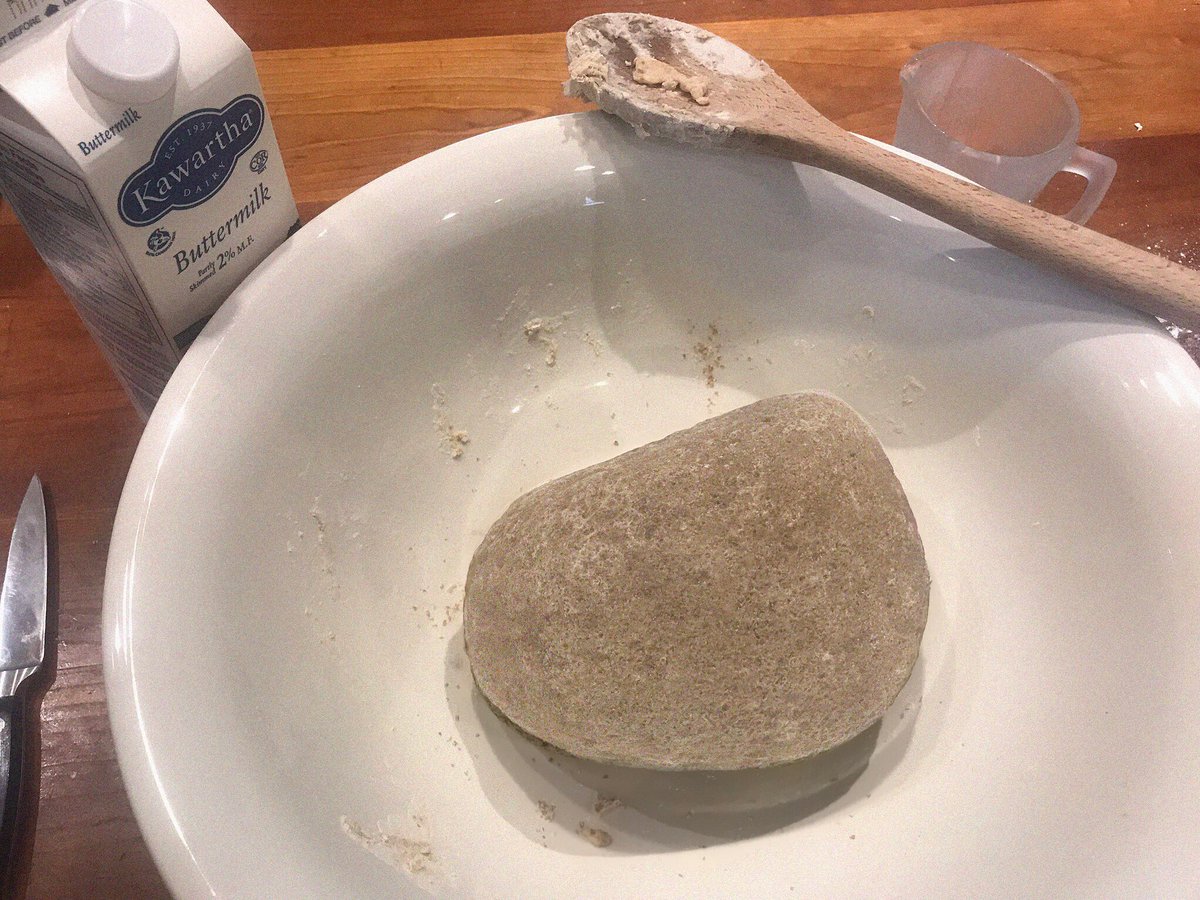
When dry stone Waller Paraic Poil was visiting here from Ireland he helped out with a big stone wall project Mark and I were working on. While he was staying With Mary and I, he fancied having some home made bread and showed us how to make his mother’s traditional Irish soda bread.

I noticed he took great care mixing the combining the brown, white flour and the baking soda with the right amount of buttermilk so that the dough was not too moist. After he had firmly kneaded it into a round fleshy lump it looked not unlike a round rock. 

Lots of parallels have been made comparing stones and bread. What was particularly interesting for me however was the visual of the relationship between ‘dry stone’ and its doughy counterpart not being too moist, or rather being ‘dry’ enough. A wetter mixture would be incorrect. It would be too gooey to work with and would not hold its shape, nor would it have the right look or yummy taste after it was baked.

Happy Saint Patrick’s Day.

Thursday, March 15, 2018

Have a nice day


Sometimes it's too easy, almost glib to merely tell someone to 'have a nice day'. How does one actually implement that suggestion if its cold and miserable and you still see snow on the ground? 

I'm not sure. But I do know that if you spend a day or two in the middle of May learning how to build with stone (no mortar) almost always, something nice is bound to happen .

A two-day beginner's dry stone wall workshop is planned for the weekend of May 12 to May 13 2018. Participants of all ages will learn the craft of dry lay construction as we continue to build another interesting section of dry stone wall, which eventually will become part of a dry stone gate entrance to a beautiful rural property near near Port Hope Ontario Canada . 

Join us for our 'Let's-Celebrate-Spring-Walling-Event'
 
This unique hands-on wall building course will be taught by proffesional waller and stone sculptor John Shaw-Rimmington. Cost for this two-day hands on seminar including printed instruction sheets, lunches for both days and a possible audio visual presentation on Saturday night is only $250. For more information please write to mcclaryharris@sympatico.ca

Wednesday, March 14, 2018

Clouds


No erosion, faintest wear
Some icy patches here and there.
They weather well exposed to air 
I’ve looked at walls like clouds.

But now they only build with block 
The reigning king is 'cultured rock’
So many things make piles of crock
Cuz none of it is real.

I've looked at walls and clouds both, now
From real and fake and still somehow
There’s no pollution with real walls
Which don’t make clouds of dust at all.

Tuesday, March 13, 2018

Both Sides Then


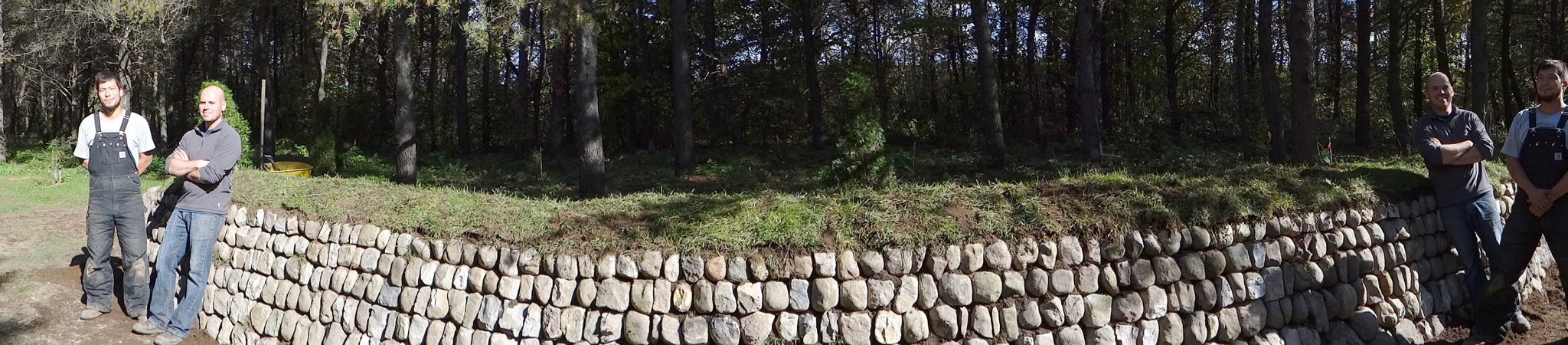
The Welsh equivilent to a Cornish hedge is the Clawdd, pronounced ‘cloud’. It is all dry laid using local stone laid vertically, and packed with dirt infill and sod/turf on top.

In Oct of 2012 at our Dry Stone Walling Across Canada festival near Montreal Quebec, Akira Inman and Andre Lemieux (standing both sides of the clawdd) were taught how to construct this unusual type of wall by our special guest speaker and professional waller Sean Adcock, and then, with help fromother students, all under Sean’s clever supervision, together built this lovely example, which Sean then photographed.

Monday, March 12, 2018

Dangerous substance


How is it that of all the possible high-tech or suspicious looking things that get detected in people's carry on bags at the security check line at the airport, it's still a simple rock that gets them all confused and requires that you be taken aside and open your bag very slowly